
French and Italian inspiration · Boxxi kitchen
Scallops with homemade potato gnocchi, cauliflower purée and nutty brown butter
Soft homemade gnocchi, smooth cauliflower purée and scallops make a delicate centrepiece for a celebratory plate. Brown butter adds a nutty aroma, while toasted hazelnuts bring a welcome crunch among the soft textures. Lemon and chives keep the buttery flavours fresh to the last bite.
We allow time to hand-shape 40 gnocchi.
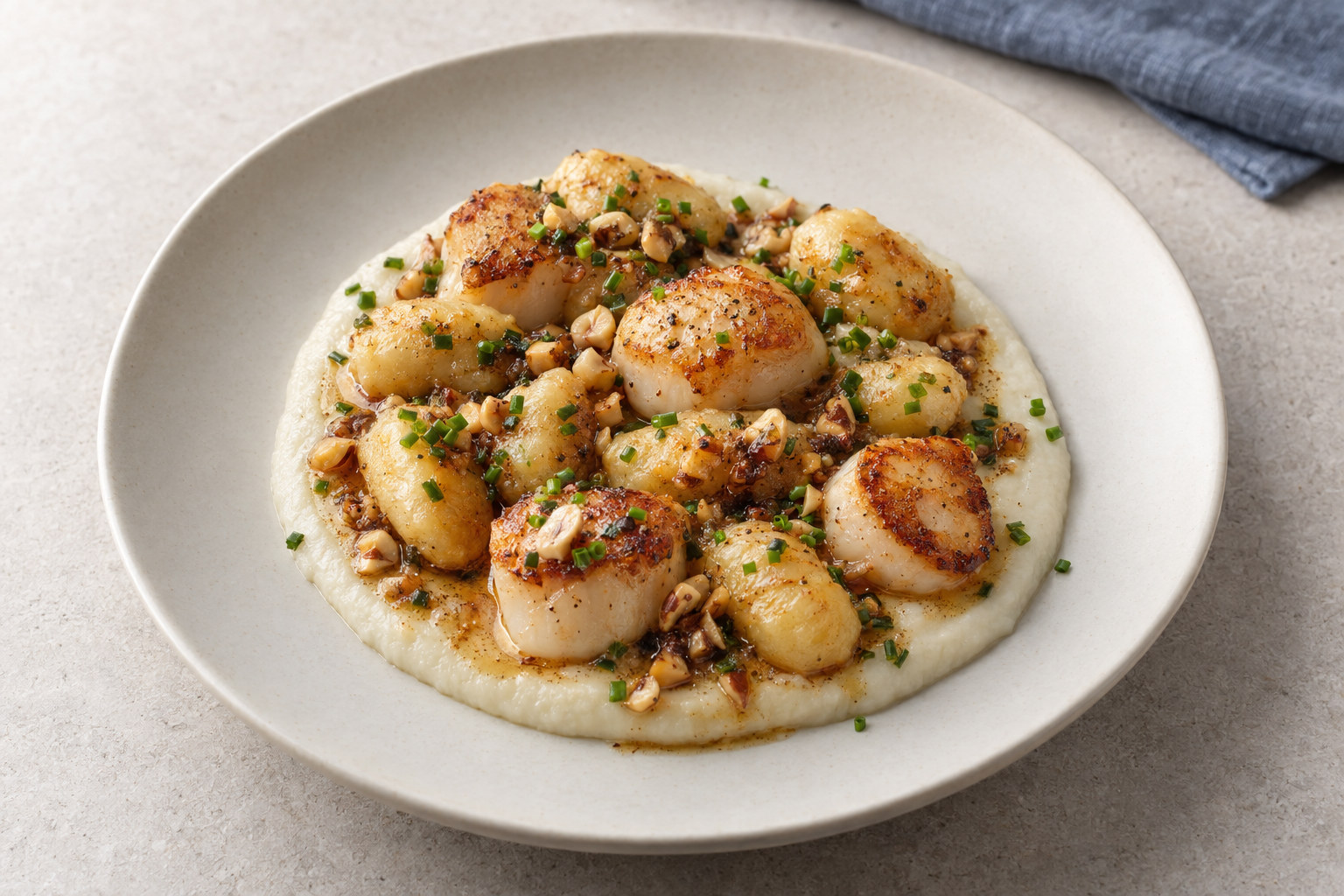
Delicate scallops and cauliflower purée, soft potato gnocchi, fragrant brown butter and crunchy hazelnuts.
Step-by-step method
What you will need
- 3 l pan with steamer insert and lid
- potato ricer
- 6 l pan for the gnocchi
- 28 cm frying pan
- 1.5 l saucepan for the purée
- small light-coloured pan for the butter
- stick blender
- one 40 × 30 cm tray
- slotted spoon
- 2 l metal bowl with a lid that sits securely on the rim of the 6 l pan
- heatproof mat away from the hob
- oven for warming plates
- three hob rings
- probe thermometer
- kitchen scales
- measuring jug
- knife and chopping board
- kettle for hot water to loosen the purée if needed
Before we start
First we steam the potatoes and shape all the gnocchi. Then we make the brown butter and pour it into a bowl. Only after that do we start the cauliflower purée and bring the gnocchi water to the boil at the same time; we use no more than three hob rings. The cooked gnocchi, tossed in butter, can wait for up to 15 minutes in a covered bowl over the hot water after the pan has been taken off the heat while we sear the scallops on the freed hob ring. We keep the purée covered over the lowest heat during this time.
Steam the potatoes
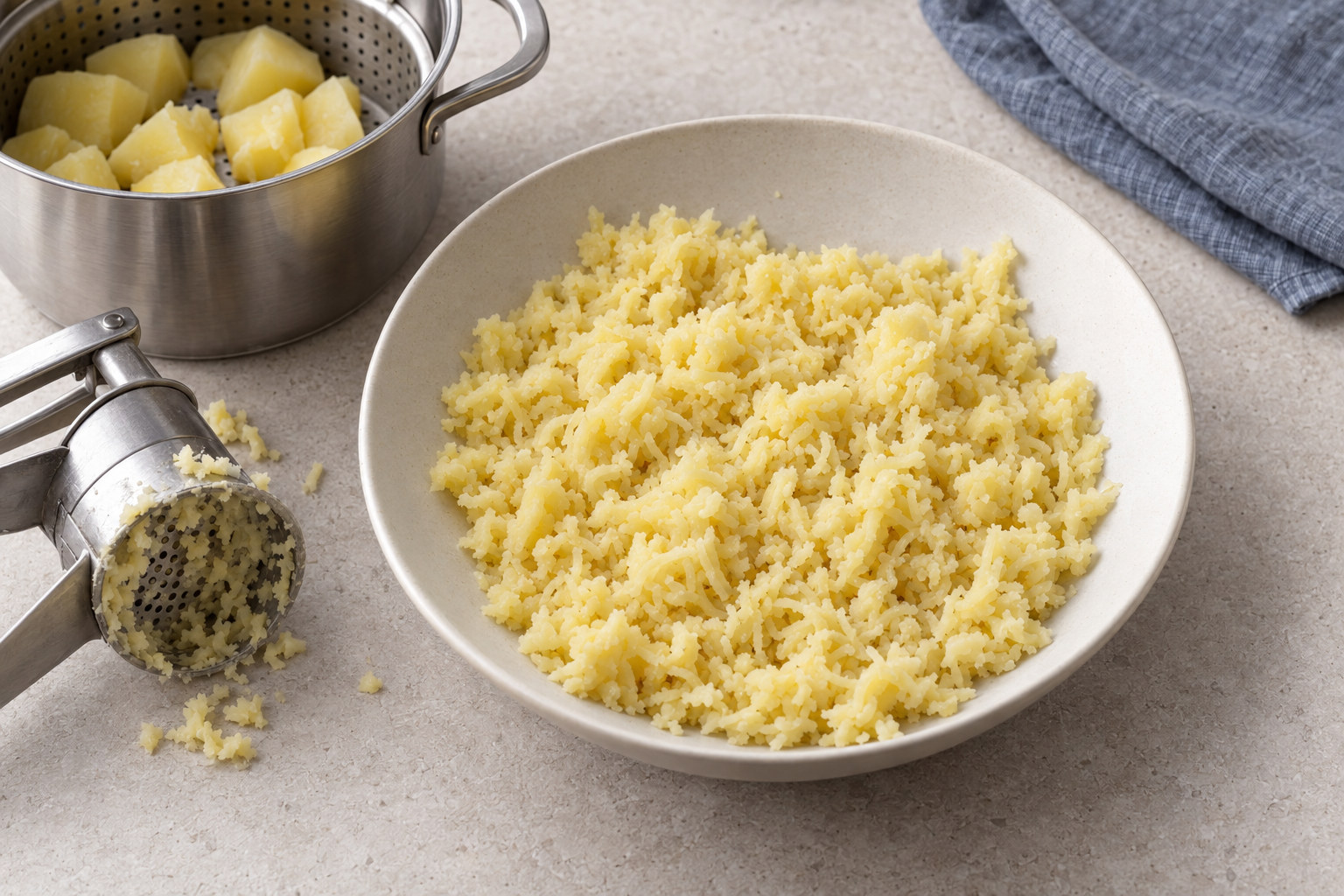
We peel the potatoes and cut them into 3 cm cubes. For 500 g, we use a 3 l pan. We pour water into the pan, keeping it below the steamer insert. We fit the insert and add the potatoes. We cover and steam for 20–30 minutes until tender, topping up with hot water if needed so the pan does not boil dry. We rice the potatoes, spread them out and leave them to steam-dry for 10 minutes. We weigh out exactly 400 g for the dough and keep any extra potatoes for another meal.
The riced potatoes are lukewarm and the surface is not wet.
Shape the gnocchi
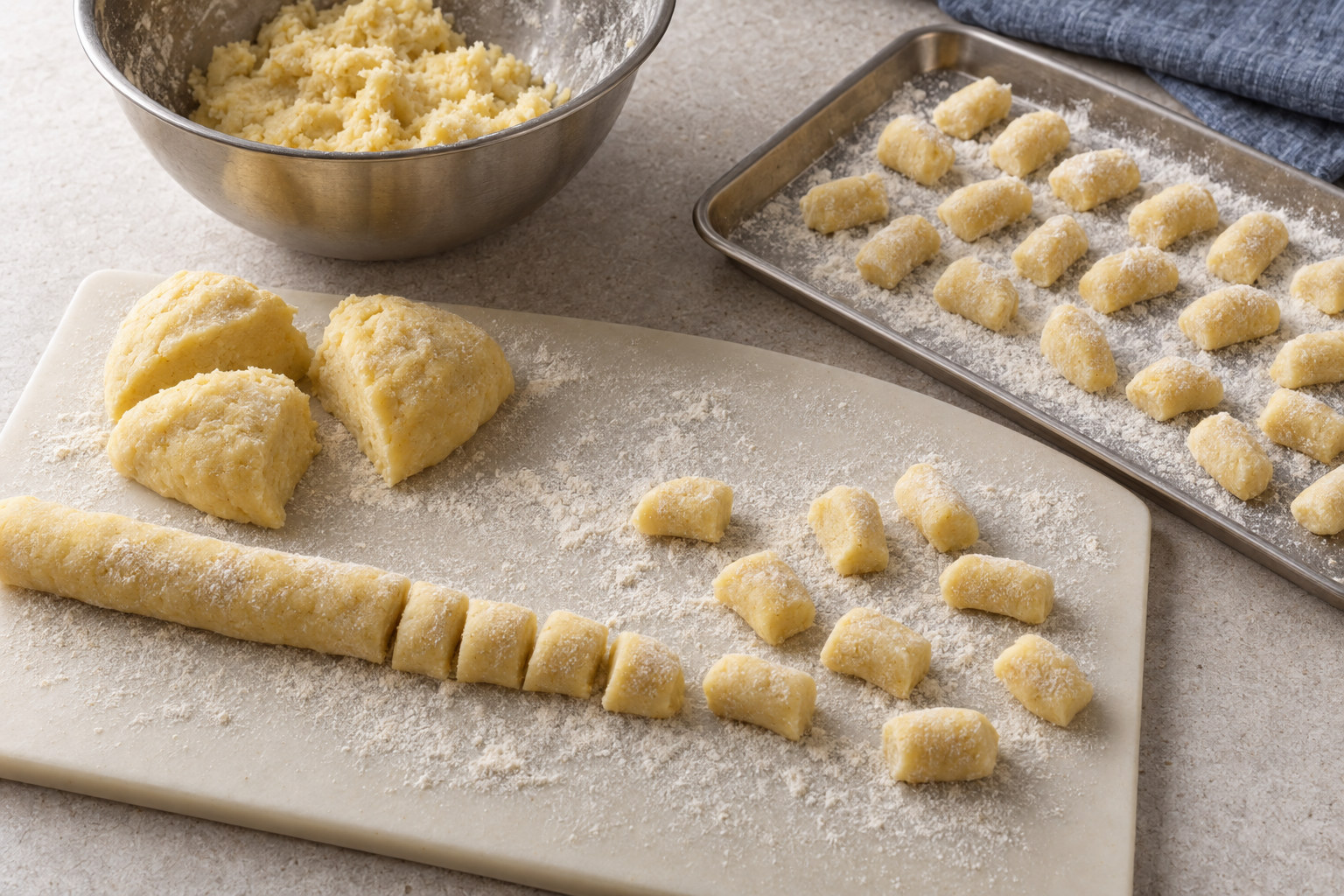
We add the egg yolk and all the plain flour to the weighed potatoes. We bring the mixture together briefly with a spatula and by hand; we do not knead it for long. We divide the dough into four equal pieces. On a lightly floured board, we roll each piece into a rope about 35 cm long and 2 cm thick, then cut it into ten pieces. This makes about 40 gnocchi. We use the coarse flour only for the board and tray, shaking off any excess. We space the gnocchi out on the floured tray and refrigerate them while the purée cooks.
The dough holds its shape but stays soft; kneading it for too long would make the gnocchi tough.
Make the brown butter
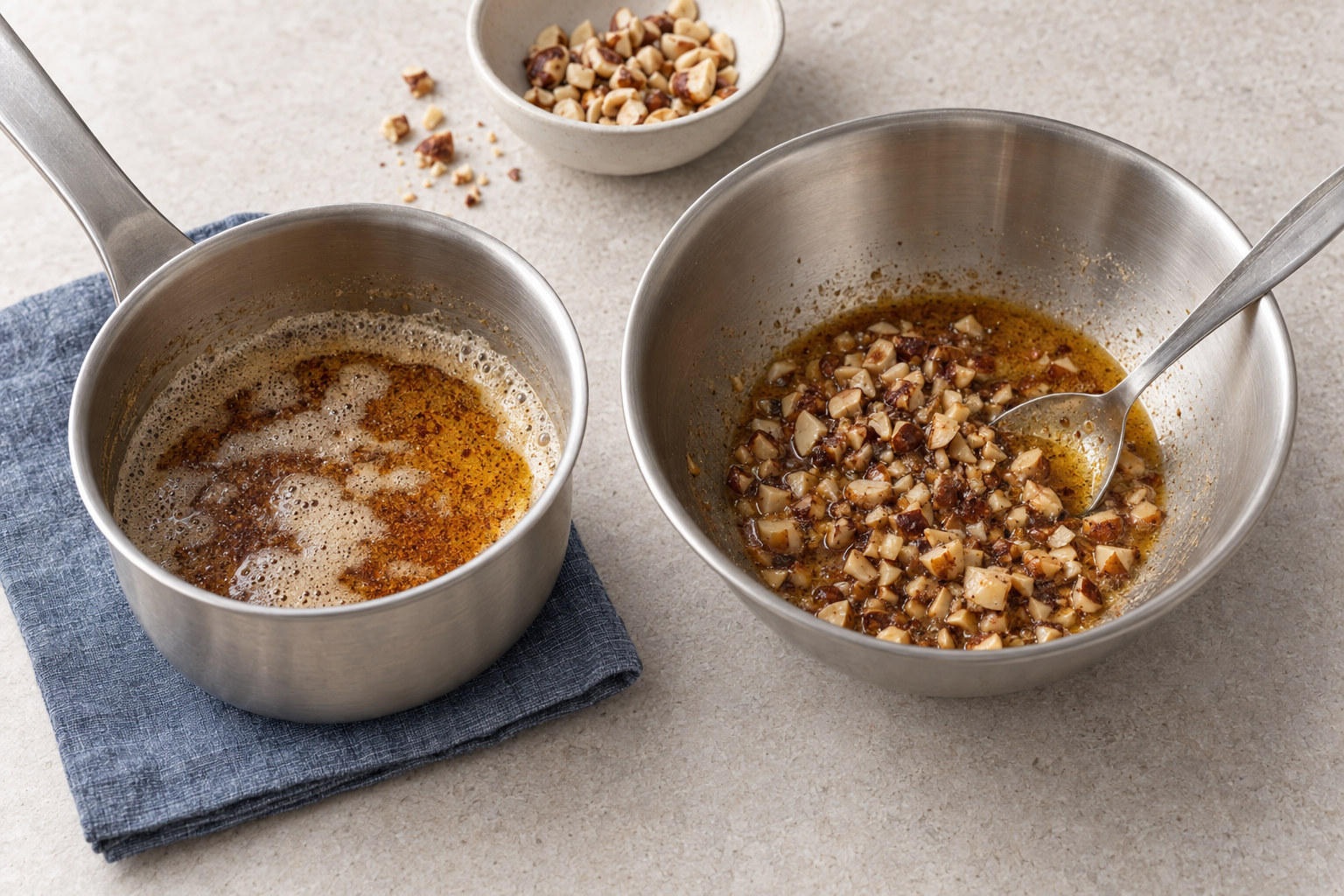
Before we start cooking the cauliflower and bring the gnocchi water to the boil, we melt the butter for the brown butter in a small, light-coloured pan. We heat it over a medium heat for 3–5 minutes, until the foam subsides and the milk solids turn hazelnut-brown. We pour it straight into a clean, larger bowl so it does not keep cooking, then stir in the roughly chopped toasted nuts. We keep the bowl near the hob. Now we start braising the cauliflower and heating the gnocchi water. We warm the plates in the oven for 10 minutes at 70 °C.
The butter smells nutty; black, bitter flecks mean it has burnt.
Cook the cauliflower and heat the water
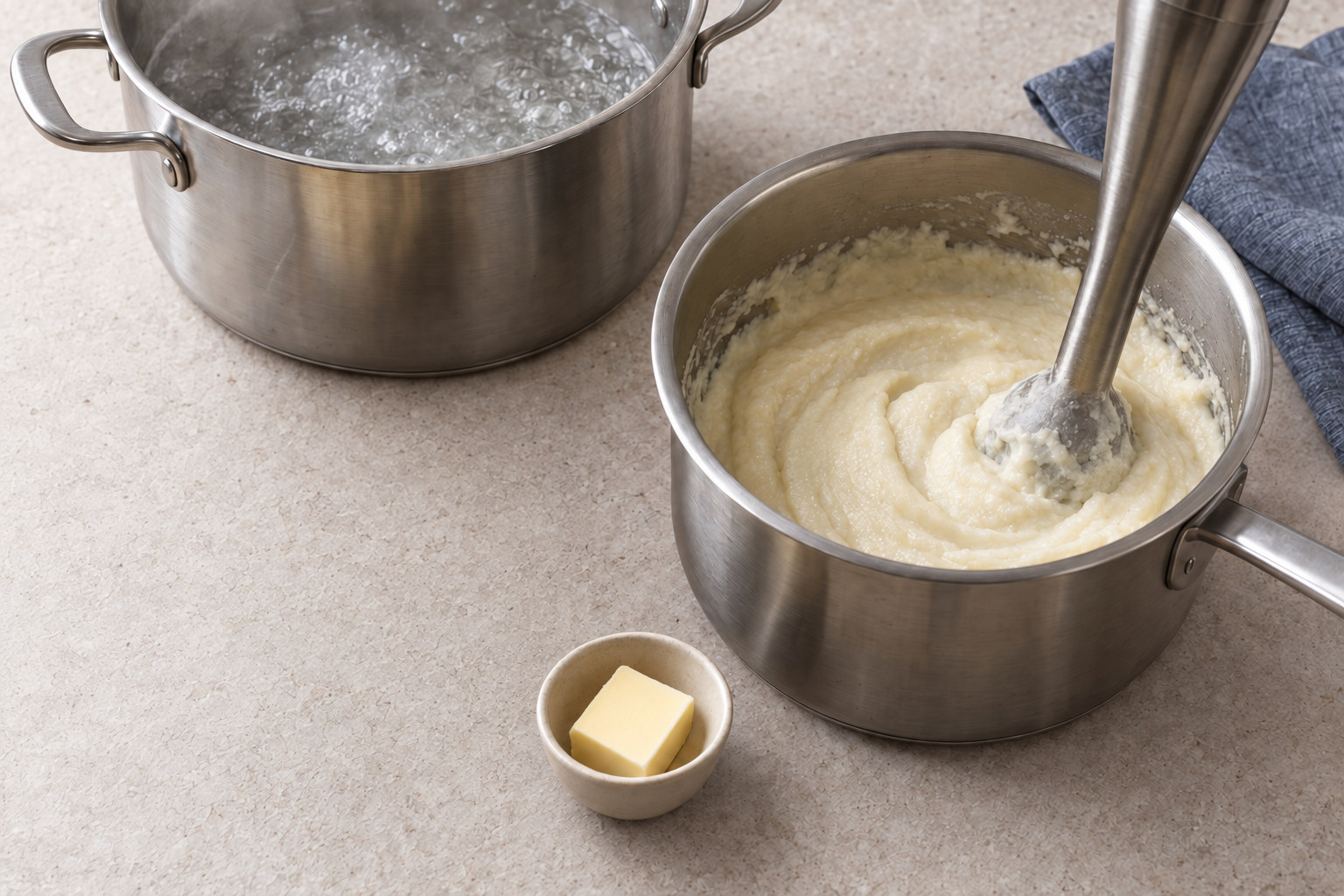
We wash the cauliflower, remove the leaves and tough core, and cut it into small 1–2 cm pieces. We cover it with the milk and 50 ml of water in a saucepan, put on the lid and braise gently for 15–20 minutes until completely tender, stirring a few times to stop the milk boiling over. At the same time, we bring enough unsalted water for the gnocchi to the boil in one pan. We blend the cooked cauliflower and its liquid with the butter until smooth. If the purée is thin, we let it reduce for 2–4 minutes. If it is thick, we loosen it a spoonful at a time with hot water from the reserve; we may not need it all. We cover it and keep it hot over the lowest heat, above 63 °C, for no more than 25 minutes.
The purée is completely smooth and slowly slips off a spoon without liquid separating.
Cook the gnocchi
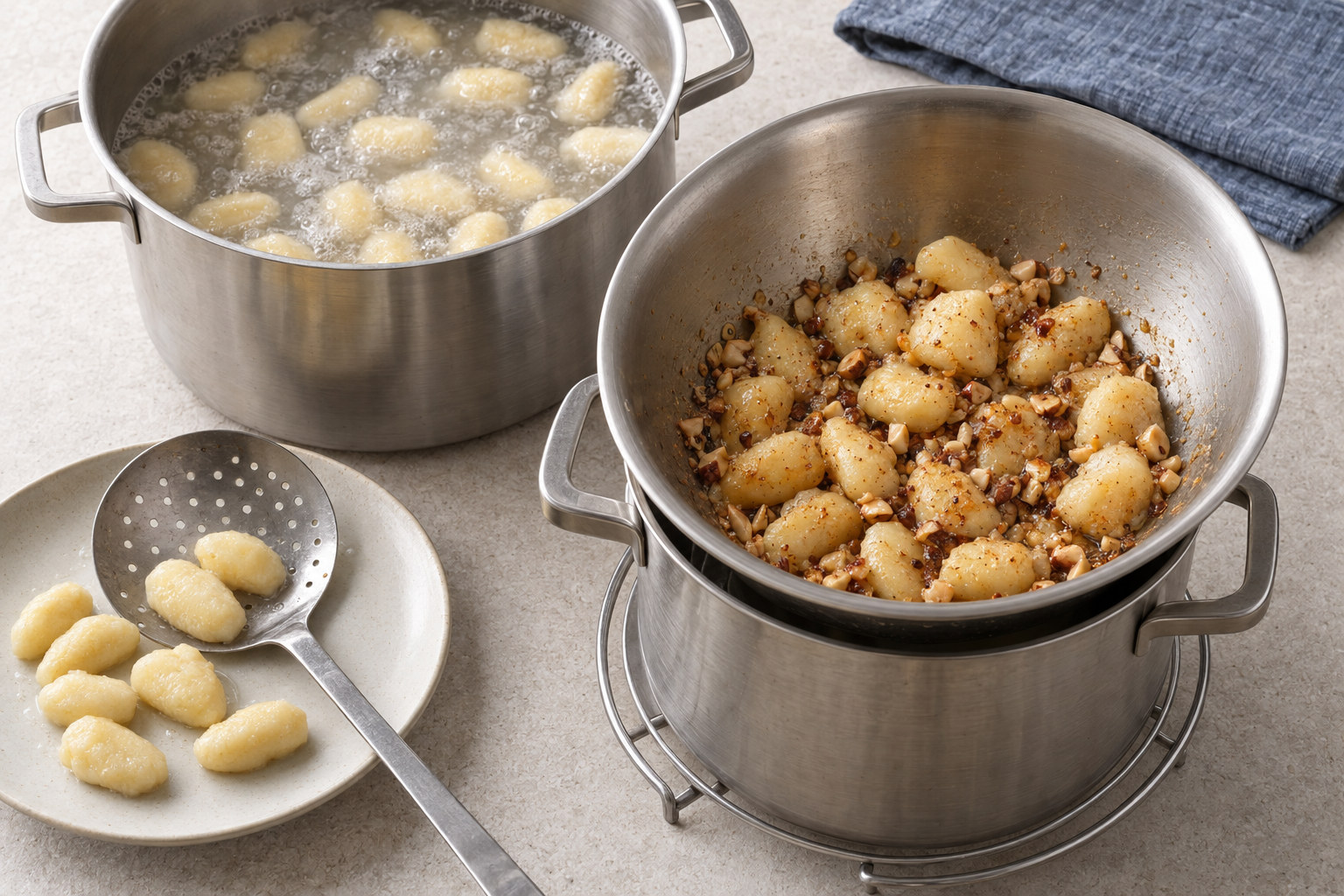
We lower all 40 gnocchi into the gently boiling water. We carefully loosen them from the bottom, wait for them to float, then cook for another 1–2 minutes; the total time is usually 3–5 minutes. We cut one open: there must be no raw layer of flour inside. We lift them out with a slotted spoon, drain them well and carefully toss them with the brown butter with hazelnuts. If they stick, we add hot cooking water a spoonful at a time, up to 30 ml. We loosely cover the bowl and keep the gnocchi warm for no more than 15 minutes over the pan of hot water. The bottom of the bowl must not touch the water. We move the pan off the hob onto a heatproof mat; the free hob ring is for the scallops.
The gnocchi stay soft and separate.
Sear the scallops
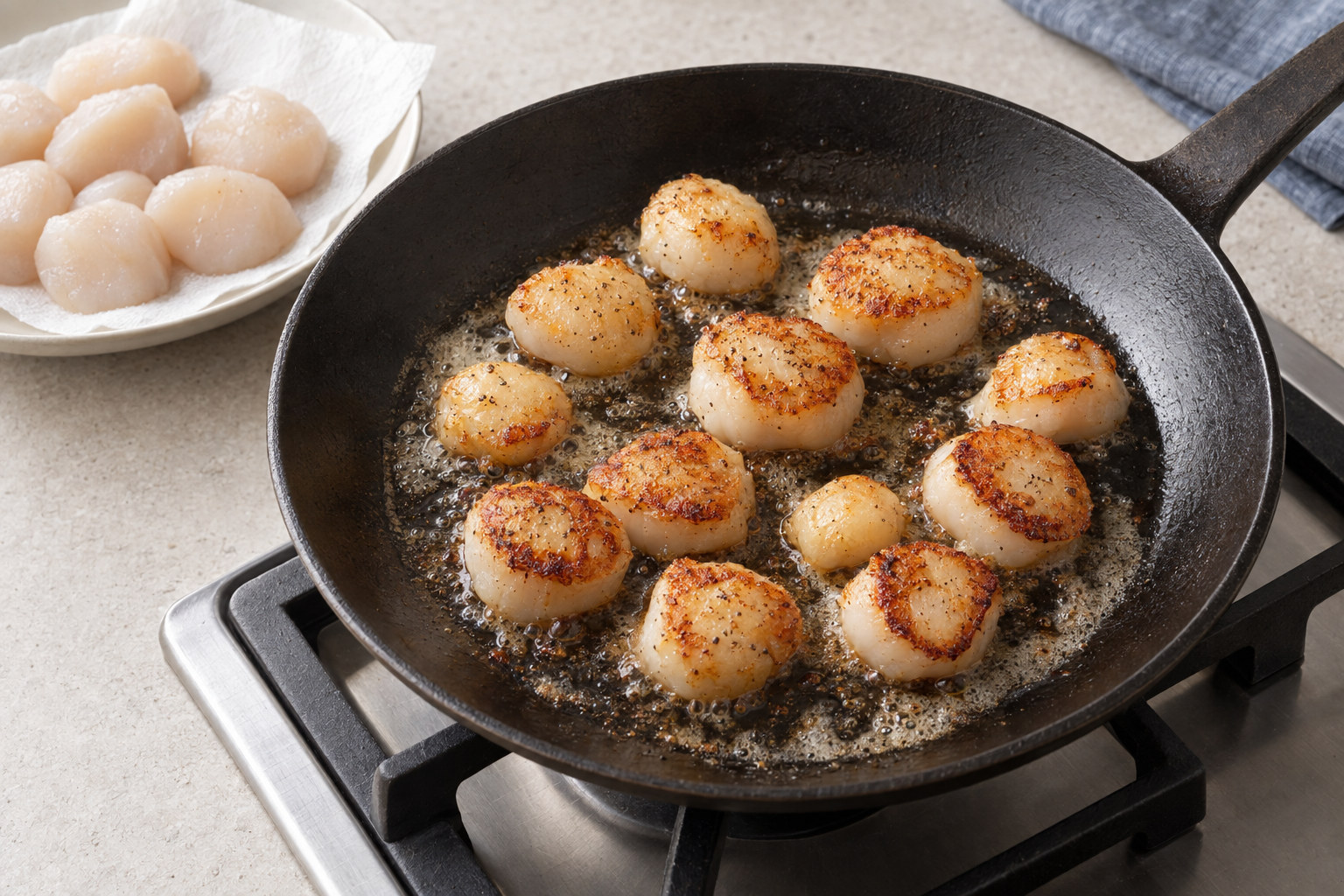
We remove any tough side muscle. We pat the scallops dry and slice larger ones horizontally into pieces no more than 2 cm thick; we leave smaller ones whole. We heat two teaspoons of oil in a 28 cm frying pan and arrange all the prepared scallops in a single layer. We sear them over a medium-high heat for about 1.5–2 minutes on the first side, turn them and cook for another 1–3 minutes, depending on thickness, until the centre reaches at least 63 °C. We check small pieces and remove them sooner. If they do not fit with small gaps between them, we cook them in two batches, keeping the first batch on a warmed plate for no more than 7 minutes. If the scallops release water, we remove cooked pieces. We do not leave them in the pan longer just to get a darker colour. We do not add salt; we finish with a little pepper.
Serve the scallops with the gnocchi
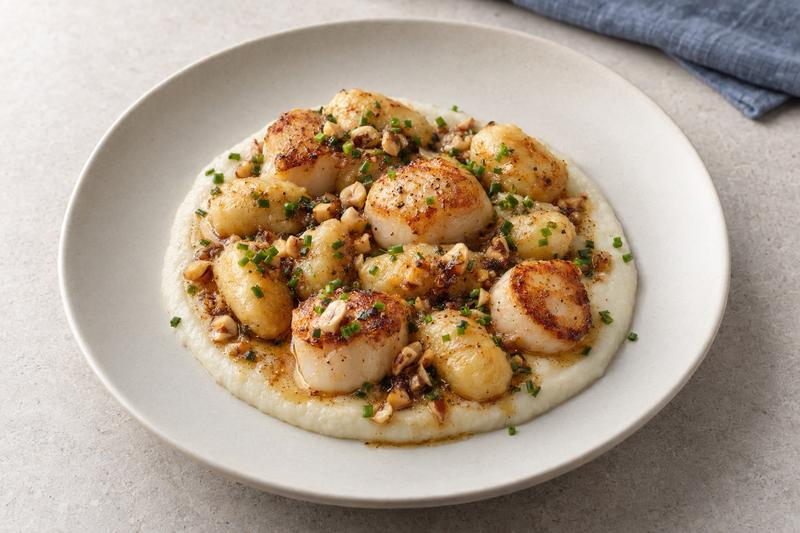
We wash, dry and chop the chives. We divide all the cauliflower purée, gnocchi and brown butter with hazelnuts from the bowl between two warm plates. We add the scallops, squeeze over the lemon juice and scatter with chopped chives. We serve straight away.
Tips from our kitchen
- We use 400 g of riced potatoes for two servings or 800 g for four; we keep any extra potatoes for another meal.
What to watch out for
- Kneading for too long or using too much flour for dusting will make the gnocchi tough.
- We pour the brown butter into another bowl as soon as it reaches the right colour; residual heat in the pan can burn it.
How we serve it
- We spread the cauliflower purée over warmed plates, add the gnocchi with the butter and nuts, then top with freshly seared scallops. We finish with lemon and chives and serve straight away.
Ingredient swaps
Hazelnuts
the same amount of toasted, unsalted almonds The nutty aroma will change, and the dish will contain almonds instead of hazelnuts.
Ingredient notes
- We use clean scallop meat. The product contains water, phosphates and 1.9 g of salt per 100 g, so we do not add salt to the scallops or the sides. We adjust the cooking time to the thickness of the pieces. We do not cook them for longer just to get a crust.
During preparation
- We keep the scallops chilled while preparing the sides. We do not place raw shellfish on trays holding the prepared gnocchi.
Our inspiration
Butter can develop a nutty aroma before we add any nuts at all. We heat it gently until the milk solids at the bottom turn golden and fragrant, then pour it into another bowl so it does not keep cooking. We add toasted hazelnuts too, for a genuine crunch alongside the soft gnocchi and smooth purée.
Similar recipes
Recipe for 4 people
We allow time to hand-shape 80 gnocchi and cook them in two pans at once.
Step-by-step method
Before we start
First we steam the potatoes and shape all the gnocchi. Then we make the brown butter and pour it into a bowl. Only after that do we start the cauliflower purée and bring the gnocchi water to the boil at the same time; we use no more than three hob rings. The cooked gnocchi, tossed in butter, can wait for up to 15 minutes in a covered bowl over the hot water after both pans have been taken off the heat while we sear the scallops on the freed hob rings. We keep the purée covered over the lowest heat during this time.
Steam the potatoes
We peel the potatoes and cut them into 3 cm cubes. For 1 kg, we use a pan of at least 5 l, 24 cm in diameter, with a deep enough steamer insert. We pour water into the pan, keeping it below the insert. We fit the insert and add the potatoes. We cover and steam for 20–30 minutes until tender, topping up with hot water if needed so the pan does not boil dry. We rice the potatoes, spread them out and leave them to steam-dry for 10 minutes. We weigh out exactly 800 g for the dough and keep any extra potatoes for another meal.
The riced potatoes are lukewarm and the surface is not wet.
Shape the gnocchi
We add the egg yolks and all the plain flour to the weighed potatoes. We bring the mixture together briefly with a spatula and by hand; we do not knead it for long. We divide the dough into eight equal pieces. On a lightly floured board, we roll each piece into a rope about 35 cm long and 2 cm thick, then cut it into ten pieces. This makes about 80 gnocchi. We use the coarse flour only for the board and trays, shaking off any excess. We space the gnocchi out on two floured trays and refrigerate them while the purée cooks.
The dough holds its shape but stays soft; kneading it for too long would make the gnocchi tough.
Make the brown butter
Before we start cooking the cauliflower and bring the gnocchi water to the boil, we melt the butter for the brown butter in a small, light-coloured pan. We heat it over a medium heat for 3–5 minutes, until the foam subsides and the milk solids turn hazelnut-brown. We pour it straight into a clean, larger bowl so it does not keep cooking, then stir in the roughly chopped toasted nuts. We keep the bowl near the hob. Now we start braising the cauliflower and heating the gnocchi water. We warm the plates in the oven for 10 minutes at 70 °C.
The butter smells nutty; black, bitter flecks mean it has burnt.
Cook the cauliflower and heat the water
We wash the cauliflower, remove the leaves and tough core, and cut it into small 1–2 cm pieces. We cover it with the milk and 100 ml of water in a saucepan, put on the lid and braise gently for 15–20 minutes until completely tender, stirring a few times to stop the milk boiling over. At the same time, we bring enough unsalted water for the gnocchi to the boil in both pans. We blend the cooked cauliflower and its liquid with the butter until smooth. If the purée is thin, we let it reduce for 2–4 minutes. If it is thick, we loosen it a spoonful at a time with hot water from the reserve; we may not need it all. We cover it and keep it hot over the lowest heat, above 63 °C, for no more than 25 minutes.
The purée is completely smooth and slowly slips off a spoon without liquid separating.
Cook the gnocchi
We lower 40 gnocchi into each pan of gently boiling water. We carefully loosen them from the bottom, wait for them to float, then cook for another 1–2 minutes; the total time is usually 3–5 minutes. We cut one open: there must be no raw layer of flour inside. We lift them out with a slotted spoon, drain them well and carefully toss them with the brown butter with hazelnuts. If they stick, we add hot cooking water a spoonful at a time, up to 60 ml. We loosely cover the bowl and keep the gnocchi warm for no more than 15 minutes over one pan of hot water. The bottom of the bowl must not touch the water. We move both pans off the hob onto heatproof mats; the free hob rings are for the scallops.
The gnocchi stay soft and separate.
Sear the scallops
We remove any tough side muscle. We pat the scallops dry and slice larger ones horizontally into pieces no more than 2 cm thick; we leave smaller ones whole. We heat two teaspoons of oil in each of two 28 cm frying pans. We divide the scallops between the pans in a single layer. We sear them over a medium-high heat for about 1.5–2 minutes on the first side, turn them and cook for another 1–3 minutes, depending on thickness, until the centre reaches at least 63 °C. We check small pieces and remove them sooner. If they do not fit with small gaps between them, we cook them in two batches, keeping the first batch on a warmed plate for no more than 7 minutes. If the scallops release water, we remove cooked pieces. We do not leave them in the pan longer just to get a darker colour. We do not add salt; we finish with a little pepper.
Serve the scallops with the gnocchi
We wash, dry and chop the chives. We divide all the cauliflower purée, gnocchi and brown butter with hazelnuts from the bowl between four warm plates. We add the scallops, squeeze over the lemon juice and scatter with chopped chives. We serve straight away.