
From the Boxxi kitchen · Inspired by southern Italy
Homemade cavatelli with octopus in tomato sauce
Homemade cavatelli have a firm bite and little hollows that catch the thick tomato sauce. We shape the semolina-and-water dough with our thumbs, then toss the pasta with tender octopus, finely diced vegetables and parsley.
We allow thirty minutes for the dough to rest, as well as time for shaping it by hand. We make the tomato base while the dough rests.
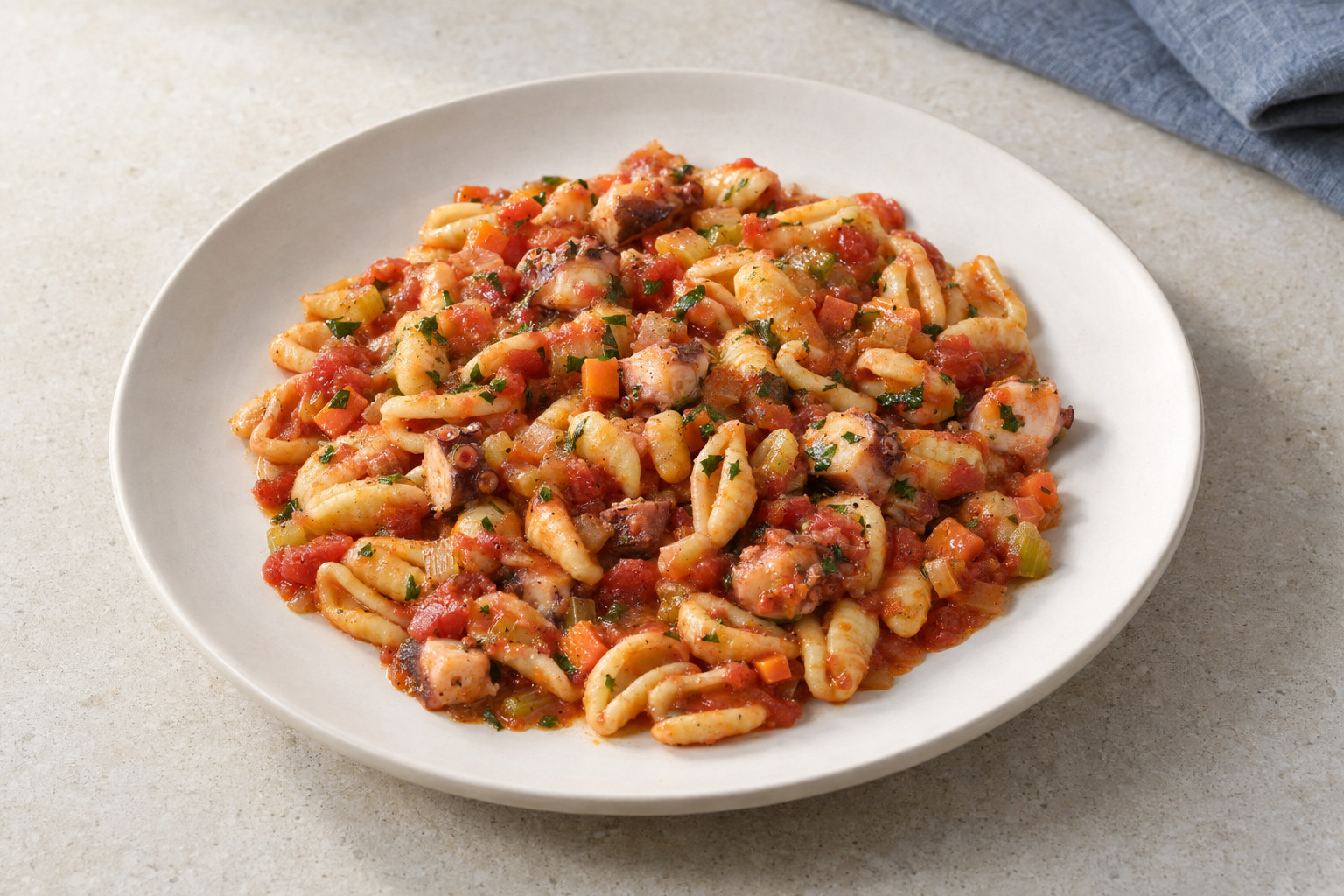
Sweet, softened vegetables, tender octopus and the freshness of white wine complement the firm homemade pasta.
Step-by-step method
What you will need
- kitchen scales
- knife and chopping board
- food thermometer with a fine tip
- bowl and kneading surface
- deep 28 cm, 3 l frying pan with a lid
- 5 l pot
- 40 × 30 cm tray
- slotted spoon
- two hob rings
Before we start
The tomato base can wait, covered, until we finish shaping the pasta. We start heating the pasta water about twenty minutes before shaping is finished, and add the octopus only once the sauce is hot again. We do not leave the cooked cavatelli sitting in the saucepan.
Knead the semolina dough
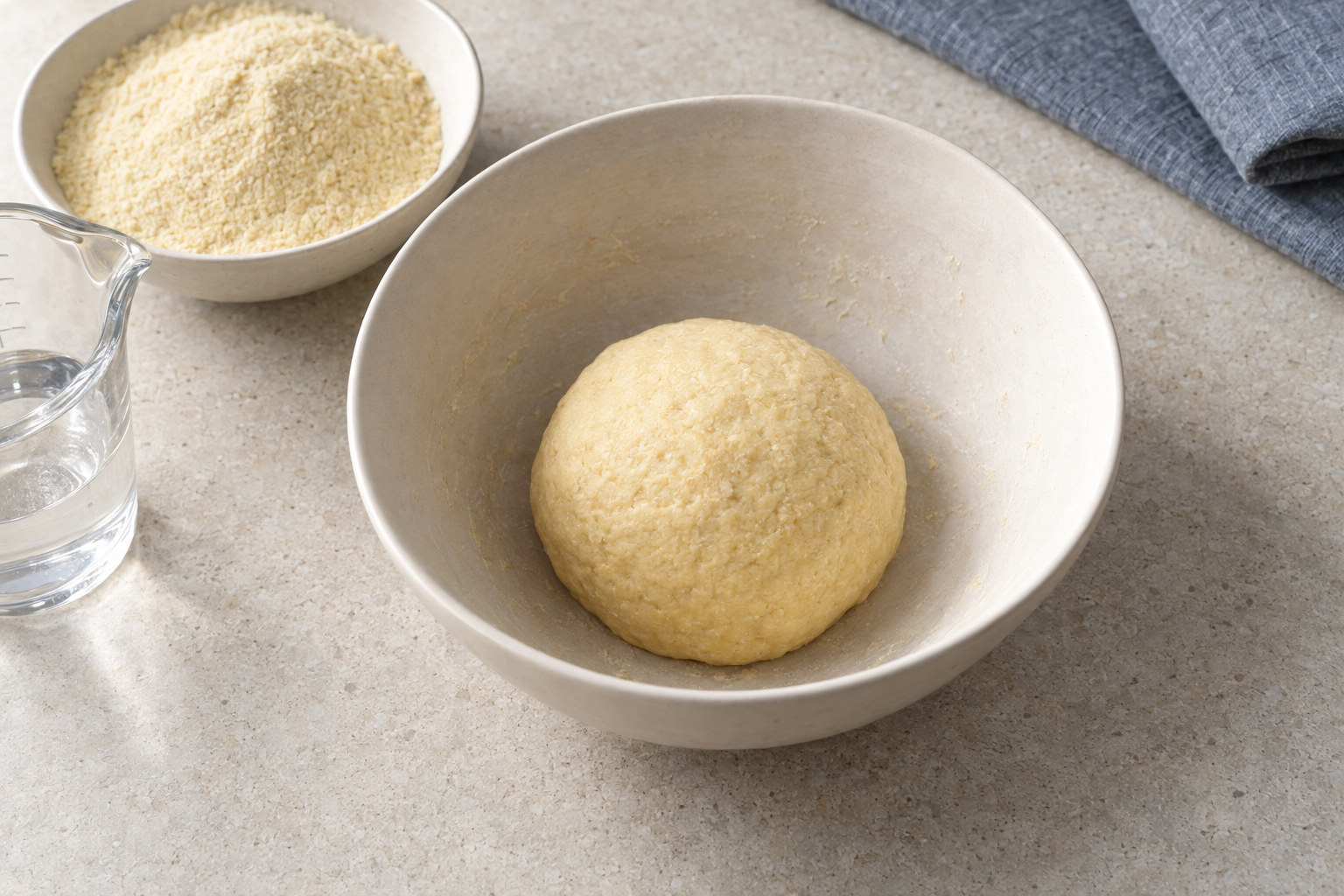
We combine the semolina with 110 ml water and knead for 8–10 minutes, until the dough holds together and feels elastic. We cover it with a bowl and leave it to rest for 30 minutes. We keep the dusting semolina out of the dough for now.
The dough is firm, smooth and does not tear when pressed.
Cook the tomato base
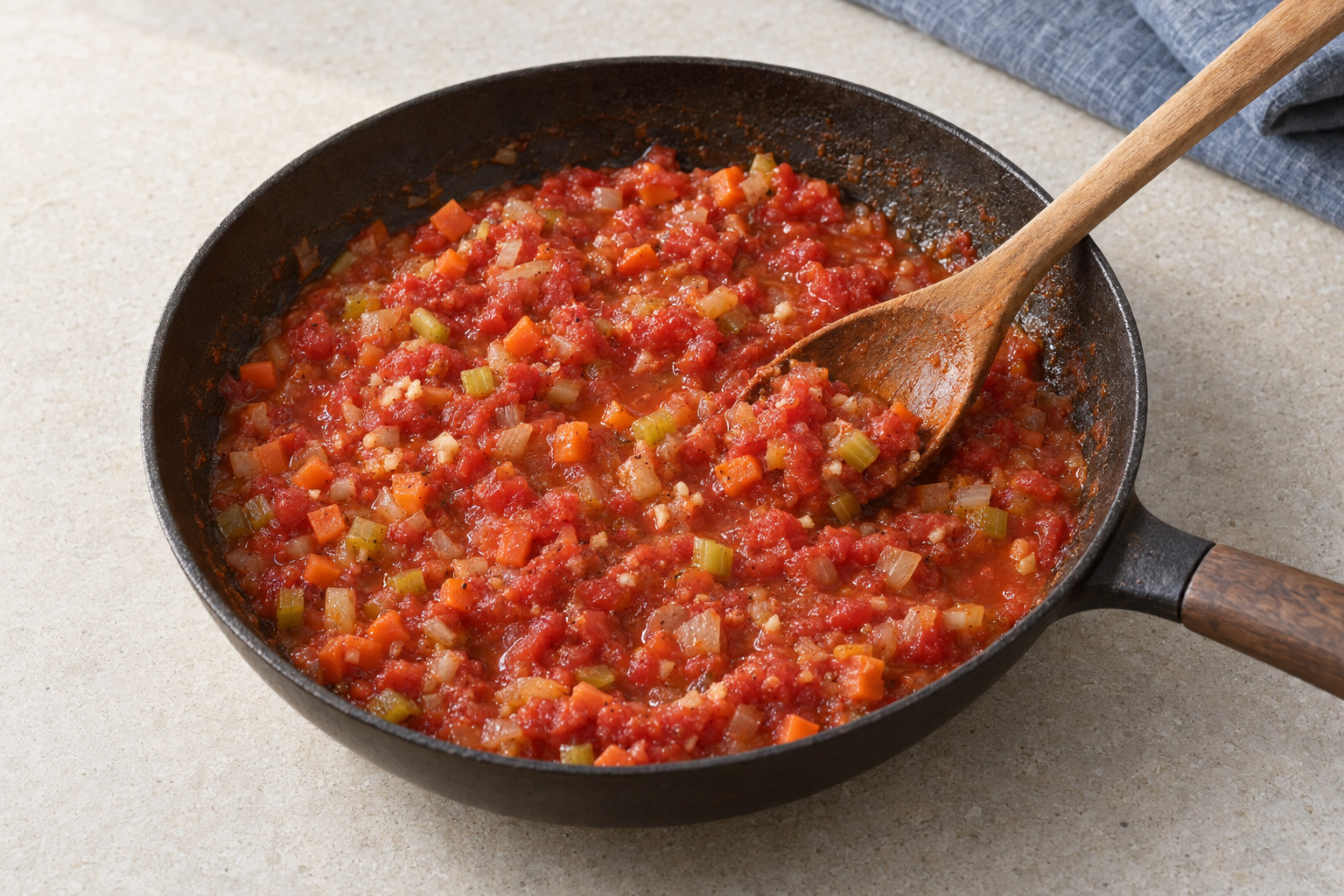
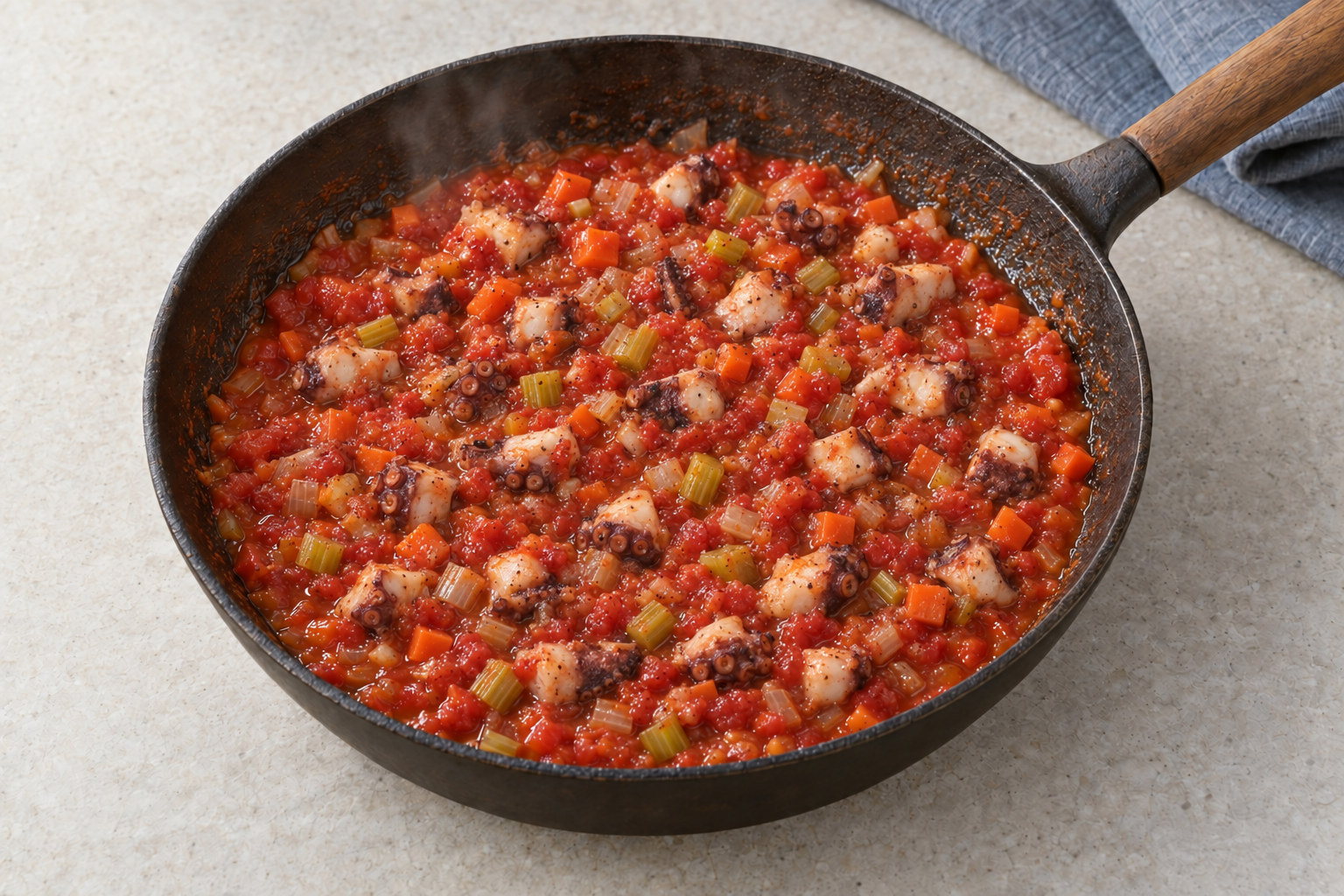
We peel the onion, carrot and garlic and wash the celery. We chop the onion, carrot and celery into 3 mm dice. In a deep frying pan, we soften the vegetables in a tablespoon of oil over a medium heat for 7–9 minutes. We add the chopped garlic, followed after 30 seconds by the wine, and let it reduce for 2–3 minutes. We stir in the tomatoes, 60 ml water, ¼ tsp salt and the pepper. We simmer gently for 18–22 minutes, stirring occasionally. We then cover the base and set it aside until we finish shaping the pasta.
The base clings to a spoon.
Shape the cavatelli
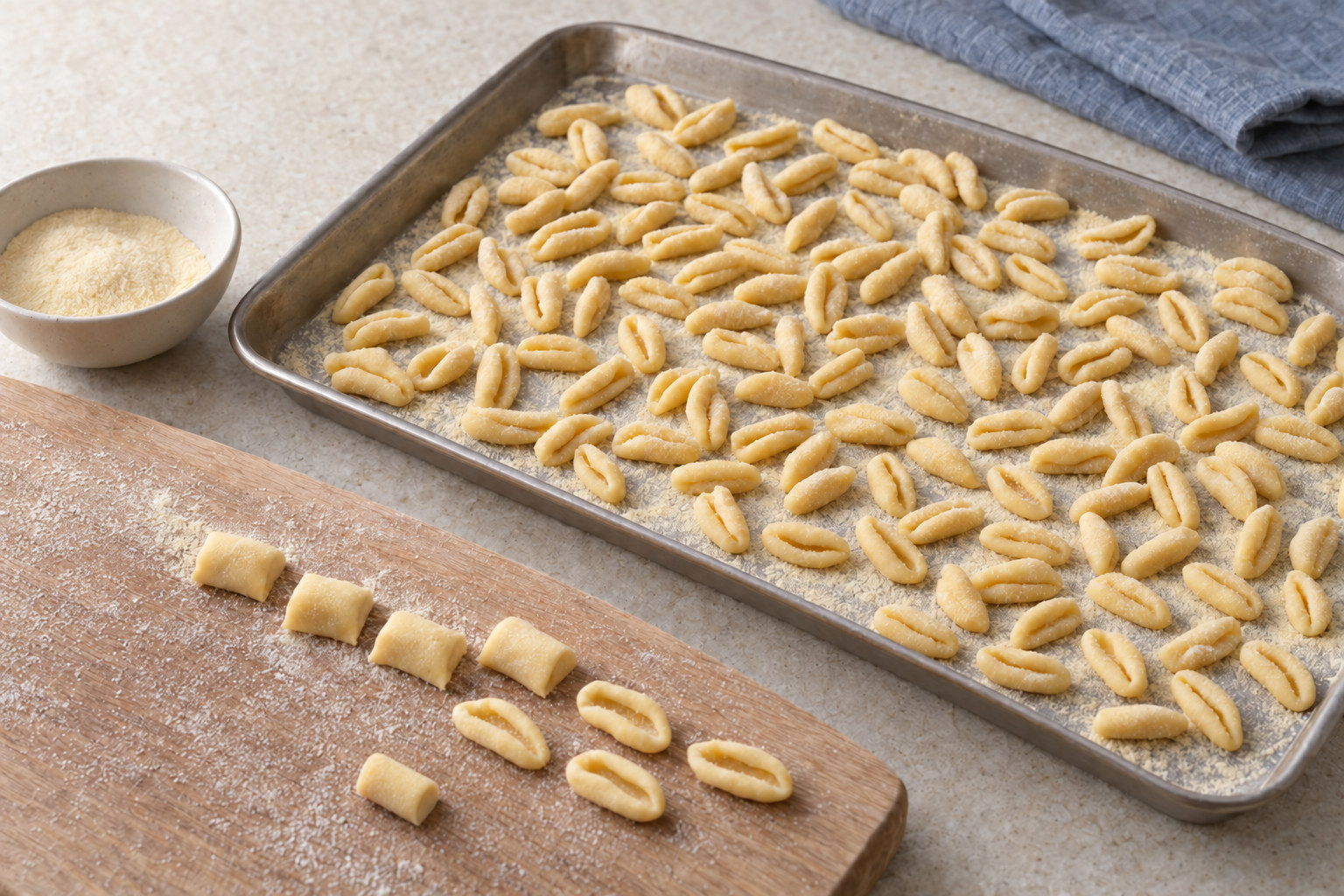
We divide the dough into 12 equal pieces, working with one at a time and keeping the rest covered. We roll each into a rope about 15 cm long and 12 mm thick, cut it into 10 pieces, then press each piece with our thumb and drag it a little towards us. We make about 120 small hollow curls. We spread them in a single layer on one large tray, dusted with some of the measured semolina, using the rest only if the dough sticks.
The hollow is open and the thickest wall is about 3 mm thick.
Heat the octopus in the sauce
We cut the drained tentacles crossways into pieces about 1.5–2 cm long, leaving the thin tips a little longer. We bring the sauce back to a gentle simmer, add the octopus and heat it through for about 4–6 minutes, stirring. We check that a thicker piece reaches at least 70 °C and hold it at that temperature for 2 minutes. We cover the pan and keep the sauce hot on the lowest heat, for no longer than it takes to cook the pasta.
The sauce catches in the folds of the pieces; we do not braise the meat for any longer.
Cook the cavatelli
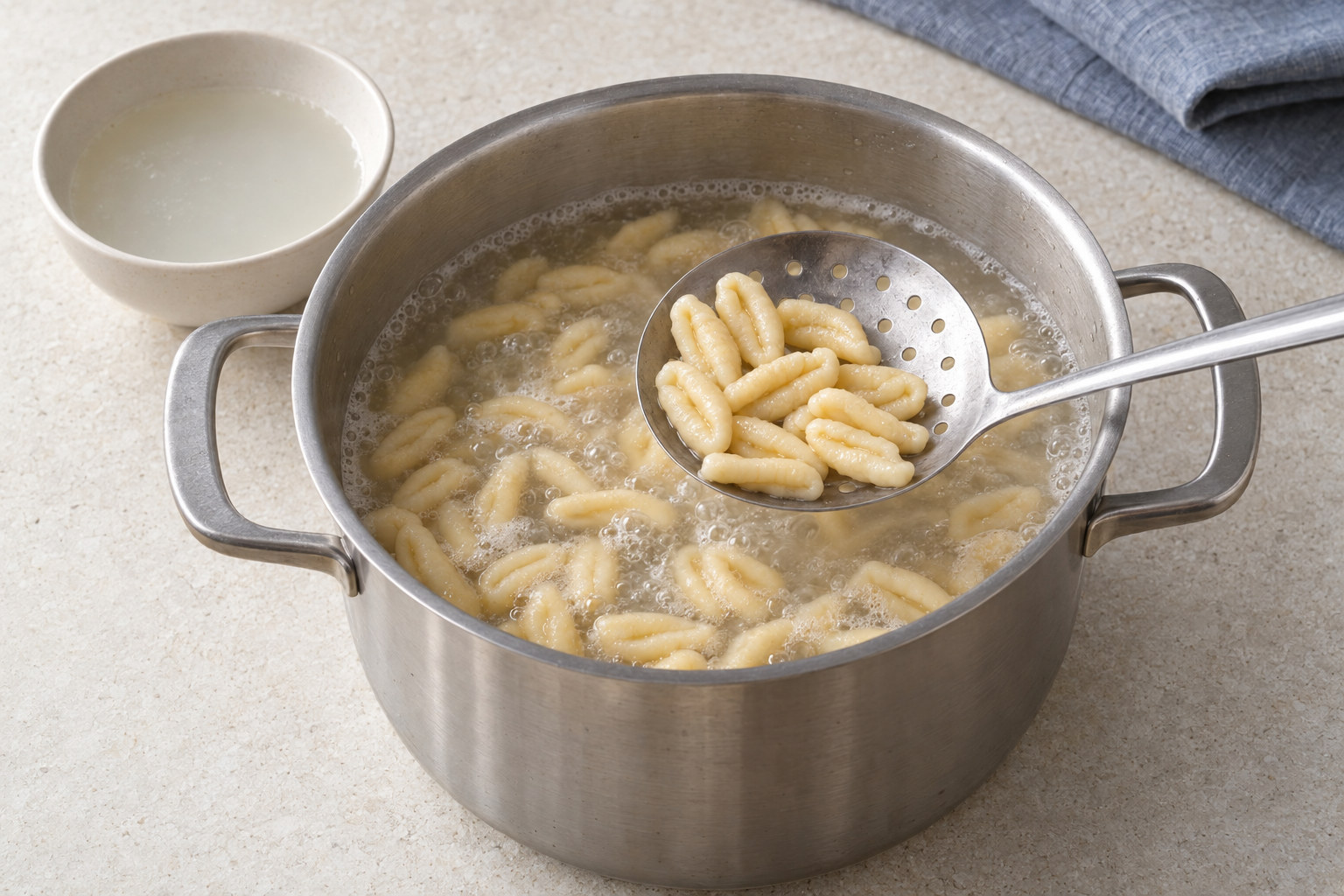
We bring plenty of water with 2 tsp salt to a gentle boil in a saucepan. We cook all the cavatelli together for about 5–7 minutes, tasting the thickest part of a piece to check it is tender with no floury centre. Before lifting them out, we reserve 100 ml cooking water, then transfer the pasta to the sauce with a slotted spoon.
The pieces remain separate and the water bubbles gently.
Combine the pasta and sauce
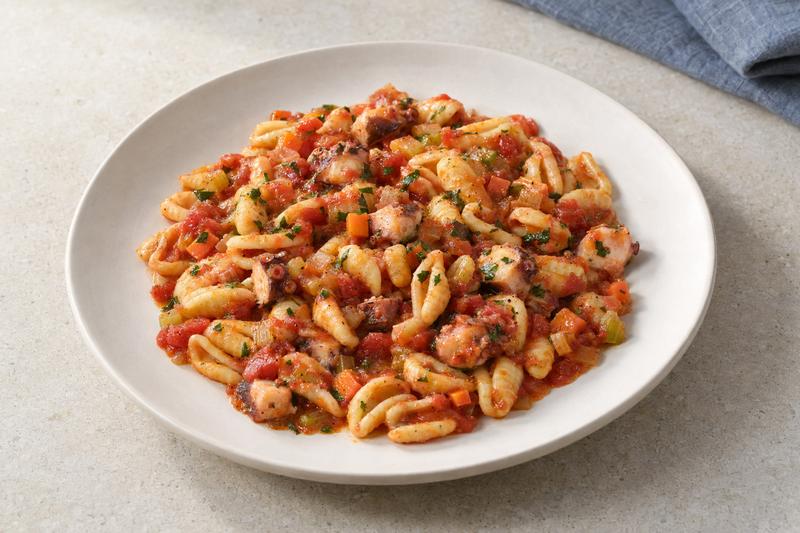
We wash, dry and chop the parsley. We return the pan to a medium heat and stir gently for 1–2 minutes. We add the reserved pasta water in 20 ml additions, using only enough to coat the pasta lightly with sauce. We stir in the chopped parsley and divide everything between 2 warmed plates, sharing out all the remaining sauce too.
The sauce is glossy, with no watery liquid pooling on the plate.
Tips from our kitchen
- We shape one piece of dough at a time, keeping the rest covered.
- We taste the thickest part of a piece of pasta to check it is cooked; floating to the surface alone is not enough.
What to watch out for
- We do not add all the dusting semolina to the dough; we use it only as needed when shaping.
- We loosen the sauce a little at a time, just enough to coat the pasta lightly.
How we serve it
- We serve the cavatelli on warmed plates, sharing out all the sauce and octopus with them.
Ingredient swaps
dry white wine
the same volume of water and 1 tsp (5 ml) lemon juice for 2 servings or 2 tsp (10 ml) for 4 servings We add the lemon at the end; the dish stays fresh-tasting but loses the aroma of wine.
Ingredient notes
- We use already cooked Octopus vulgaris tentacles and all of the meat once drained.
- We only heat the cooked tentacles through; another long cooking would make them tough.
During preparation
- We use clean utensils. We keep the tentacles at 0–2 °C for no more than one day and take them out just before preparation.
- We measure the temperature inside several of the largest pieces of meat, rather than putting the thermometer tip only into the surrounding sauce.
Our inspiration
We need neither a pasta machine nor a cutter to make cavatelli. Pressing and dragging a small piece of semolina dough with our thumb creates an open hollow. This gives the pasta its shape and a place to hold the sauce. In our cavatelli, it catches the tomatoes and finely diced vegetables from the octopus ragù.
Similar recipes
Recipe for 4 people
Step-by-step method
Before we start
The tomato base can wait, covered, until we finish shaping the pasta. We start heating the pasta water about twenty minutes before shaping is finished, and add the octopus only once the sauce is hot again. We do not leave the cooked cavatelli sitting in the saucepan.
Knead the semolina dough
We combine the semolina with 220 ml water and knead for 8–10 minutes, until the dough holds together and feels elastic. We cover it with a bowl and leave it to rest for 30 minutes. We keep the dusting semolina out of the dough for now.
The dough is firm, smooth and does not tear when pressed.
Cook the tomato base
We peel the onion, carrot and garlic and wash the celery. We chop the onion, carrot and celery into 3 mm dice. In a deep frying pan, we soften the vegetables in two tablespoons of oil over a medium heat for 7–9 minutes. We add the chopped garlic, followed after 30 seconds by the wine, and let it reduce for 2–3 minutes. We stir in the tomatoes, 100 ml water, ½ tsp salt and the pepper. We simmer gently for 18–22 minutes, stirring occasionally. We then cover the base and set it aside until we finish shaping the pasta.
The base clings to a spoon.
Shape the cavatelli
We divide the dough into 24 equal pieces, working with one at a time and keeping the rest covered. We roll each into a rope about 15 cm long and 12 mm thick, cut it into 10 pieces, then press each piece with our thumb and drag it a little towards us. We make about 240 small hollow curls. We spread them in a single layer on two large trays, dusted with some of the measured semolina, using the rest only if the dough sticks.
The hollow is open and the thickest wall is about 3 mm thick.
Heat the octopus in the sauce
We cut the drained tentacles crossways into pieces about 1.5–2 cm long, leaving the thin tips a little longer. We bring the sauce back to a gentle simmer, add the octopus and heat it through for about 4–6 minutes, stirring. We check that a thicker piece reaches at least 70 °C and hold it at that temperature for 2 minutes. We cover the pan and keep the sauce hot on the lowest heat, for no longer than it takes to cook the pasta.
The sauce catches in the folds of the pieces; we do not braise the meat for any longer.
Cook the cavatelli
We bring plenty of water with 3 tsp salt to a gentle boil in a saucepan. We cook the cavatelli in two batches of about 120 pieces, each for 5–7 minutes, tasting the thickest part of a piece to check it is tender with no floury centre. Before lifting them out, we reserve 180 ml cooking water, then transfer the pasta to the sauce with a slotted spoon. We leave the first batch covered in the sauce off the heat for no more than 8 minutes while the second batch cooks.
The pieces remain separate and the water bubbles gently.
Combine the pasta and sauce
We wash, dry and chop the parsley. We return the pan to a medium heat and stir gently for 1–2 minutes. We add the reserved pasta water in 20 ml additions, using only enough to coat the pasta lightly with sauce. We stir in the chopped parsley and divide everything between 4 warmed plates, sharing out all the remaining sauce too.
The sauce is glossy, with no watery liquid pooling on the plate.