
French-inspired · French terrine technique, our own keta salmon combination
Baked keta salmon terrine with horseradish and cucumber salad
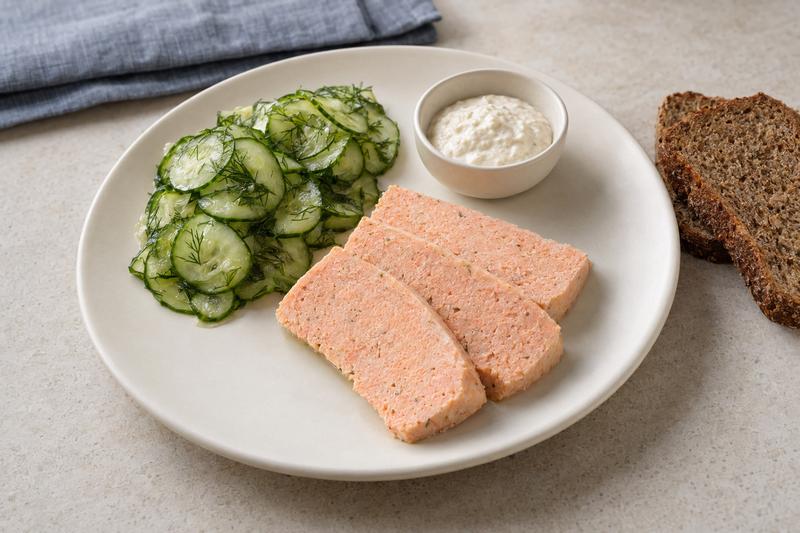
Cold slices of delicate keta salmon terrine are served with horseradish yoghurt and thinly sliced cucumber with dill. Crème fraîche softens the flavour of the fish, lemon zest adds fragrance, and rye bread completes the meal. We make the terrine a day ahead; before serving, all that remains is to prepare the fresh accompaniments and cut neat slices.
The total time includes a long chilling period. It is easiest to make the terrine a day ahead.
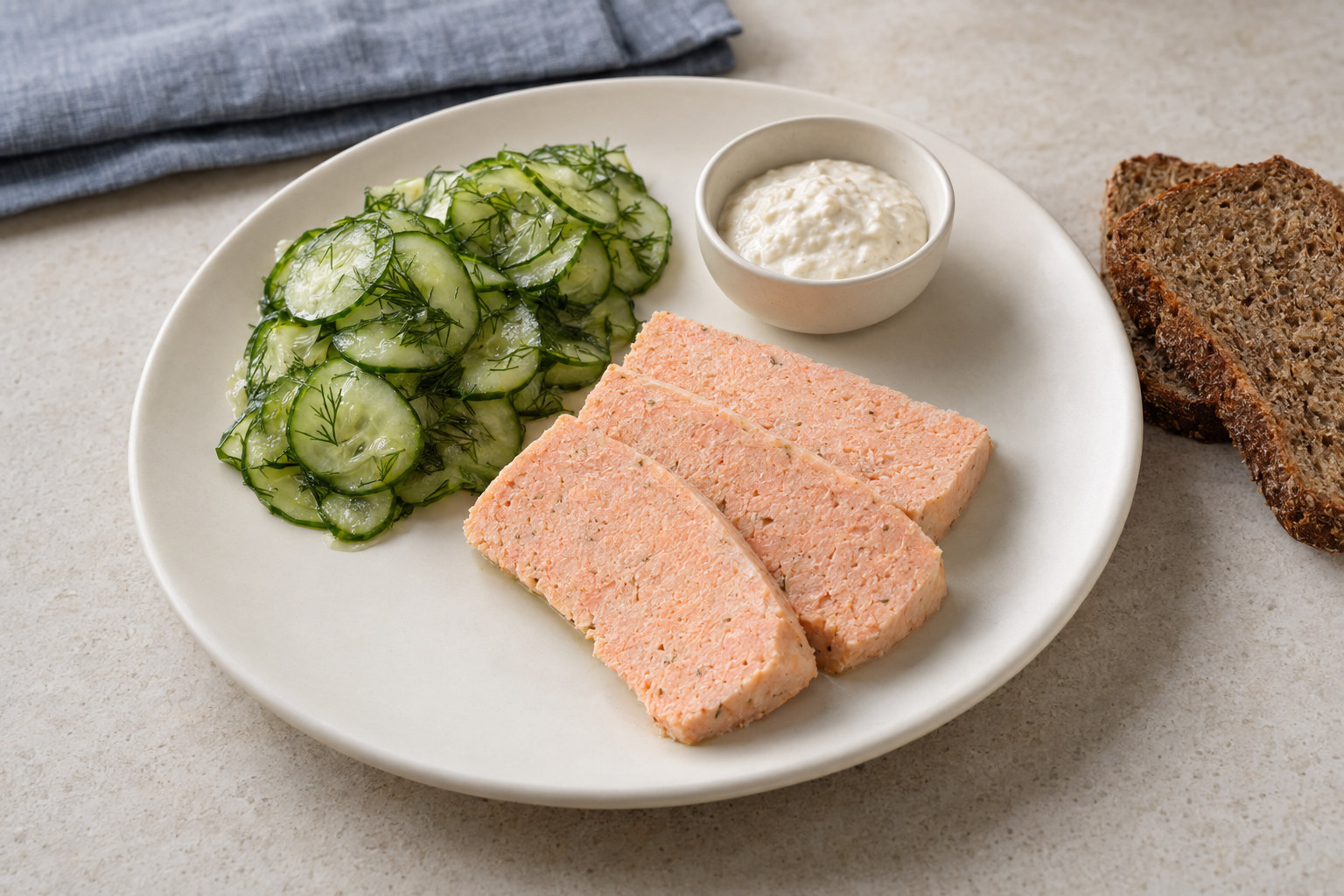
Crème fraîche gives the salmon terrine a gentle, creamy flavour. Horseradish yoghurt adds a sharp kick, while cucumber with cider vinegar brings a fresh tang.
Step-by-step method
What you will need
- one 900–1000 ml mould, about 22 × 10 cm
- 30 × 25 cm roasting tin for the water bath
- food processor with a blade
- baking paper and foil
- wire rack
- fridge
- oven
- thermometer
- kitchen scales
Before we start
We make the terrine a day ahead and prepare the horseradish cream and cucumber salad just before serving.
Chill the ingredients and prepare the mould
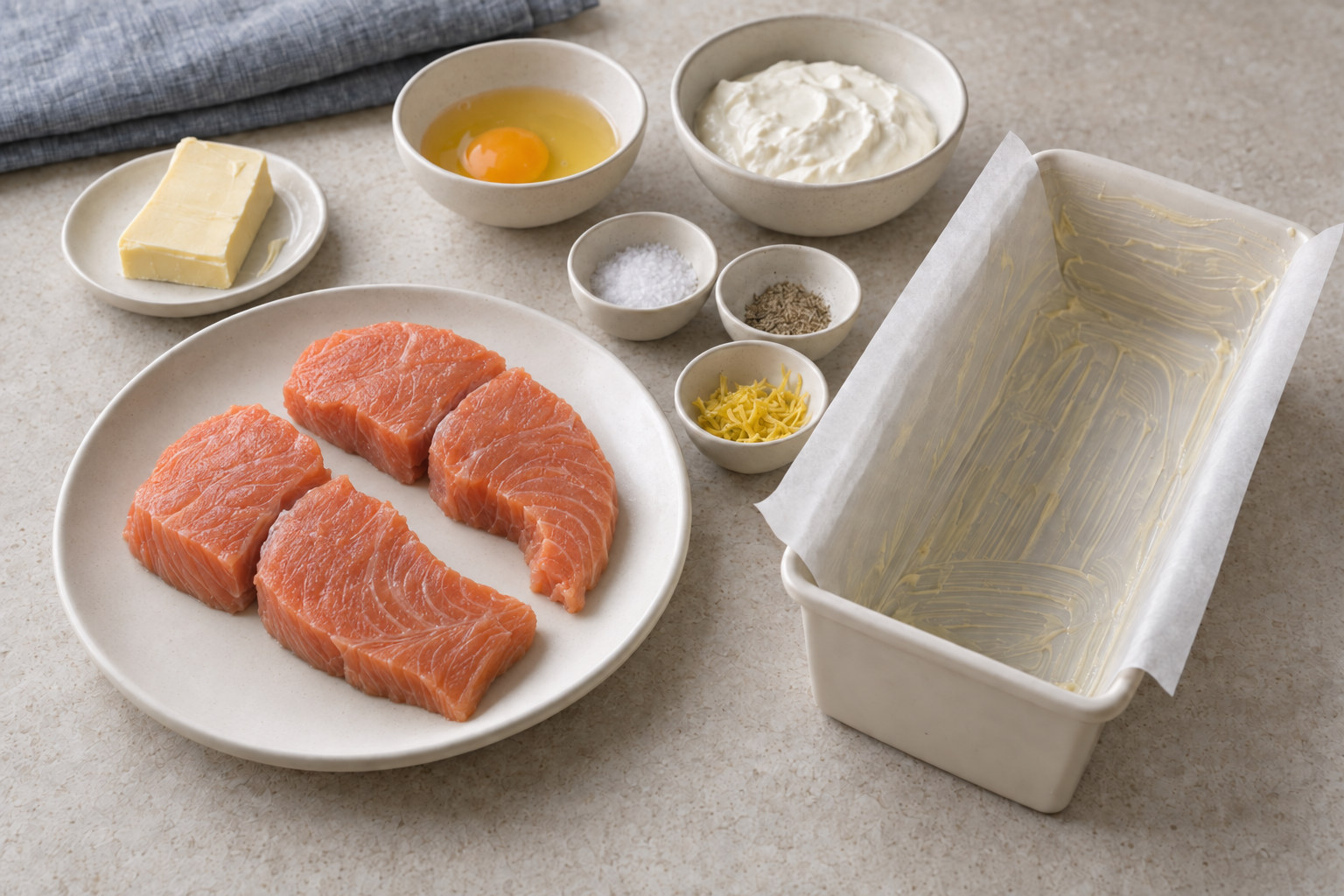
We remove the skin and bones from the keta salmon steaks, pat the flesh dry and return it to the fridge. We chill the food processor bowl and blade in the fridge for 20 minutes. We grease a 900–1000 ml mould with a teaspoon of butter and line it with a strip of baking paper. We preheat the oven to 140 °C, conventional heat.
All the ingredients for the fish mixture stay cold, and the fish is not watery.
Make the smooth fish mixture
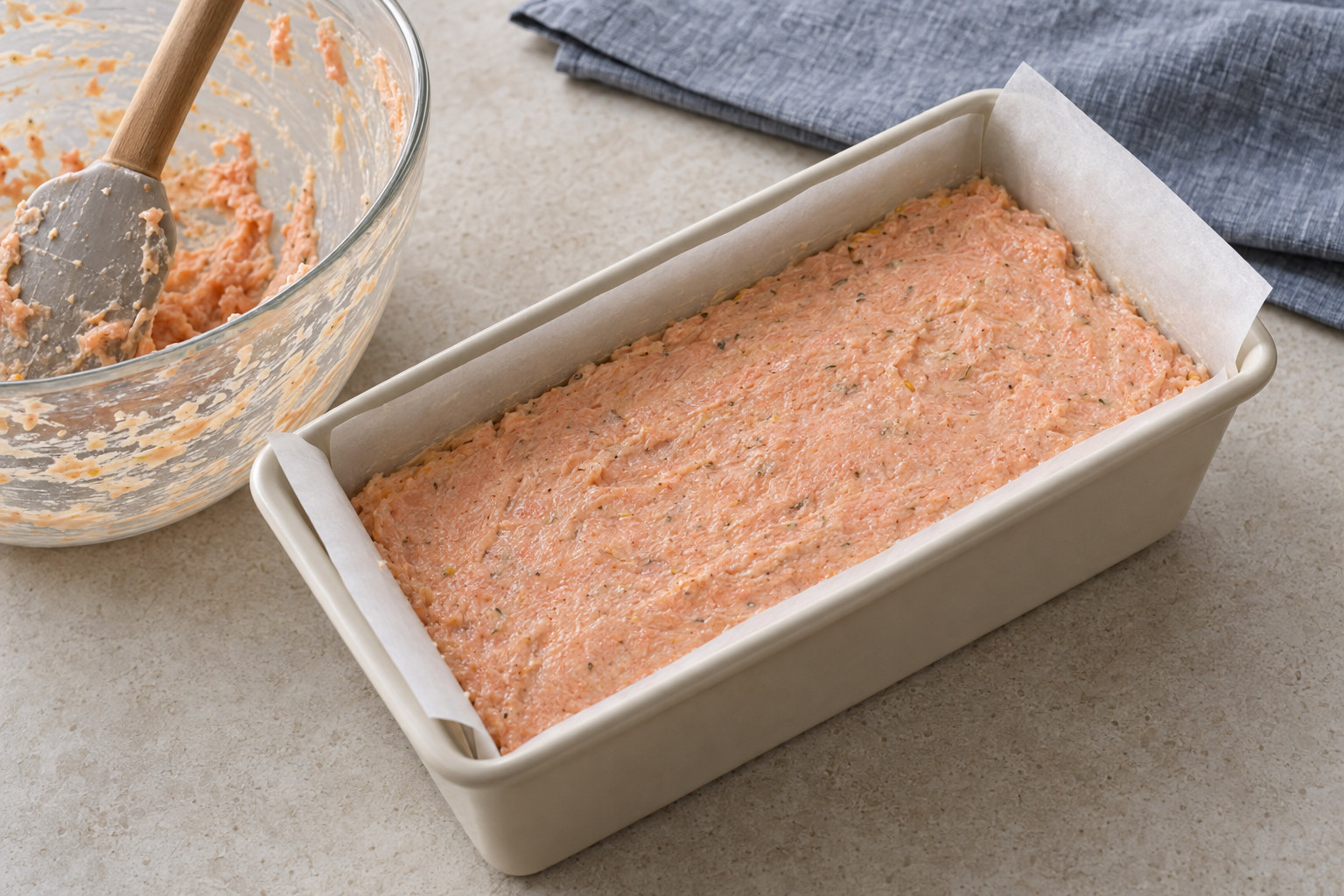
We wash the lemon thoroughly and finely grate only the coloured zest, leaving the white pith behind. We briefly blend the cold fish with the salt and pepper, then add one extra-large egg and blend to combine. In two additions, we briefly blend in 165 g crème fraîche and the lemon zest. The mixture must not exceed 10 °C; if it starts warming up, we stop and chill it. We transfer the mixture to the mould, smooth the surface and gently tap the base of the mould a few times.
The fish mixture is smooth, cohesive and glossy, with no separated fat.
Bake in a water bath
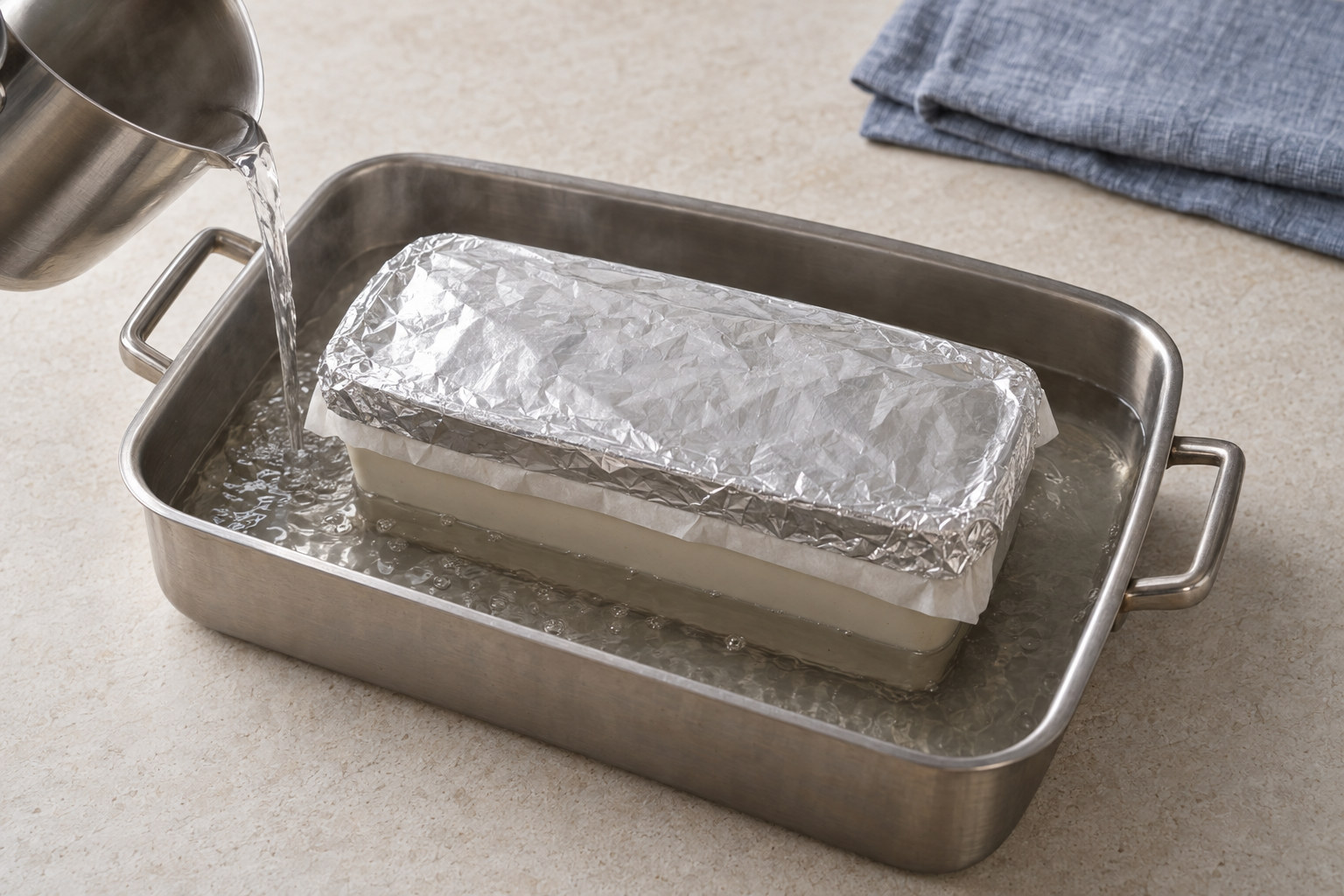
We cover the mould with baking paper and loosely with foil. We place it in the roasting tin and add hot water halfway up the sides of the mould. We bake for about 40–55 minutes, checking that the centre stays at 75 °C for 30 seconds. We carefully lift the mould out of the water bath.
The centre is firm but springy; the water bath bubbles gently without boiling vigorously.
Cool and leave to set
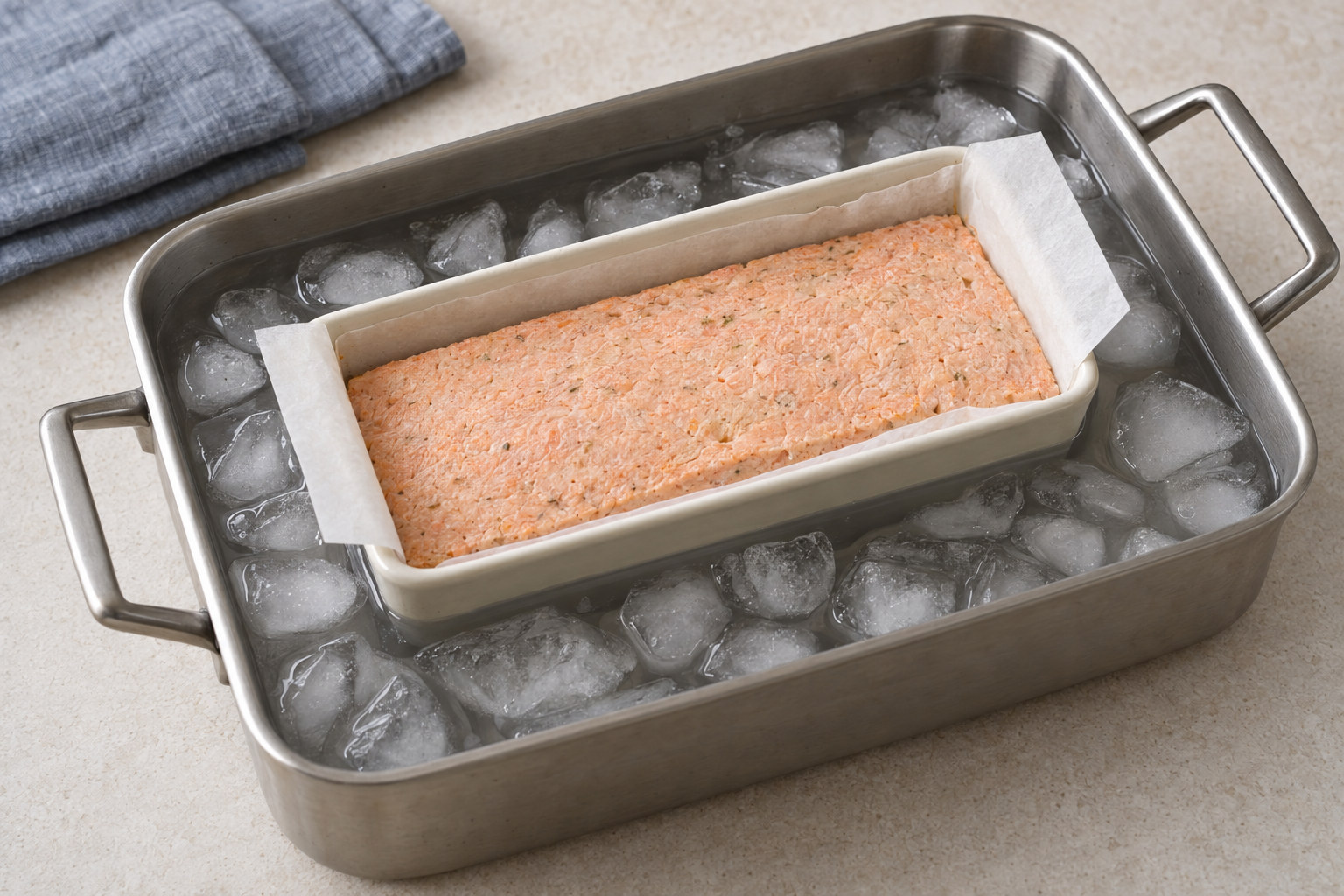
We leave the mould on a wire rack for about 20 minutes, then stand it in a roasting tin of cold water. We change the water as needed, taking care not to let it enter the terrine. As soon as the mould is no longer hot, we put it in the fridge, no later than 2 hours after baking. We chill for at least 6 hours, ideally overnight, until the centre is no warmer than 5 °C.
The terrine is completely cold and holds together before slicing.
Make the horseradish cream and cucumber salad, then slice the terrine
We peel and grate the horseradish, adjusting the amount according to its strength. We wash the cucumber and dill, let the dill drain and chop it. We mix the yoghurt with the horseradish, 5 ml lemon juice and a small pinch of salt. We thinly slice the cucumber and mix with 15 ml vinegar, a teaspoon of sugar, a pinch of salt and the dill. We leave it to stand for 10 minutes. We turn out the terrine and cut it into 6 slices with a wet, sharp knife. We serve 3 slices per person with half the cream and salad, and two slices of bread.
Tips from our kitchen
- We blend the chilled fish mixture briefly, making it smooth without unnecessarily warming it up.
- We use a thermometer to judge when the terrine is cooked, as a different mould shape changes how long it takes to heat through.
What to watch out for
- We keep the fish mixture from warming up during blending so the fat and water do not separate.
- We slice the terrine only once it is completely cold, otherwise we would spoil its texture.
How we serve it
- We serve the terrine cold with freshly made cucumber salad and rye bread.
Ingredient swaps
Fresh horseradish
1 tbsp drained preserved horseradish for two servings or 2 tbsp for four; we add it to taste according to its strength A milder flavour; we adjust the lemon according to how acidic the horseradish is.
Ingredient notes
- We use one 600 g pack of keta salmon steaks for two servings and two packs for four.
During preparation
- We handle raw fish separately from ready-to-eat food. The terrine mixture contains raw egg: during baking, we check that the centre stays at 75 °C for 30 seconds. We cool it quickly and keep it in the fridge for no more than 48 hours, leaving it out of the fridge for as little time as possible when serving.
Our inspiration
A salmon terrine can bring together different forms of the same fish. Alain Ducasse, who led the kitchen at Le Louis XV in Monaco, combines fresh and smoked salmon, eggs, crème fraîche and hazelnuts in his terrine. The combination of fish, egg and cream caught our attention; in our baked version, we let the keta salmon itself shine. Bryan Webb, former head chef and co-owner of Tyddyn Llan in Wales, also serves horseradish and cucumber with terrine. We prepare these fresh accompaniments with yoghurt and dill.
Similar recipes
Recipe for 4 people
Step-by-step method
Before we start
We do not overfill the food processor; we process the fish mixture in two chilled batches.
Chill the ingredients and prepare the moulds
We remove the skin and bones from the keta salmon steaks, pat the flesh dry and return it to the fridge. We chill the food processor bowl and blade for 20 minutes. We grease two 900–1000 ml moulds with a teaspoon of butter each and line each with a strip of baking paper. We preheat the oven to 140 °C, conventional heat.
All the ingredients for the fish mixture stay cold, and the fish is not watery.
Make the smooth fish mixture
We wash the lemon thoroughly and finely grate only the coloured zest, leaving the white pith behind. We process the fish in two cold batches: we blend each with half the salt and pepper, blend in one extra-large egg, then add 165 g crème fraîche in two additions, along with half the lemon zest. We keep the mixture below 10 °C; if it starts warming up, we stop and return the bowl to the fridge. We fill one mould with each batch, smooth the surface and tap gently to release air bubbles. We leave at least 1 cm of space above the mixture.
The fish mixture is smooth, cohesive and glossy, with no separated fat.
Bake in a water bath
We cover both moulds with baking paper and loosely with foil, then place them side by side in a 35 × 25 cm roasting tin. We add hot water halfway up the sides of the moulds. We bake for about 50–65 minutes, until the centre of each terrine stays at 75 °C for 30 seconds. We check the temperature in each mould separately, then carefully lift the cooked terrines out of the water bath.
The centre is firm but springy; the water bath bubbles gently without boiling vigorously.
Cool and leave to set
We leave the moulds on a wire rack for about 20 minutes, then stand them in a roasting tin of cold water. We change the water as needed, taking care not to let it enter the terrine. As soon as the moulds are no longer hot, we put them in the fridge, no later than 2 hours after baking. We chill for at least 8 hours, ideally overnight, until the centre is no warmer than 5 °C.
The terrine is completely cold and holds together before slicing.
Make the horseradish cream and cucumber salad, then slice the terrine
We peel and grate the horseradish, adjusting the amount according to its strength. We wash the cucumbers and dill, let the dill drain and chop it. We mix 200 g yoghurt, two tablespoons of horseradish, 10 ml lemon juice and two small pinches of salt. We thinly slice the cucumbers and dress with 30 ml vinegar, 2½ teaspoons of sugar, ¼ teaspoon of salt and the dill, then leave to stand for 10 minutes. We cut each of the two terrines into 6 slices and serve three slices for each of the four portions, with a quarter of the cream and salad, and two slices of bread.
We cut the slices with a sharp, damp knife.