
Provençal-inspired · Provençal-inspired
Fallow deer daube with fennel, olives and homemade rosemary fougasse
Orange zest and fennel scent the thick wine gravy in which fallow deer shoulder slowly turns tender. Black olives add a salty note, and we serve it with homemade rosemary fougasse with a golden crust. We set aside an unhurried day for this lunch: while the meat braises, the bread has time to rise.
While the meat braises slowly, we make the dough and let it rise. We bake the bread towards the end of braising; the total time includes its cooling on a rack.
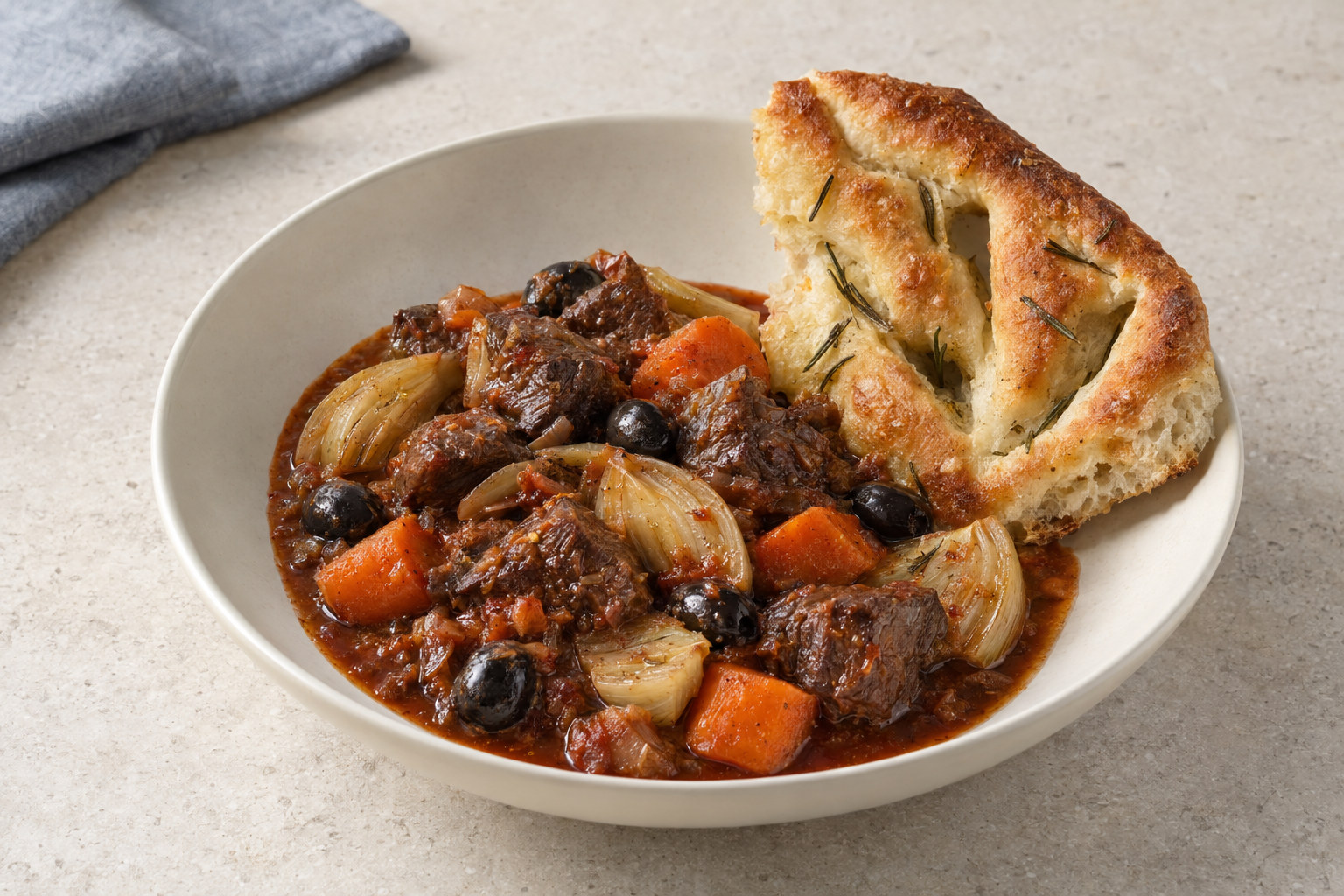
Fennel brings a light aniseed aroma, orange peel a citrus note, and olives a touch of salt. Crisp rosemary bread goes with the thick wine gravy.
Step-by-step method
What you will need
- kitchen scales
- knife and two separate chopping boards
- measuring jug
- heavy 20 cm, 3 l pot with a lid
- 2 l mixing bowl for the dough
- spatula
- baking tray with 30 × 25 cm usable area
- baking parchment
- pastry brush
- wire cooling rack
- oven
Before we start
We make the dough approximately 40 minutes after the meat begins to braise. While it rises, we prepare the fennel and carrots. We bake the bread towards the end of braising; if it is not ready at the same time as the meat, we briefly keep the daube hot under the lid.
Sear the meat and make the base
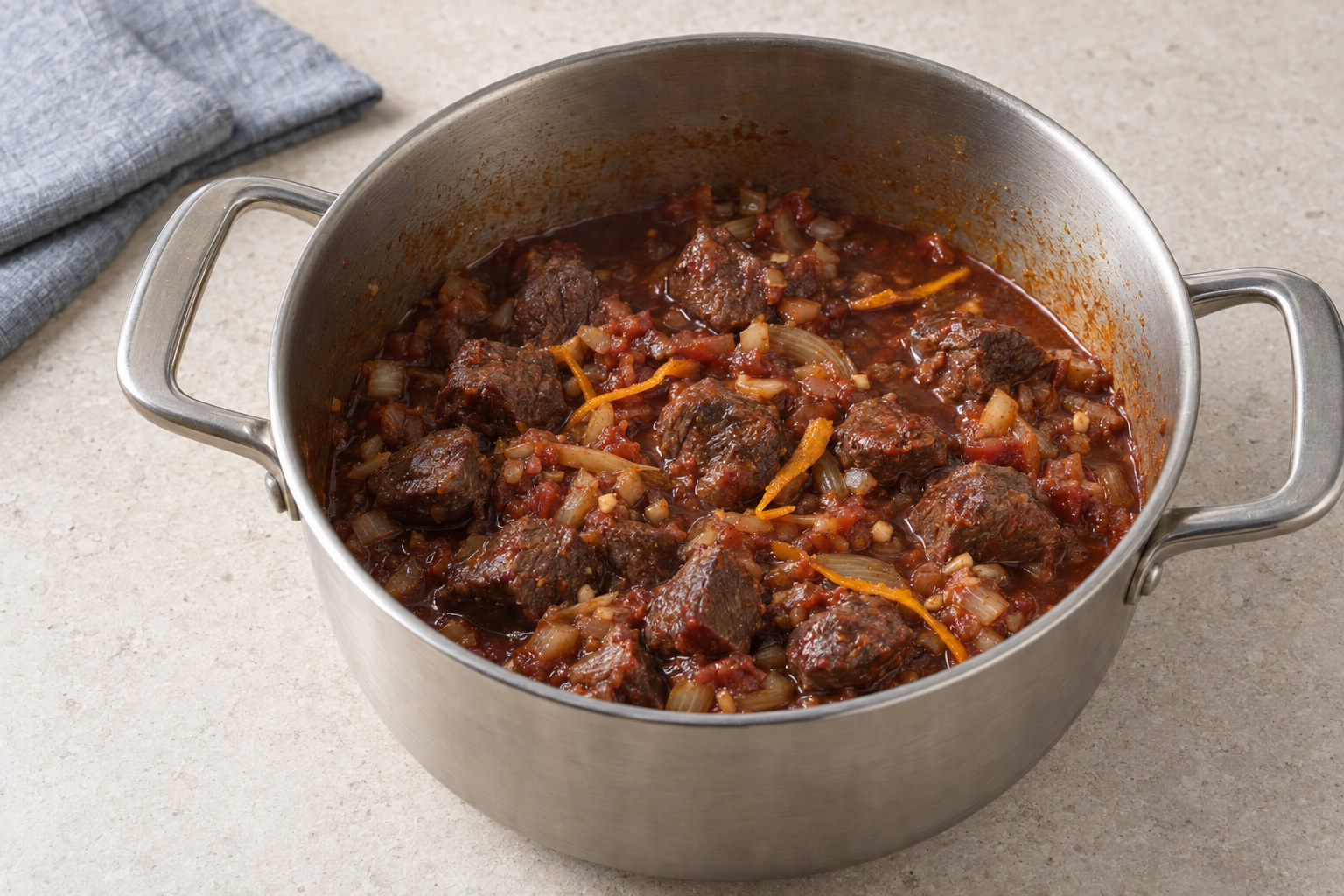
We peel and finely chop the onion and garlic. We cut the shoulder into 3 cm cubes, pat them dry, season with the salt for the meat and add pepper. We divide two teaspoons of oil between two similarly sized batches of meat. We sear each batch for 4–6 minutes over a medium-high heat, then remove it. In the remaining oil we cook the chopped onion for 7–9 minutes, stirring. We add the chopped garlic and all the tomato purée and cook for 1 minute. We pour in the wine, simmer for 3–5 minutes, return the meat and its collected juices, then add all the stock and the orange peel.
Braise the meat slowly and add the vegetables
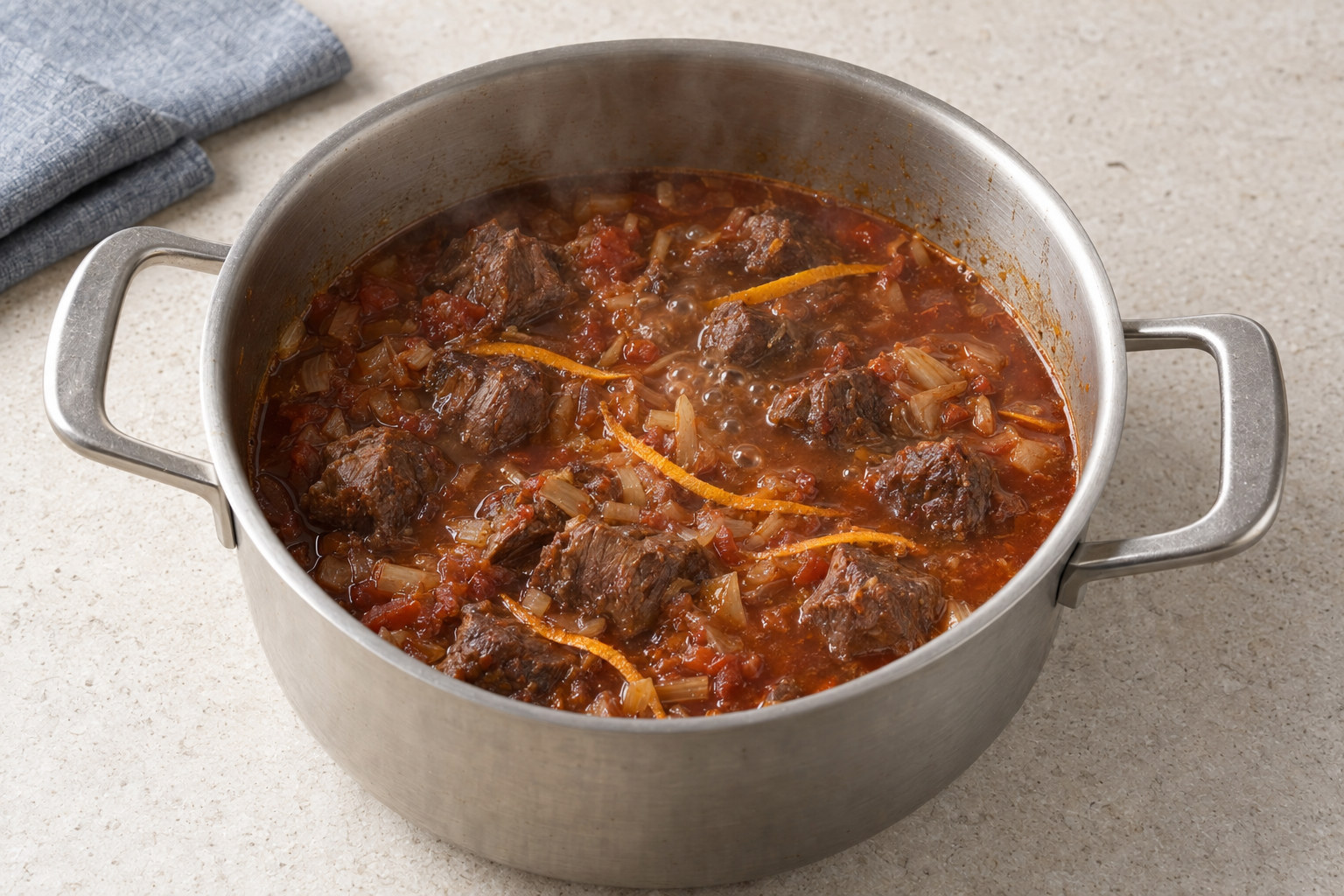
We cover the pot tightly and braise the meat for approximately 150–210 minutes. We lower the heat so the liquid bubbles only occasionally. Every 30 minutes, we stir and add a little hot water as needed. The meat is ready when we can easily pull it apart with a fork. If the connective tissue is still springy, we continue braising and adjust the bread timing. We trim the carrots and fennel and cut them into 2 cm pieces. We add the carrots for the last 40 minutes. We add the fennel and all the olives for the last 25 minutes; these periods are part of the total braising time. At the end, we remove the strips of orange peel.
Make the fougasse dough
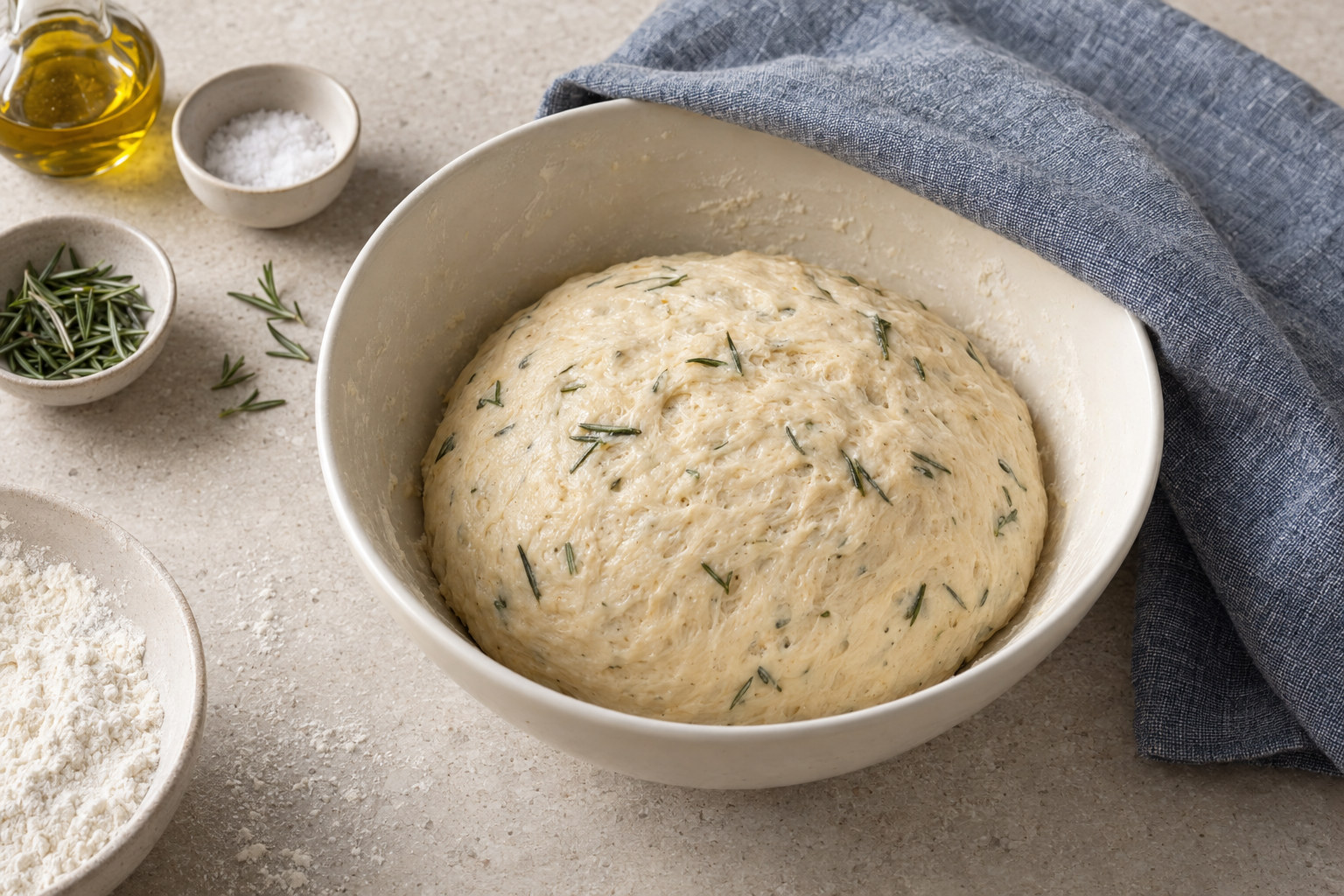
We mix all the bread flour, instant yeast, salt for the bread, chopped rosemary leaves, lukewarm water for the dough and oil for the dough. We knead for 8–10 minutes until the dough is elastic and slightly sticky. We cover it in the bowl and leave it to rise at approximately 22–24 °C for a total of 60–90 minutes, until roughly doubled in size. After the first 20 minutes, we fold the edges towards the centre once.
Shape the fougasse
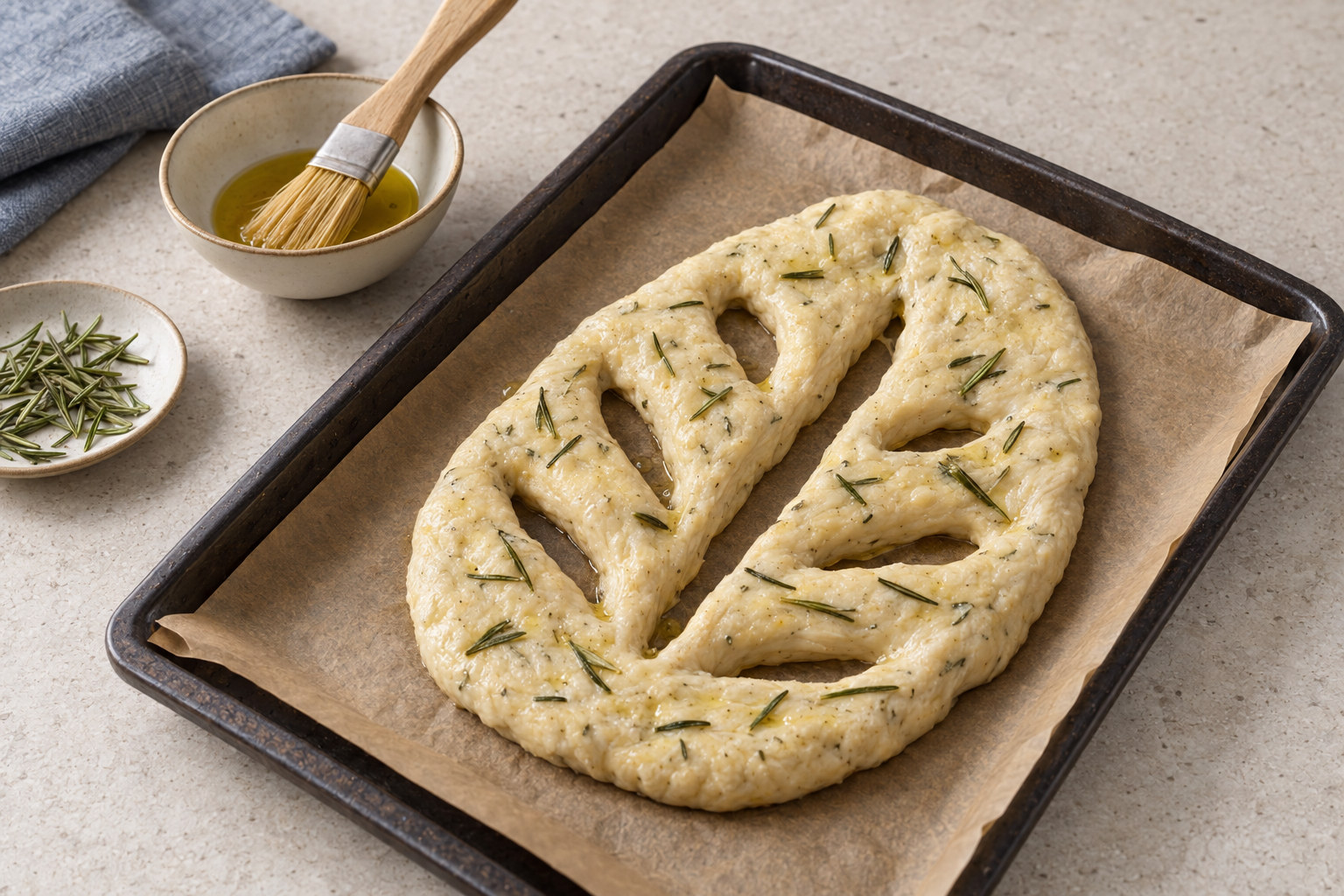
We dust the work surface with some of the flour for shaping and turn out the dough. We use the remaining flour as needed while shaping. We stretch out one oval approximately 25 × 15 cm and 8 mm thick. We put it on parchment on the tray, cut one lengthwise and four diagonal slits, and open them with our fingers to at least 1.5 cm so they do not close while rising. We let it rise for another 20–30 minutes; meanwhile, we preheat the oven to 220 °C.
The open slits stay pronounced after rising.
Bake the fougasse
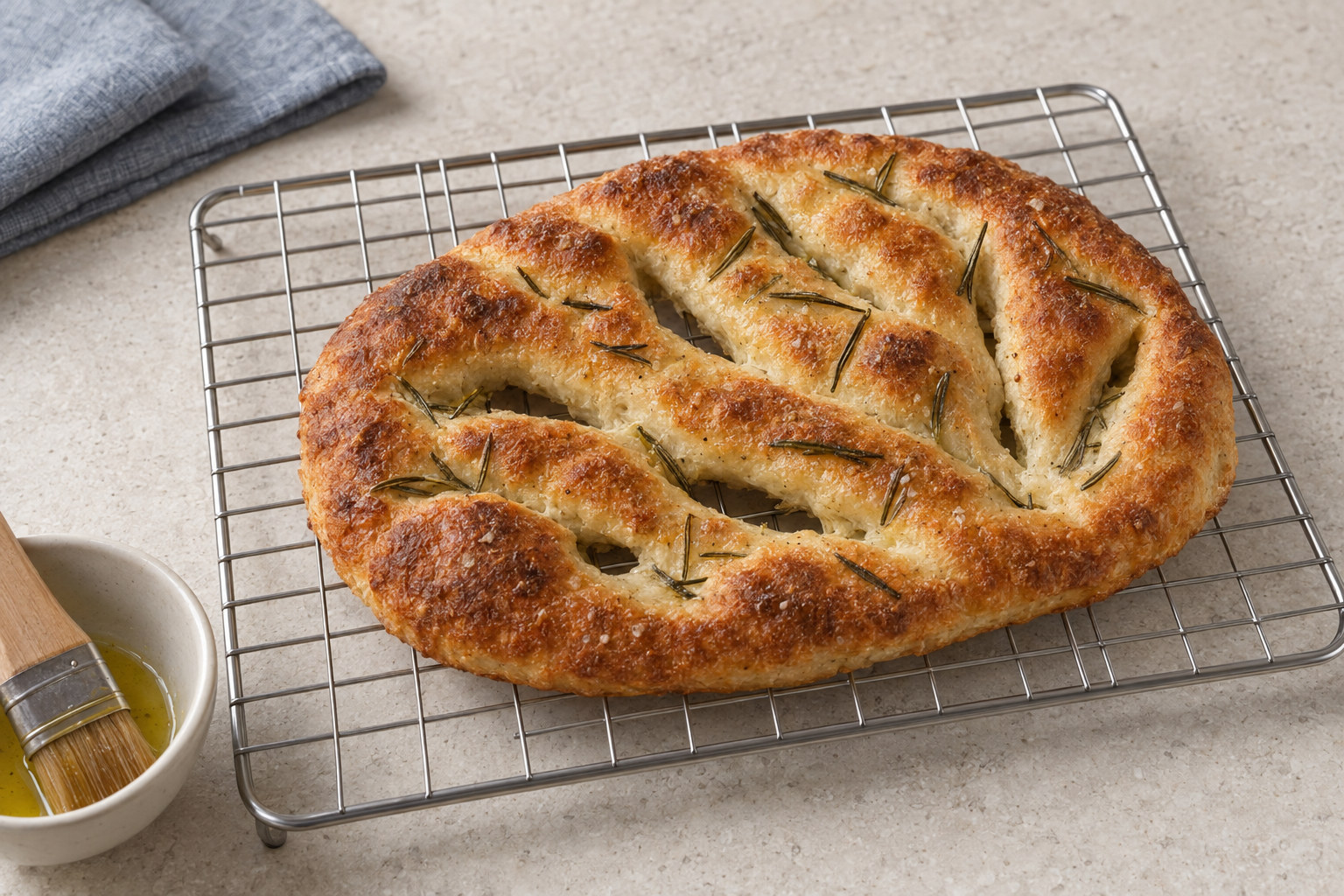
We brush the surface with the olive oil set aside for the bread. We bake at 220 °C with top and bottom heat for 15–20 minutes, until the crust is golden and the base is firm. We transfer the bread to a wire rack and let it cool for 10 minutes. Only then do we break it apart.
Finish the braised meat
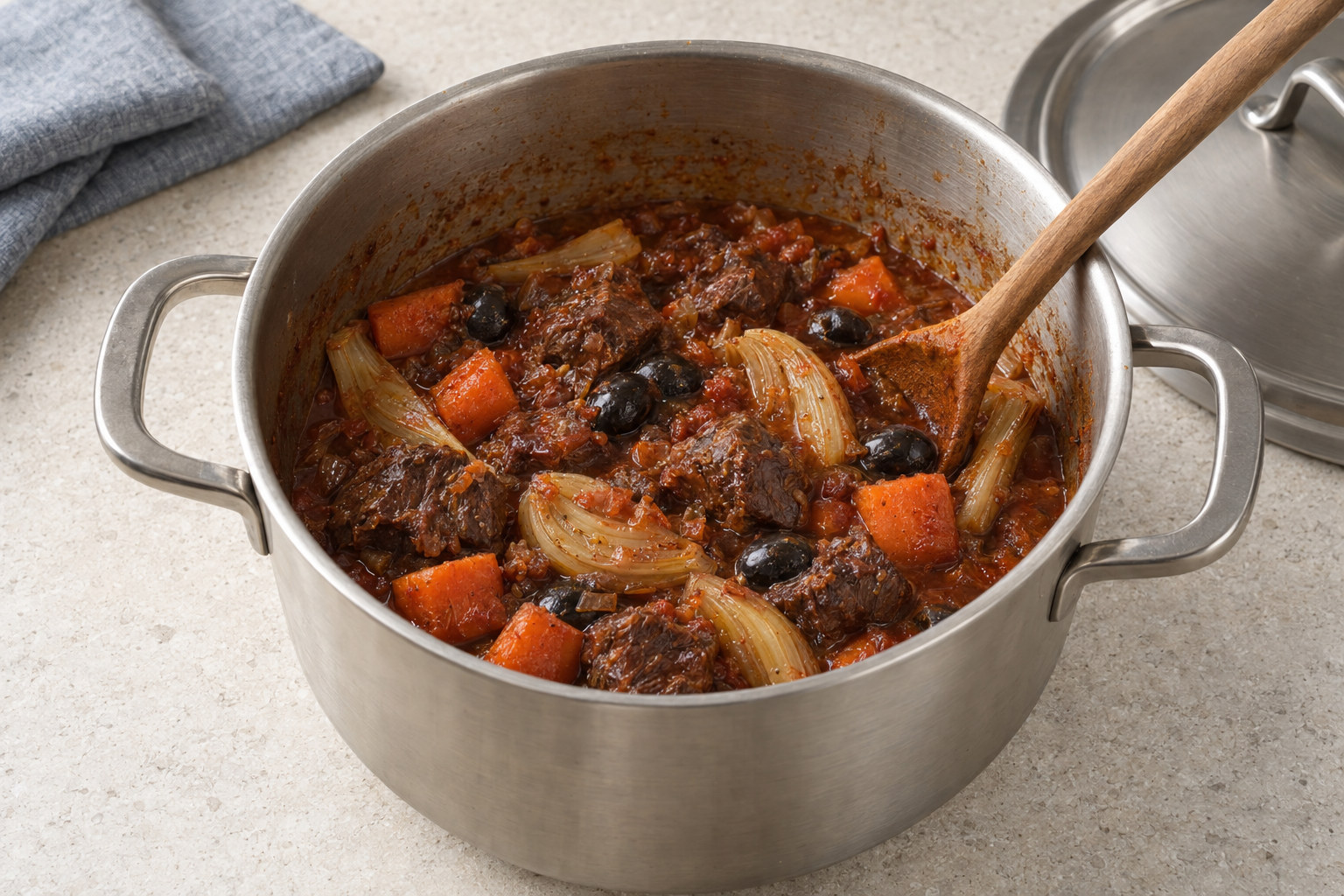
We check that the meat, carrots and fennel are tender. If the gravy is thin, we uncover the pot and reduce it for 5–10 minutes, stirring several times from the bottom. If the bread is still in the oven, we keep the finished daube covered over the lowest heat so it stays hot, for no longer than 30 minutes.
Serve with homemade bread
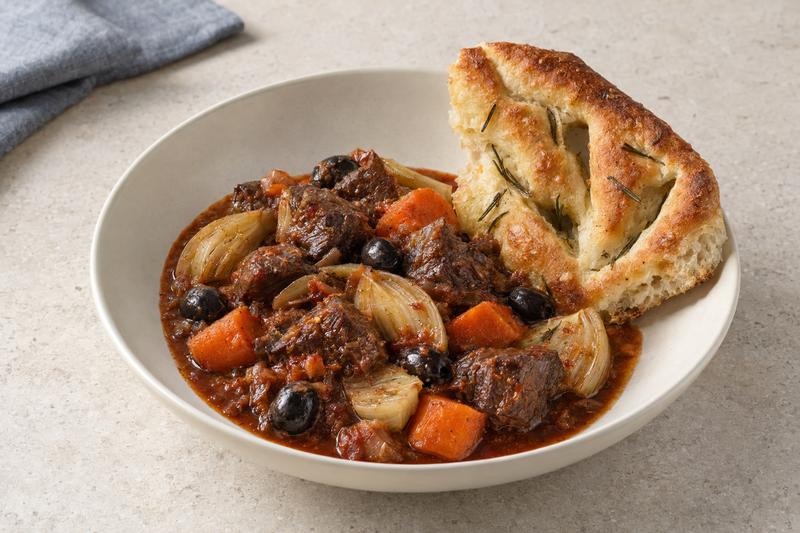
We divide the daube with all its meat, vegetables, olives and gravy between 2 warmed deep plates. We break the fougasse into 2 equal portions and serve it alongside.
Tips from our kitchen
- We add the carrots and fennel towards the end of braising at the times given, so they soften without falling apart.
- We open up the cuts in the dough with our fingers as described so they do not close as it rises. We let the baked bread cool on a rack before breaking it apart.
What to watch out for
- We sear the meat in the stated batches so it browns instead of stewing in its own juices.
- We bake the fougasse when the meat is almost tender. If the shoulder is still tough, we braise it longer and adjust the bread timing.
How we serve it
- We divide the braised shoulder with all the fennel, carrots, olives and gravy among warmed deep plates. We break the fougasse into equal portions and serve it alongside.
During preparation
- We keep raw meat and its utensils separate from cooked food and wash our hands after handling it.
Our inspiration
In a Provençal daube, red wine, garlic and orange peel bring the aromas of a slow Sunday lunch. The citrus is there for its fragrance, rather than sour juice. We pair these three with fallow deer shoulder, fennel and olives. To soak up the gravy, we bake a rosemary fougasse; its cuts resemble the veins of a leaf, and everyone can tear off a piece once it is baked.
Similar recipes
Recipe for 4 people
While the meat braises slowly, we make the dough and let it rise. We bake the two fougasses one after the other while the meat braises, each for 15–20 minutes; the total time also includes 10 minutes of cooling on a rack.
Step-by-step method
Before we start
We make the dough as soon as the meat begins to braise. While it rises, we prepare the fennel and carrots. We shape the breads on two trays approximately 20 minutes apart and bake them one at a time, each for 15–20 minutes. We leave the finished breads on the rack until the meat is tender. If the meat becomes tender before the second bread is baked, we keep the finished daube covered and hot over the lowest heat for no longer than 30 minutes.
Sear the meat and make the base
We peel and finely chop the onions and garlic. We cut the shoulder into 3 cm cubes, pat them dry, season with the salt for the meat and add pepper. We divide one and a half tablespoons of oil between four similarly sized batches of meat. We sear each batch for 4–6 minutes over a medium-high heat, then remove it. In the remaining oil we cook the chopped onions for 7–9 minutes, stirring. We add the chopped garlic and all the tomato purée and cook for 1 minute. We pour in the wine, simmer for 3–5 minutes, return the meat and its collected juices, then add all the stock and the orange peel.
Braise the meat slowly and add the vegetables
We cover the pot tightly and braise the meat for approximately 150–210 minutes. We lower the heat so the liquid bubbles only occasionally. Every 30 minutes, we stir and add a little hot water as needed. The meat is ready when we can easily pull it apart with a fork. If the connective tissue is still springy, we continue braising and adjust the bread timing. We trim the carrots and fennel and cut them into 2 cm pieces. We add the carrots for the last 40 minutes. We add the fennel and all the olives for the last 25 minutes; these periods are part of the total braising time. At the end, we remove the strips of orange peel.
Make the fougasse dough
We mix all the bread flour, instant yeast, salt for the bread, chopped rosemary leaves, lukewarm water for the dough and oil for the dough. We knead for 8–10 minutes until the dough is elastic and slightly sticky. We cover it in the bowl and leave it to rise at approximately 22–24 °C for a total of 60–90 minutes, until roughly doubled in size. After the first 20 minutes, we fold the edges towards the centre once.
Shape the fougasse
We dust the work surface with some of the flour for shaping and turn out the dough. We use the remaining flour as needed while shaping. We divide the dough into two equal parts. We stretch the first into an oval approximately 28 × 13 cm and 8 mm thick and put it on parchment on the first tray. We cut one lengthwise and four diagonal slits and open them with our fingers to at least 1.5 cm so they do not close while rising. We cover the second piece of dough and, approximately 20 minutes later, shape it into another oval in the same way on the second tray. We let each bread rise on its own tray for 20–30 minutes; meanwhile, we preheat the oven to 220 °C.
The open slits stay pronounced after rising.
Bake the fougasse
Just before baking each fougasse, we brush it with some of the olive oil set aside for the bread. We put only one tray in the oven at a time. We bake the first bread at 220 °C with top and bottom heat for 15–20 minutes, until the crust is golden and the base is firm. We transfer it to a wire rack and bake the second bread in the same way, also for 15–20 minutes. We let each cool on the rack for at least 10 minutes. Only then do we break the breads apart.
Finish the braised meat
We check that the meat, carrots and fennel are tender. If the gravy is thin, we uncover the pot and reduce it for 5–10 minutes, stirring several times from the bottom. If the bread is still in the oven, we keep the finished daube covered over the lowest heat so it stays hot, for no longer than 30 minutes.
Serve with homemade bread
We divide the daube with all its meat, vegetables, olives and gravy between 4 warmed deep plates. We break the fougasse into 4 equal portions and serve it alongside.