
Czech restaurant inspiration · Czech restaurant inspiration
Fallow deer loin with chestnut purée, glazed vegetables and fondant potatoes
A smooth chestnut purée, buttery vegetables and golden fondant potatoes turn fallow deer loin into a festive course. A dark red wine and juniper jus balances the sweet sides. Several pans are in play, but the reward is a colourful plate with soft potato centres and seared ends.
We start the potatoes before the meat and prepare the other sides and jus while it roasts. We allow time for the loin to rest too.
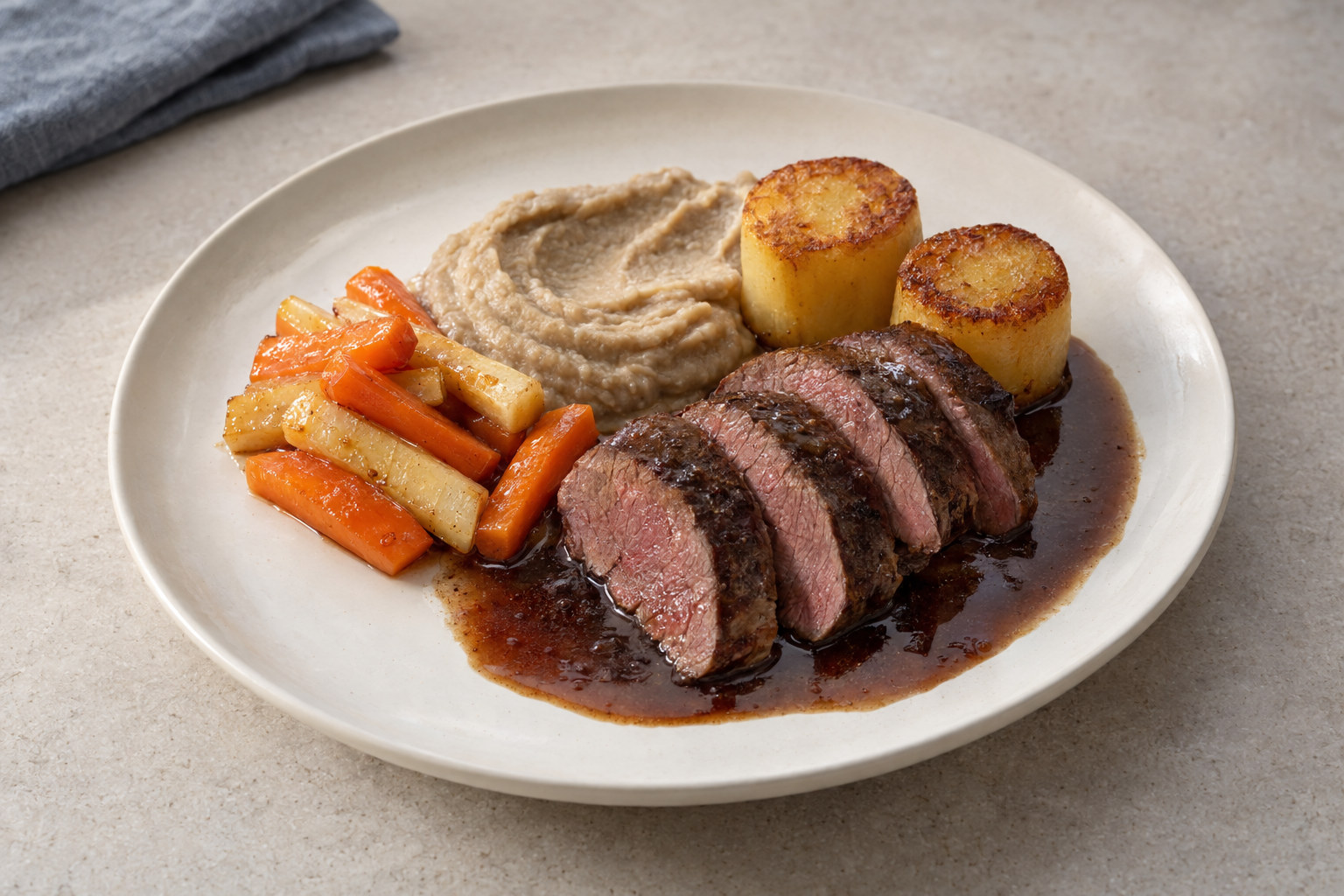
A wine and juniper jus complements gently sweet chestnuts and buttery carrot and parsnip. The fondant potatoes have seared ends and tender centres.
Step-by-step method
What you will need
- kitchen scales
- probe thermometer with a thin probe
- knife and two separate chopping boards
- measuring jug
- heavy 18 cm lidded pan for the potatoes
- 26 cm pan for the meat
- 30 × 18 cm roasting dish
- 1 l saucepan for the purée
- 20 cm lidded pan for the vegetables
- stick blender
- fine sieve
- oven
- four hob burners
Before we start
We start with the fondant potatoes. After the first 10 minutes of preparing them, we begin searing the loin. We prepare the chestnut purée and vegetables while it roasts and keep the finished sides covered briefly over the lowest heat. We begin reducing the sauce while the meat roasts and finish it as the meat rests.
We prepare the meat and potatoes
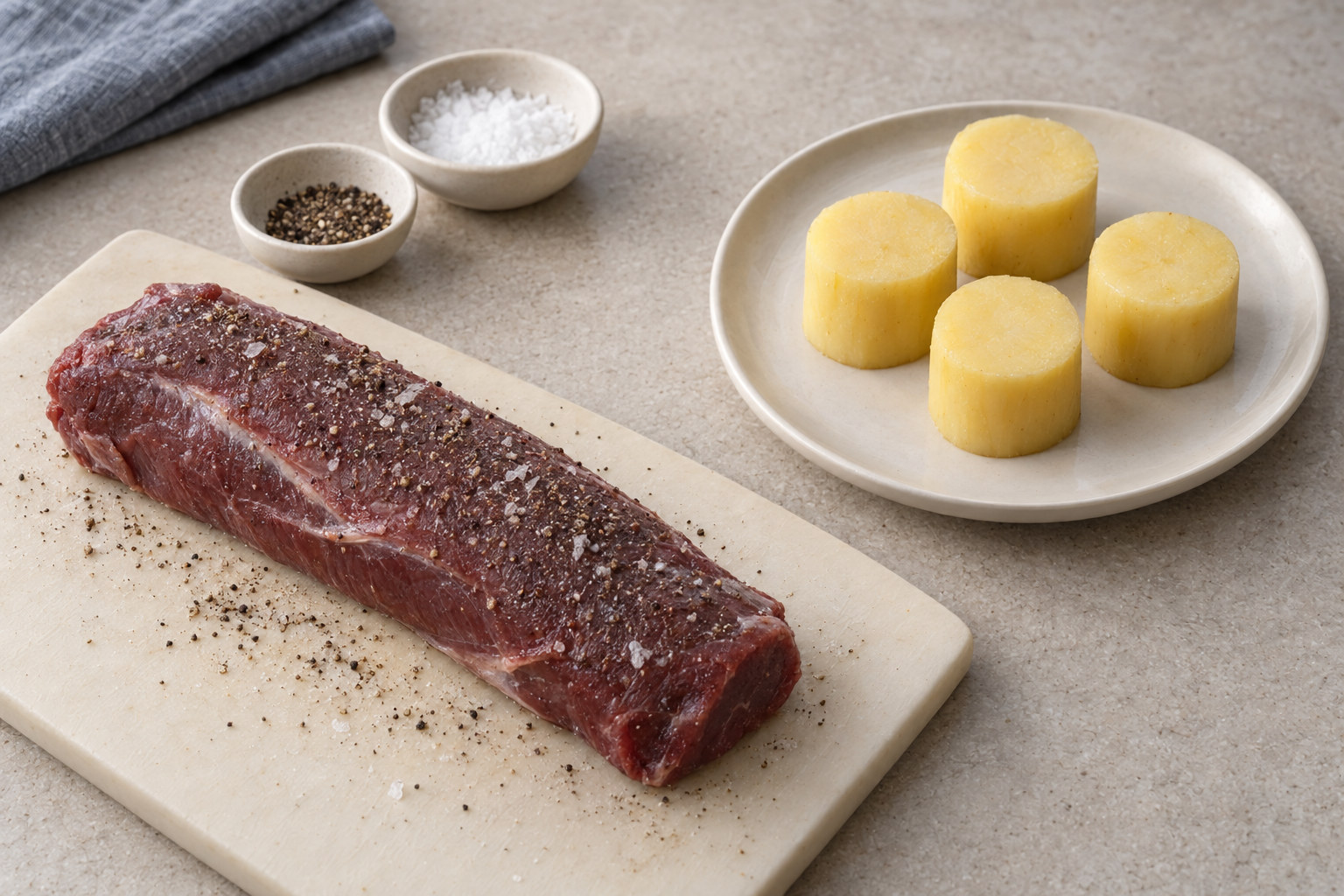
We preheat the oven to 150 °C. We need one 360 g loin piece with a diameter of 4–5 cm. We dry the meat, season it with the salt set aside for it and add pepper. We peel the potatoes and shape four similarly sized cylinders about 3 cm high, each with two flat cut ends.
We sear and braise the fondant potatoes
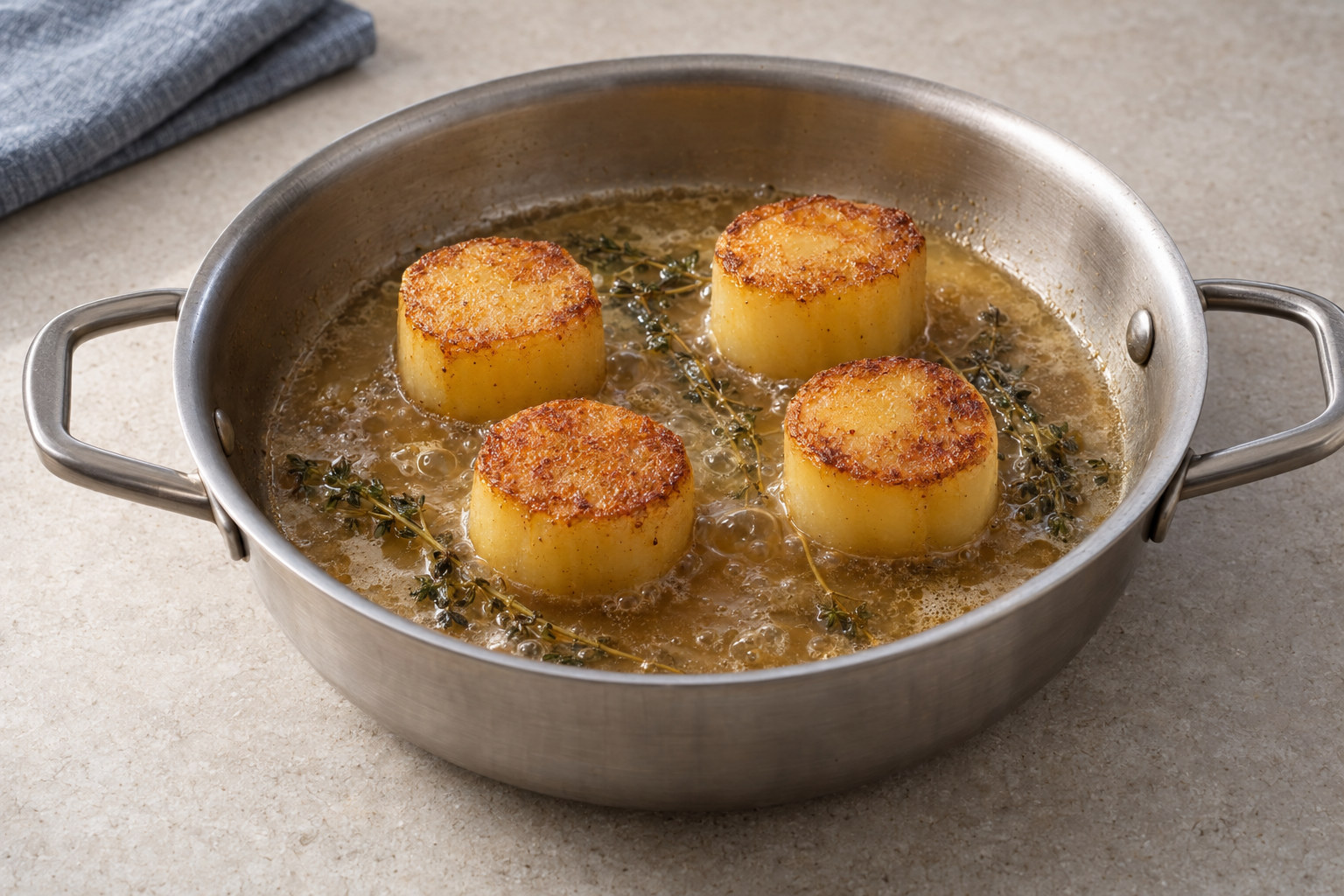
In an 18 cm pan, we melt all the butter set aside for the potatoes. We sear each flat end of the potato cylinders over medium heat for 4–5 minutes. We add all the vegetable stock, the potato salt and thyme, cover and gently braise for 25–35 minutes. We turn them halfway through. If the liquid evaporates, we add reserve water in 20 ml amounts, no more than 60 ml in total. A knife passes through the tender potato centres without resistance. We remove the thyme, uncover and let the remaining liquid thicken for 2–3 minutes.
We sear and roast the loin
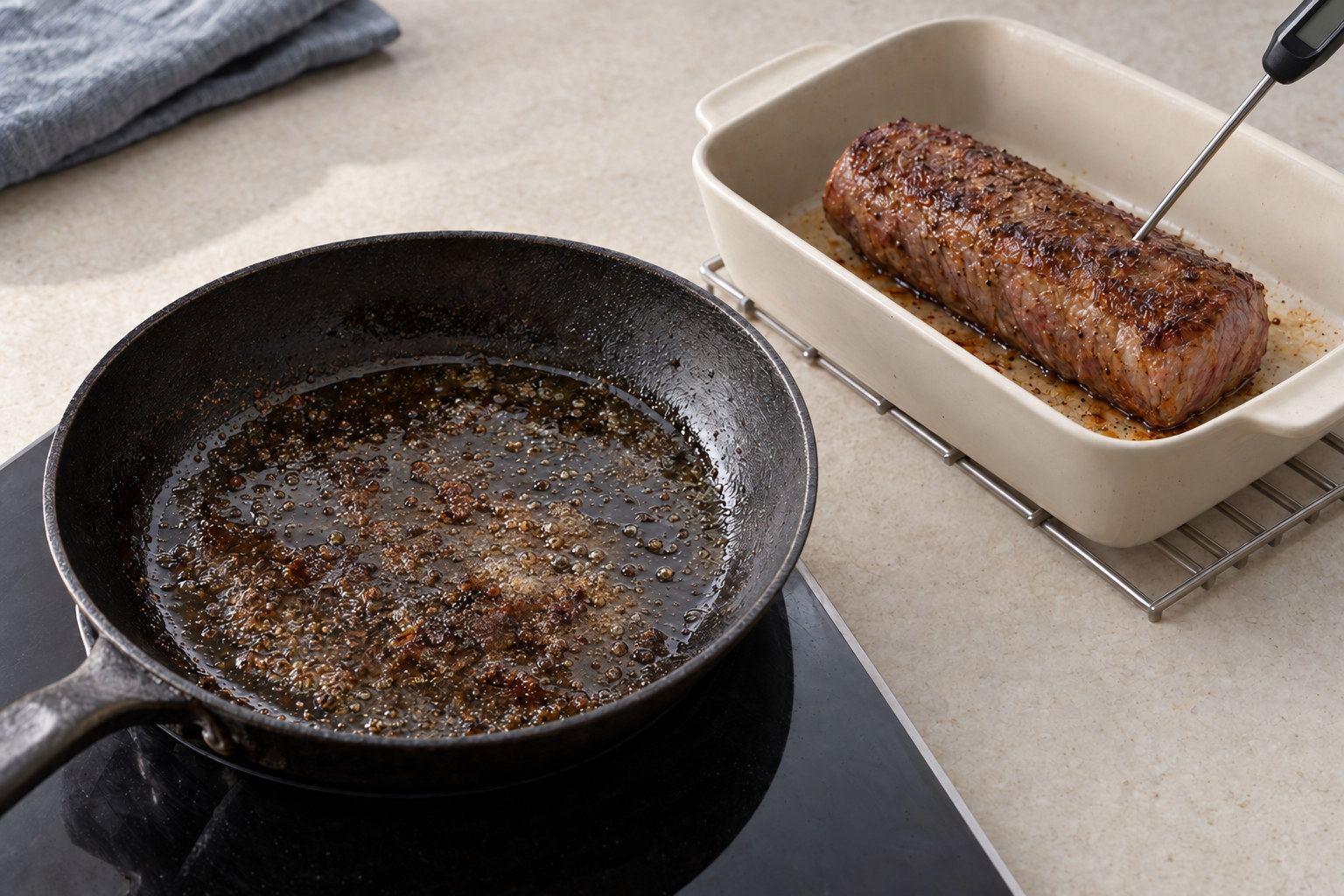
After the potatoes have been cooking for 10 minutes, we heat the meat pan with rapeseed oil. We sear the loin over medium-high heat on all sides for 5–6 minutes. We transfer it to the roasting dish and roast at 150 °C for roughly 20–35 minutes, until its centre reaches at least 70 °C for 2 minutes. We verify the temperature with the probe, then rest the meat for 5 minutes.
We make the chestnut purée
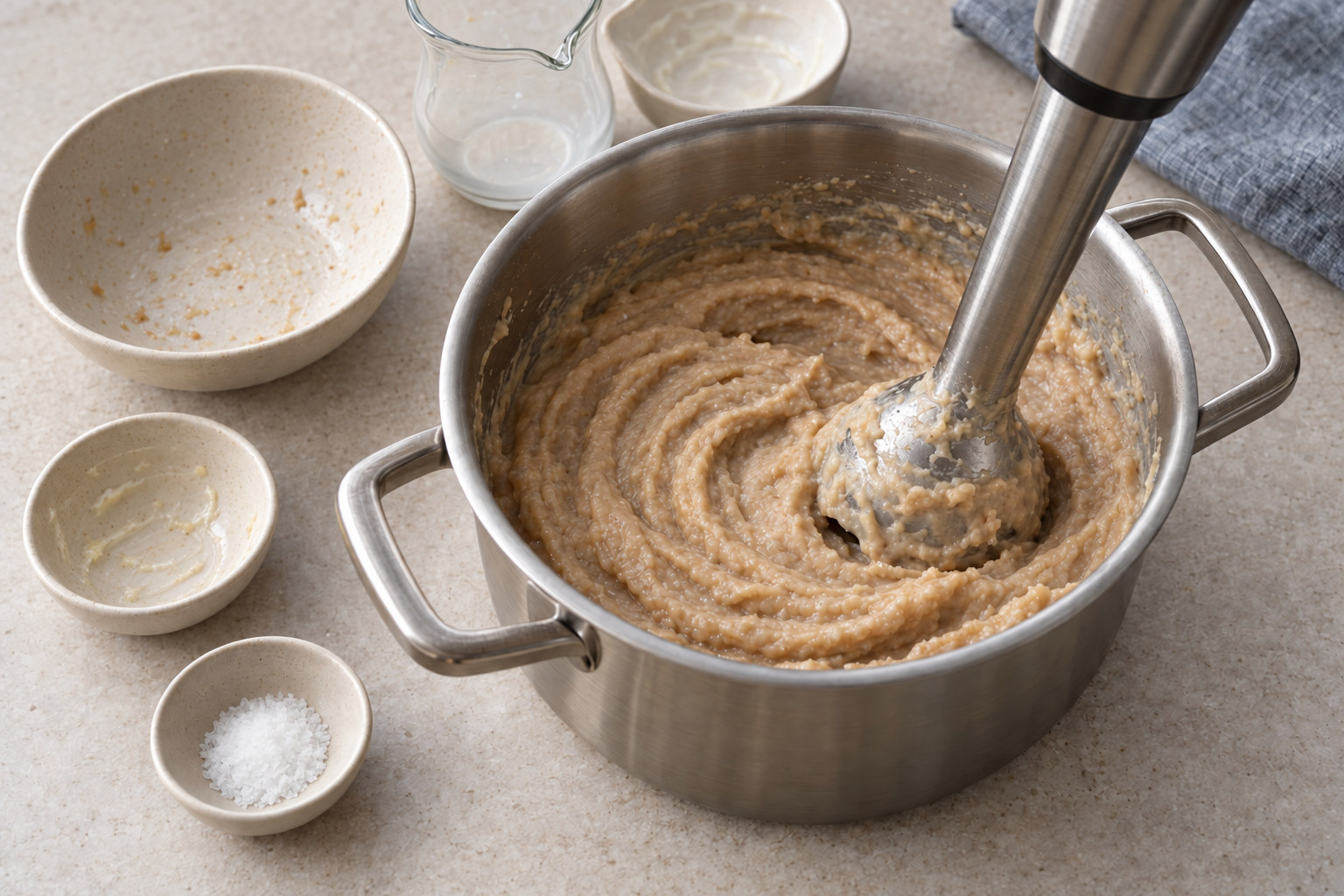
While the meat roasts, we warm the cooked chestnuts with all the milk and cream under a lid for 7–10 minutes, stirring regularly. We add half the butter and half the salt set aside for the purée and vegetables and blend until smooth. We keep the purée covered over the lowest heat and stir it before serving.
We blend the cooked chestnuts into a smooth, thick purée.
We glaze the vegetables with butter
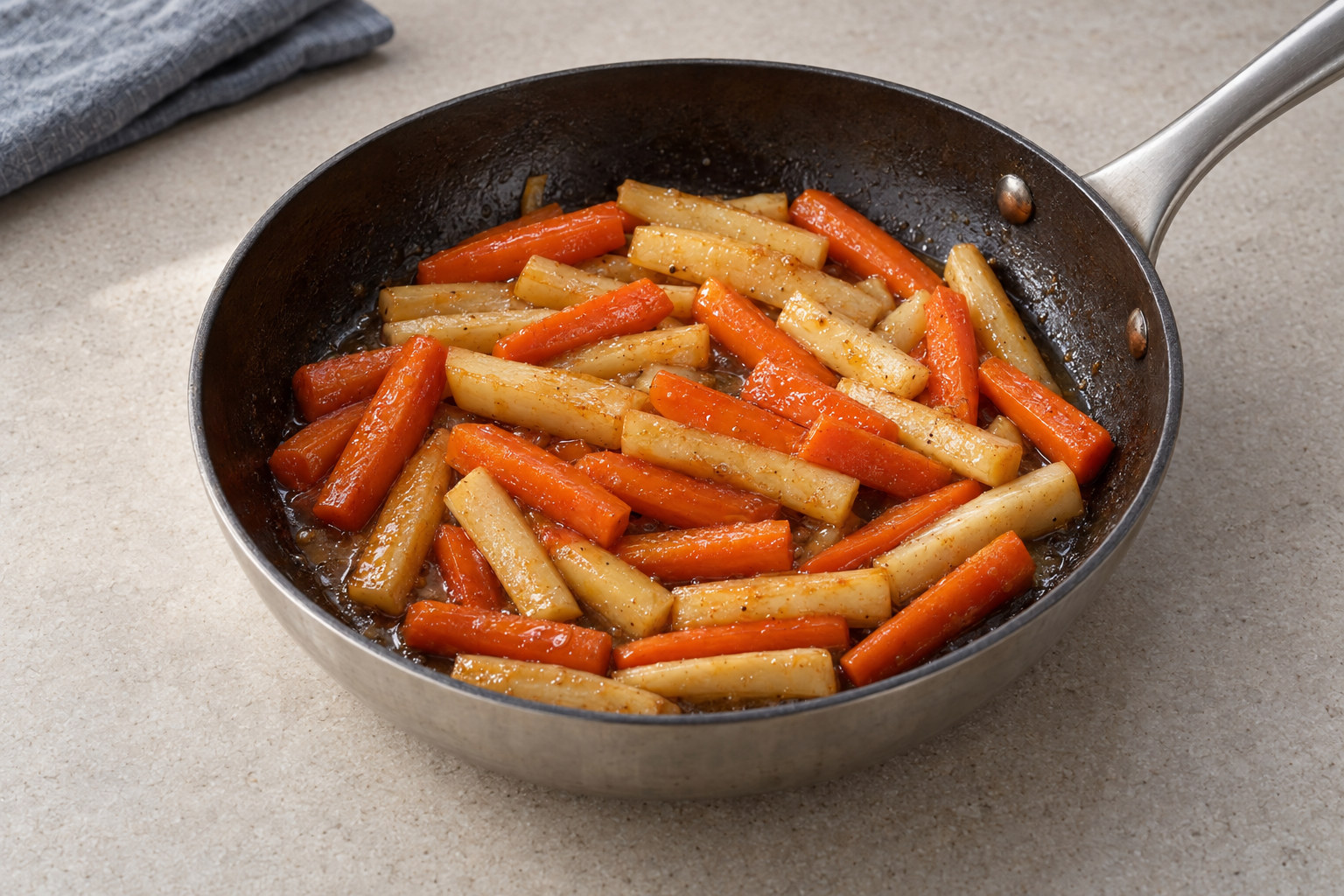
We peel the carrots and parsnip and cut them into batons about 1 × 1 × 4 cm. We put them in the vegetable pan with the other half of the butter for the purée and vegetables, the other half of the salt, all the sugar and 80 ml glazing water. We cover and simmer gently for 10–15 minutes until tender. Then we uncover and reduce for about 5 minutes, turning the vegetables until they are glossy. If they dry out before softening, we add reserve water in 20 ml amounts, no more than 40 ml.
The vegetables are tender and glossy, not overcooked.
We finish the juniper jus
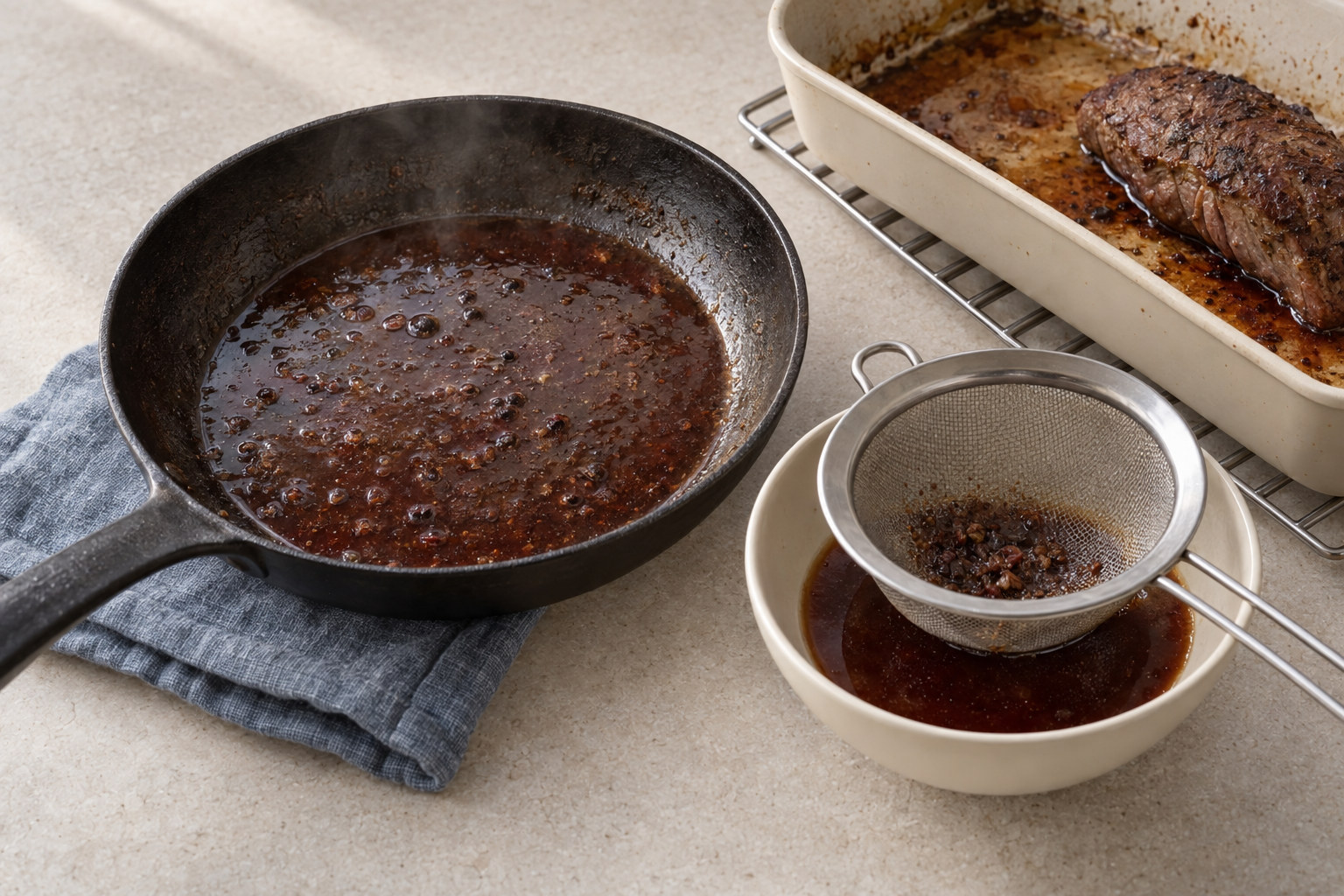
We make the jus while the meat roasts. We pour all the wine into the pan used to sear the meat, add crushed juniper berries and simmer for 3 minutes. We add all the beef stock and reduce for 8–12 minutes until the jus lightly coats a spoon. We strain it, add the meat juices from the roasting dish and resting plate, and bring it briefly to a boil.
We strain the jus and watch it as it reduces so it does not catch.
We plate and serve
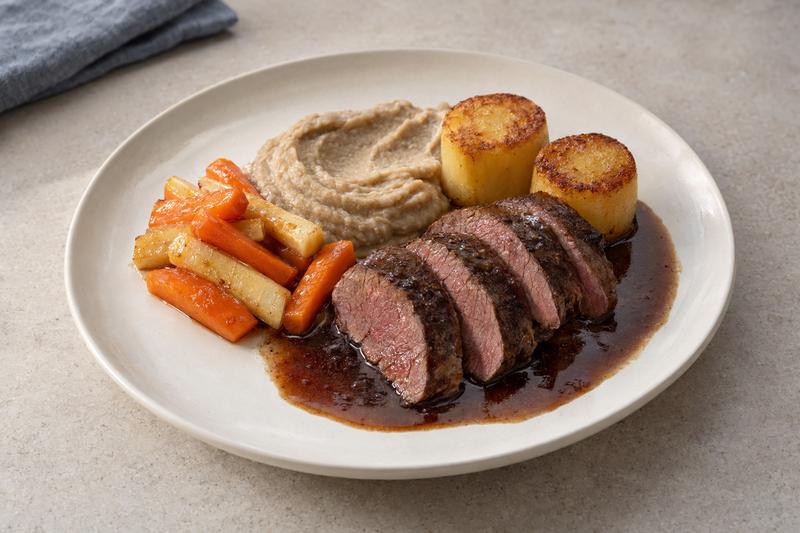
We slice the loin across the grain and divide it between 2 warmed plates. We add two fondant potatoes to each, with equal portions of chestnut purée and glazed vegetables. We spoon over the meat jus and serve immediately.
Tips from our kitchen
- We use cooked chestnuts with no added sugar for the purée.
- We start with the potatoes and prepare the purée, vegetables and jus while the meat roasts. We need the four stated hob burners to work in parallel.
What to watch out for
- We sear the meat in the stated batches so it browns rather than stewing in its own juices.
- We check the loin temperature with a probe and the potatoes for tenderness with a knife. We check each side dish prepared in parallel separately.
How we serve it
- With each portion of sliced loin, we serve two fondant potatoes, chestnut purée and glazed vegetables. We spoon over the juniper jus and serve immediately.
Ingredient notes
- For two servings we need one whole 360 g loin piece, 4–5 cm in diameter; for four, we need two such pieces.
During preparation
- We measure the temperature with a clean probe. We keep raw meat and its utensils separate from cooked food and wash our hands after handling it.
Our inspiration
We need not save chestnuts for desserts. Their natural sweetness works with game too. On our festive plate, they accompany fallow deer loin: we let the chestnuts shine in the purée and add carrot, parsnip and buttery potatoes. We plan this dish for a day when we have time to give the sides attention as well.
Similar recipes
Recipe for 4 people
Step-by-step method
Before we start
We start with the fondant potatoes. After the first 10 minutes of preparing them, we begin searing the loin. We prepare the chestnut purée and vegetables while it roasts and keep the finished sides covered briefly over the lowest heat. We begin reducing the sauce while the meat roasts and finish it as the meat rests.
We prepare the meat and potatoes
We preheat the oven to 150 °C. We need two 360 g loin pieces, each 4–5 cm in diameter. We dry the meat, season it with the salt set aside for it and add pepper. We peel the potatoes and shape eight similarly sized cylinders about 3 cm high, each with two flat cut ends.
We sear and braise the fondant potatoes
In a 24 cm pan, we melt all the butter set aside for the potatoes. We sear each flat end of the potato cylinders over medium heat for 4–5 minutes. We add all the vegetable stock, the potato salt and thyme, cover and gently braise for 25–35 minutes. We turn them halfway through. If the liquid evaporates, we add reserve water in 20 ml amounts, no more than 100 ml in total. A knife passes through the tender potato centres without resistance. We remove the thyme, uncover and let the remaining liquid thicken for 2–3 minutes.
We sear and roast the loin
After the potatoes have been cooking for 10 minutes, we heat the meat pan with rapeseed oil. We sear each loin piece separately over medium-high heat on all sides for 5–6 minutes. We transfer them to the roasting dish and roast at 150 °C for roughly 20–35 minutes, until the centre of each piece reaches at least 70 °C for 2 minutes. We verify the temperature with the probe, then rest the meat for 5 minutes.
We make the chestnut purée
While the meat roasts, we warm the cooked chestnuts with all the milk and cream under a lid for 7–10 minutes, stirring regularly. We add half the butter and half the salt set aside for the purée and vegetables and blend until smooth. We keep the purée covered over the lowest heat and stir it before serving.
We blend the cooked chestnuts into a smooth, thick purée.
We glaze the vegetables with butter
We peel the carrots and parsnip and cut them into batons about 1 × 1 × 4 cm. We put them in the vegetable pan with the other half of the butter for the purée and vegetables, the other half of the salt, all the sugar and 130 ml glazing water. We cover and simmer gently for 10–15 minutes until tender. Then we uncover and reduce for about 5 minutes, turning the vegetables until they are glossy. If they dry out before softening, we add reserve water in 20 ml amounts, no more than 60 ml.
The vegetables are tender and glossy, not overcooked.
We finish the juniper jus
We make the jus while the meat roasts. We pour all the wine into the pan used to sear the meat, add crushed juniper berries and simmer for 3 minutes. We add all the beef stock and reduce for 8–12 minutes until the jus lightly coats a spoon. We strain it, add the meat juices from the roasting dish and resting plate, and bring it briefly to a boil.
We strain the jus and watch it as it reduces so it does not catch.
We plate and serve
We slice the loin across the grain and divide it between 4 warmed plates. We add two fondant potatoes to each, with equal portions of chestnut purée and glazed vegetables. We spoon over the meat jus and serve immediately.