
Boxxi original cuisine · European cuisine with an Icelandic finish
Mushroom pithiviers with white bean cream and flaked salt
Beneath the golden sunburst pattern of these small pies lie mushrooms, spinach and ricotta. Homemade puff pastry cracks delicately when cut; alongside we serve smooth white bean cream and a fresh cucumber salad. We save the pithiviers for a day when we have time to fold and chill the pastry properly.
We allow for all four chilling periods and for the pies to rest after baking.
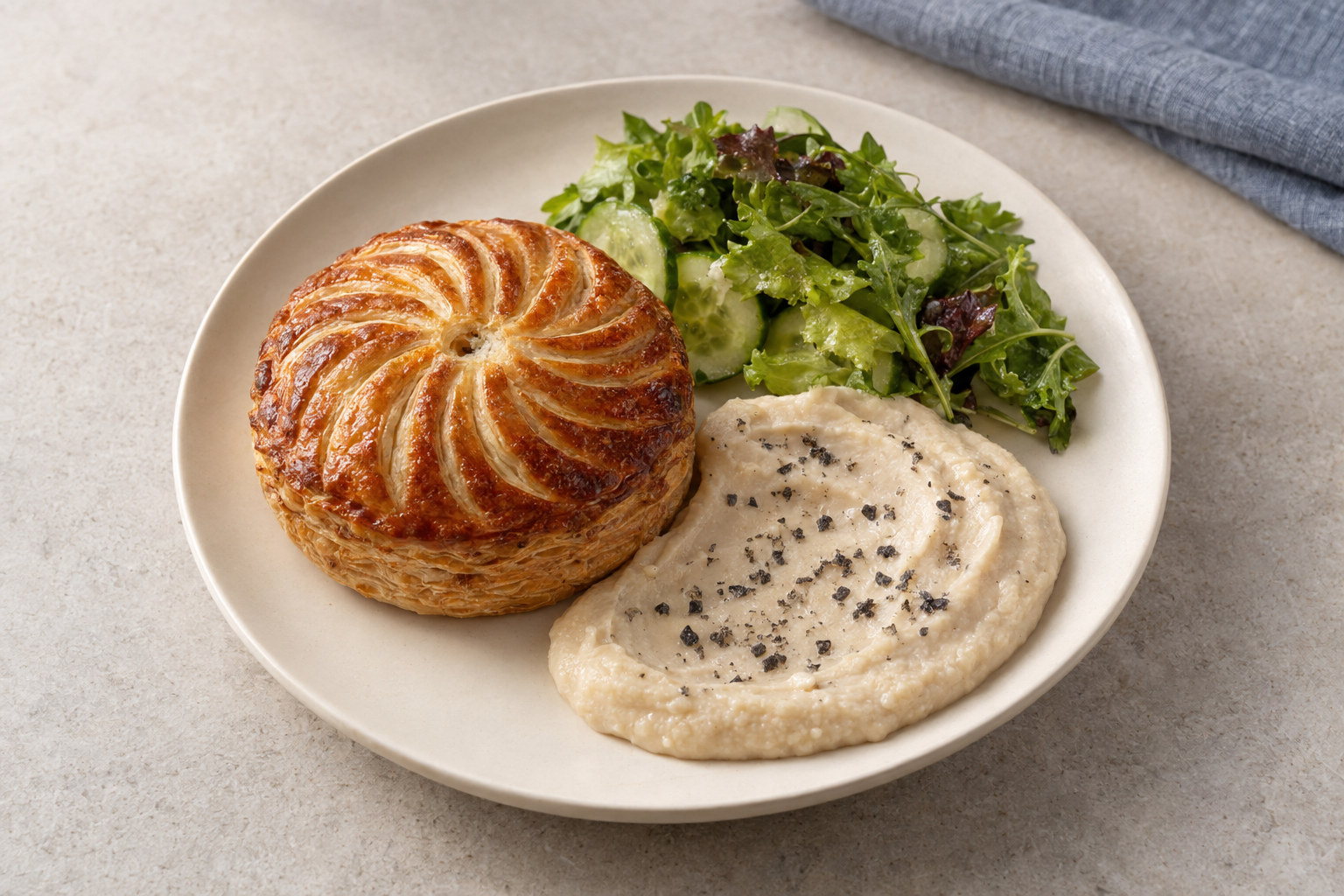
Delicate buttery layers, full-flavoured chestnut mushrooms and mild ricotta. Lemon bean cream softens each bite and cucumber salad adds freshness; the chosen flaked salt seasons the surface of the cream.
Step-by-step method
What you will need
- kitchen scales
- knife and chopping board
- rolling pin
- ruler and 14/16 cm round templates
- 28 cm frying pan
- two 40 × 30 cm baking trays
- baking parchment
- fridge with room for a baking tray
- oven
- pastry brush
- 1-litre saucepan
- stick blender
- wire rack
Before we start
We make the filling while the pastry chills. We prepare the bean cream near the end of baking and the salad just before serving.
Make the pastry base
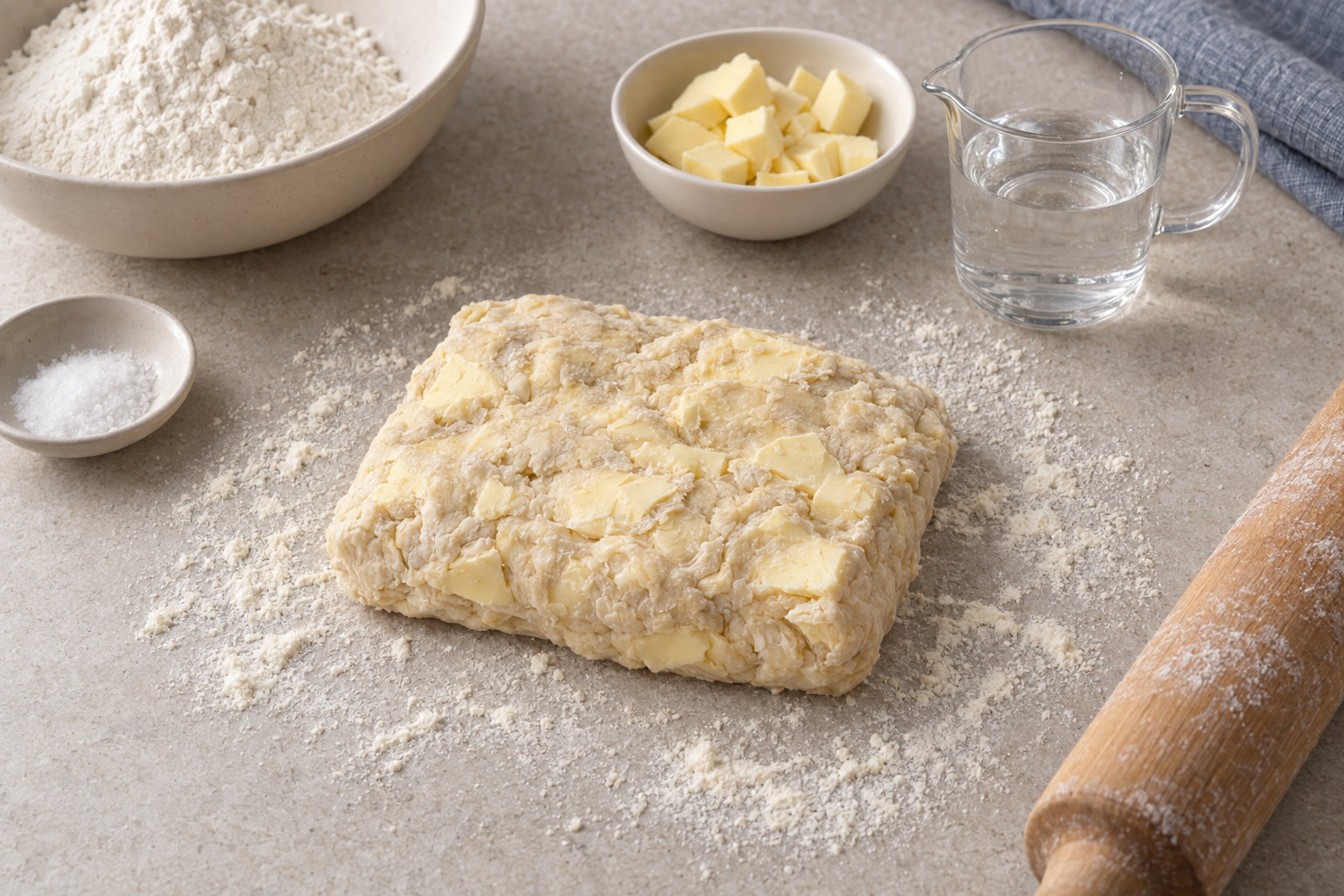
We mix the flour with ¼ teaspoon salt. We add the cold butter cubes and flatten them lightly with our fingers so they stay visible. We pour in 50 ml cold water and bring the mixture together briefly into a rough dough. We wrap it and chill for 30 minutes.
Flat pieces of butter remain in the pastry, whose surface is cold and firm.
Fold and chill the pastry
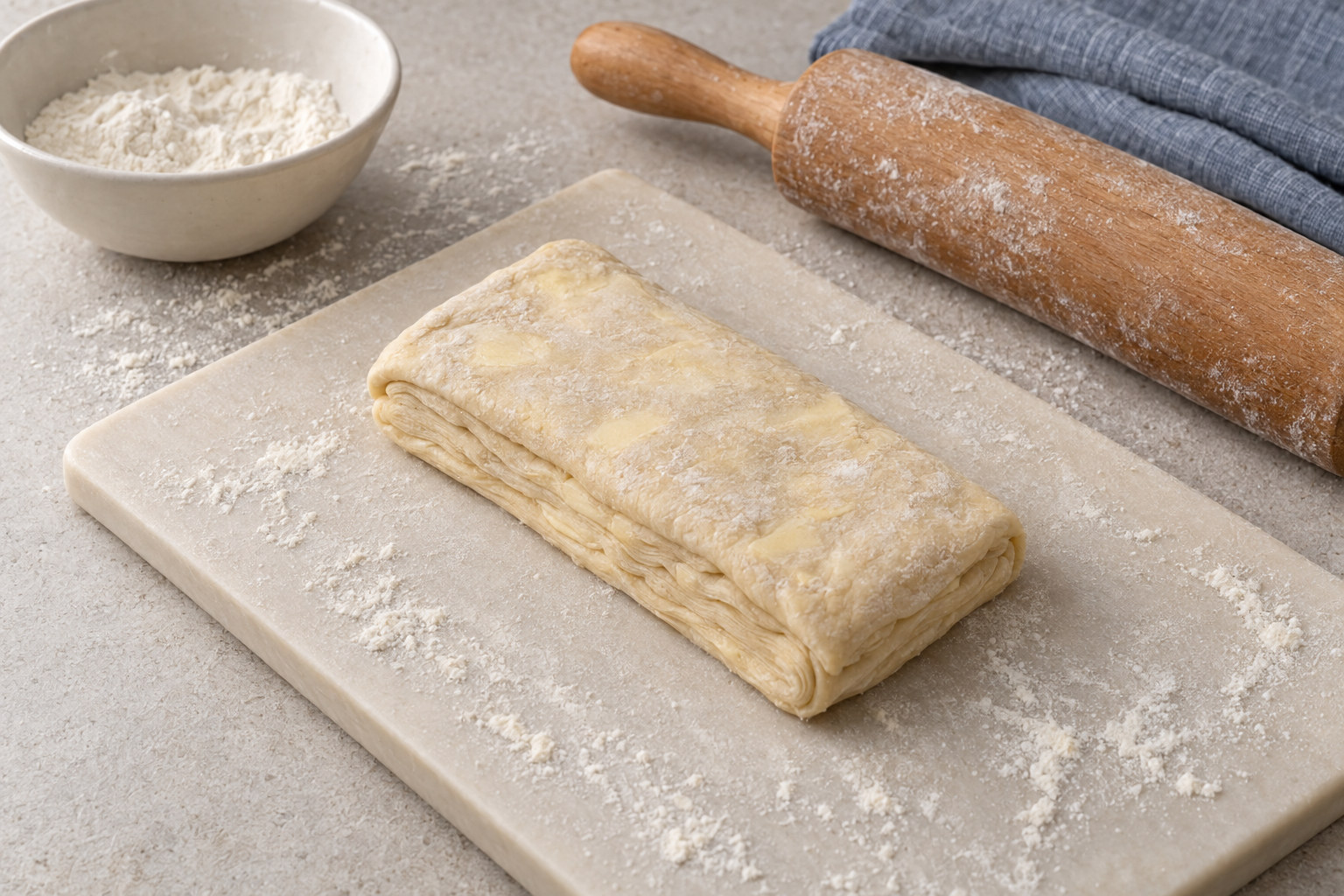
On a lightly floured surface, we roll out a rectangle about 12 × 30 cm. We fold the top third to the centre and the bottom third over it, turn the dough a quarter turn and repeat. We wrap and chill for 30 minutes. Then we make two more of the same folds and chill again for 30 minutes. If the butter starts to smear, we stop and return the dough to the fridge for 15 minutes.
The butter streaks stay separate, and the pastry neither cracks nor leaks fat as we roll it.
Make the filling and cook off the liquid
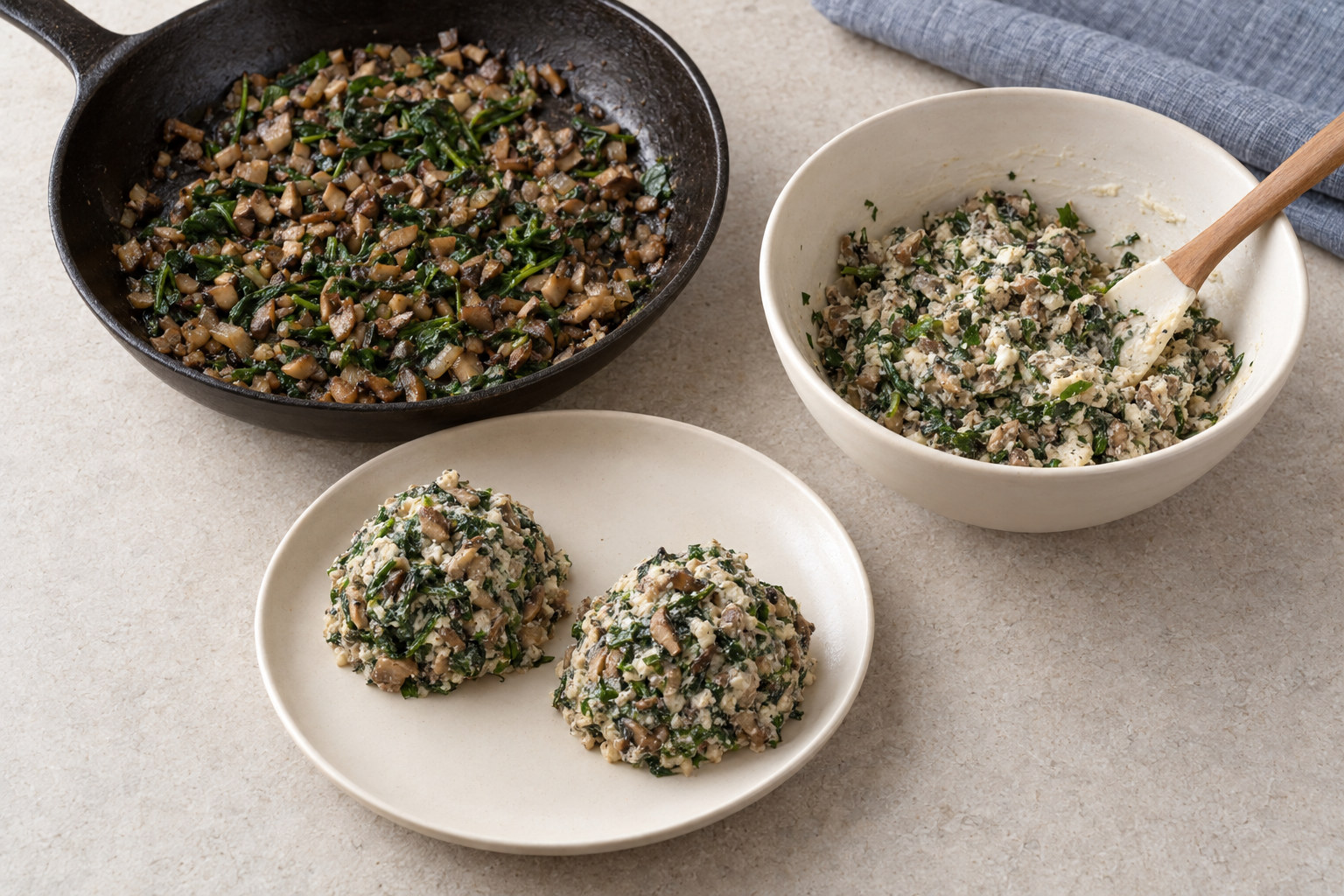
While the pastry chills, we clean the mushrooms and peel the shallot. We rinse and dry the spinach and parsley. We cut the mushrooms and shallot into pieces about 3 mm across. We fry the shallot in oil for 2 minutes, then the mushrooms for 10–12 minutes until no liquid remains. We add the spinach, let it wilt for 2 minutes and cook a little longer to evaporate the water it releases. We spread the mixture on a plate and let it cool for 15–20 minutes. We combine it with the ricotta, chopped parsley, two pinches of salt and pepper. We divide the cold filling into two equal portions.
The filling holds together and releases no water onto the plate. It must be completely cold before going into the pastry; if necessary, we chill it again before filling.
Shape the small round pies
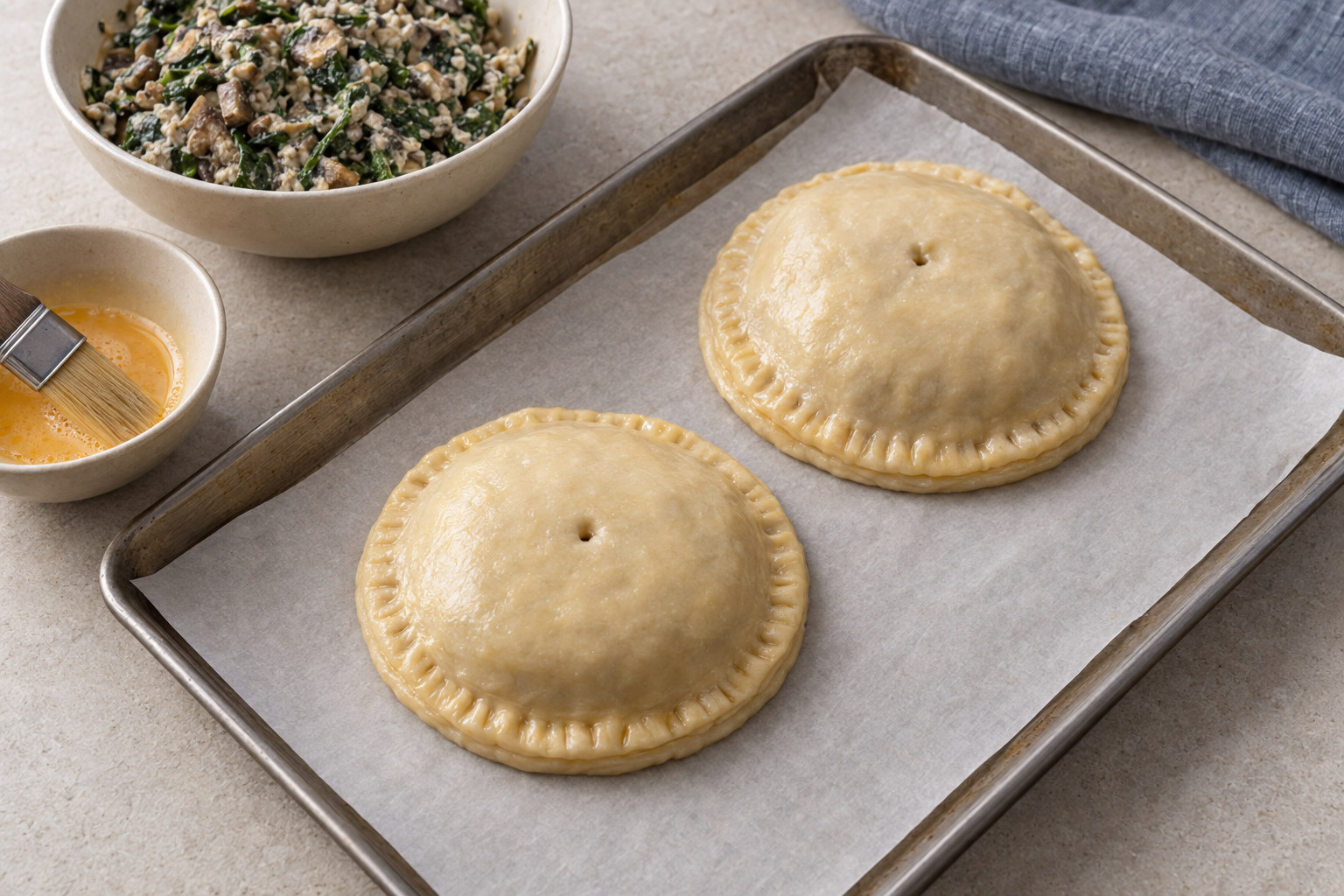
We divide the pastry into two smaller portions for the bases and two larger ones for the tops. We roll each portion to 2.5–3 mm thick and cut two base circles 14 cm across and two top circles 16 cm across. We leave a clear 1.2 cm border on each base and shape the filling into two low mounds no more than 3 cm high in the centres. We brush the borders with a little egg, cover with the larger circles and press to seal without stretching. We transfer the pies to a baking tray and chill for 30 minutes.
The filling does not stretch the top pastry and none remains in the seams. We stack the pastry scraps and save them for another bake; we do not gather them into a ball.
Decorate and bake the pies
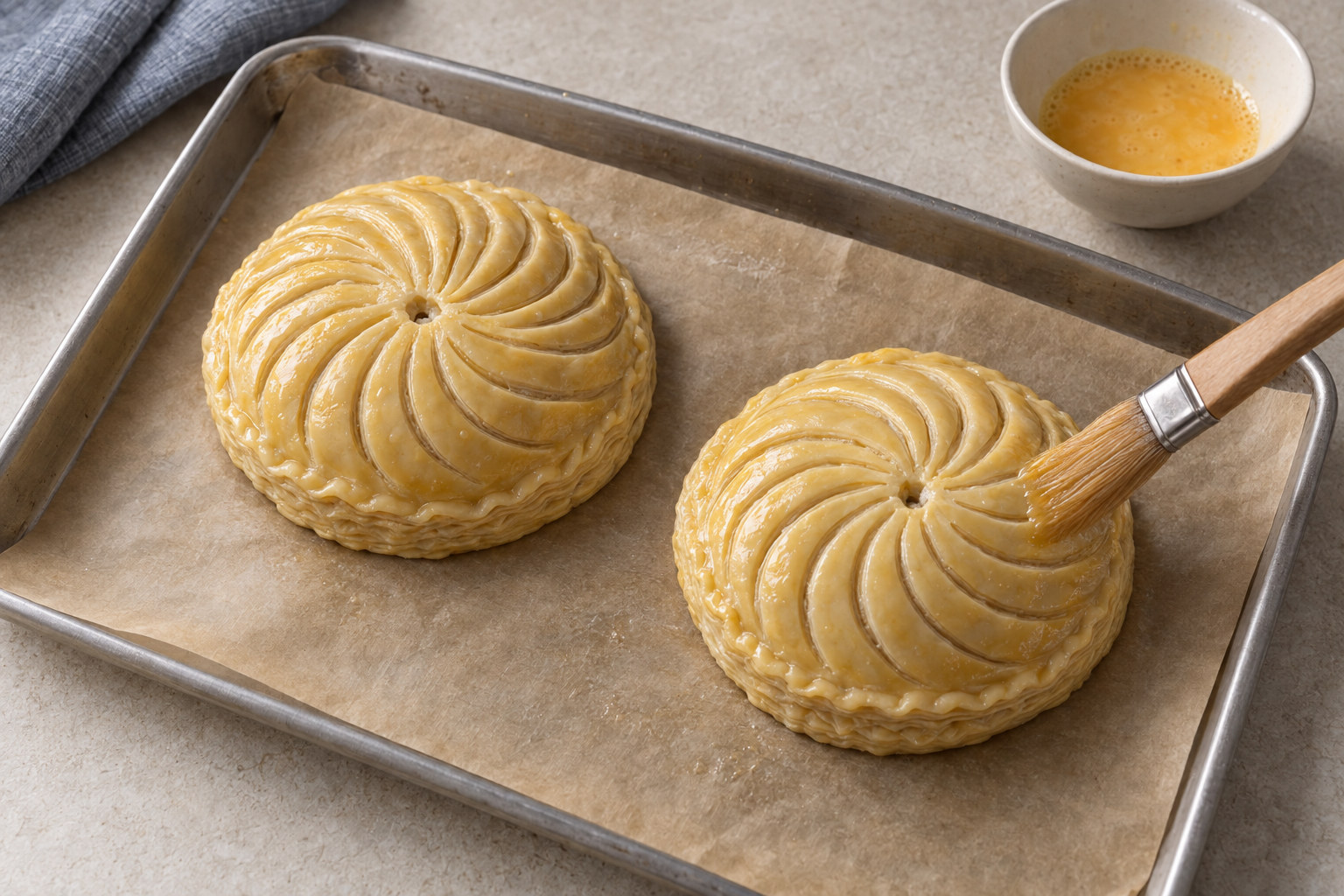
We preheat the oven to 210 °C with top and bottom heat, with an empty baking tray on the lower-middle shelf. We lightly brush the pies with egg, avoiding the cut sides. With a knife, we lightly score curved rays on the tops without cutting through. We make a 3 mm steam hole in the centre of each. We carefully slide the paper with the pies onto the hot tray. We bake for 15 minutes, lower the temperature to 190 °C and bake for another 15–20 minutes. We leave the pies to rest on a wire rack for 5 minutes.
The pastry is deep golden, its layers separate at the sides and the base is firm and baked through.
Make the cream and salad
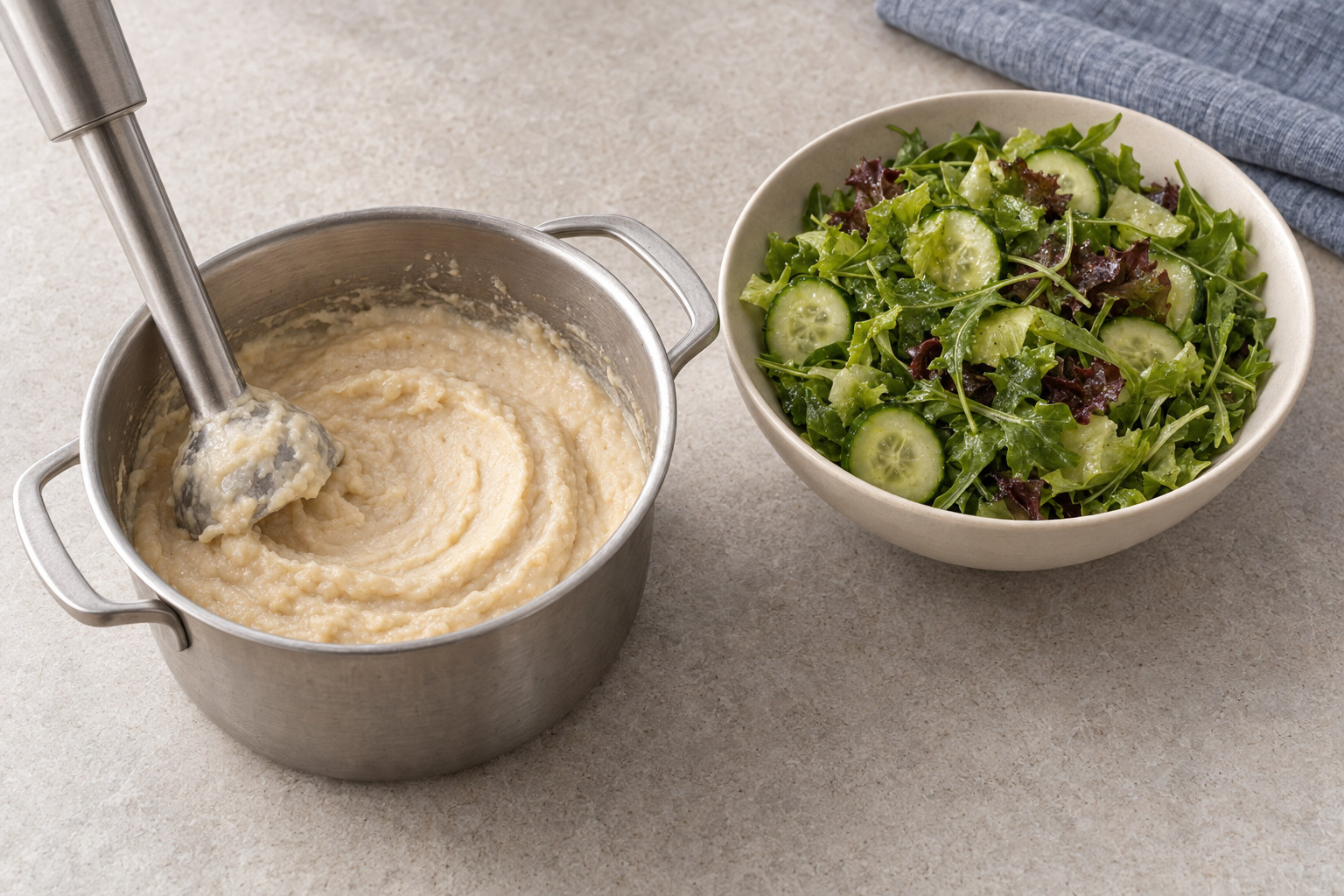
During the last 15 minutes of baking, we start the cream. We heat the beans with 70 ml water in a 1-litre saucepan for 5 minutes. We blend them smooth with two teaspoons oil and the lemon juice, then return the cream to a low heat. We keep it covered and hot for no more than 15 minutes, stirring occasionally. We wash and thinly slice the cucumber. We rinse and dry the salad leaves. We combine the cucumber and leaves with the lemon juice and oil only just before serving.
The cream is smooth and thick and does not spread across the plate. The salad stays crisp.
Serve the pies with cream, salad and flaked salt
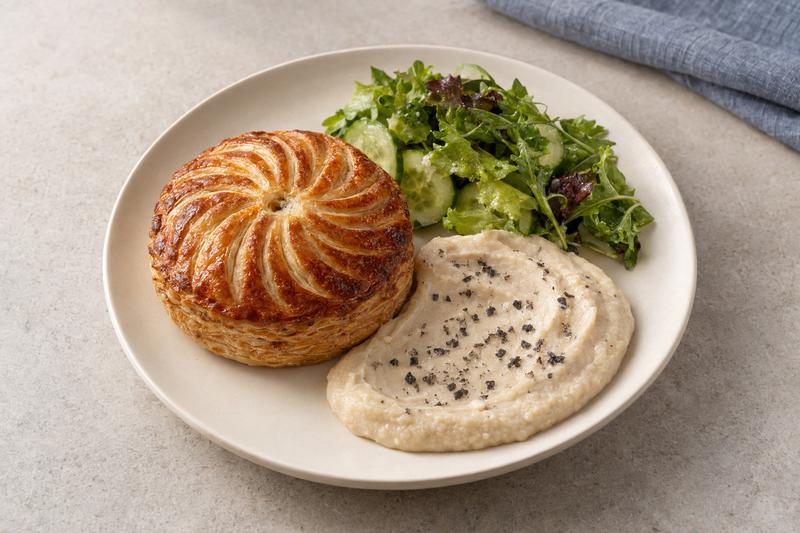
We divide the bean cream between two plates, set one pie and half the salad beside it on each, and distribute the flaked salt evenly over the cream. We do not dip the pie into the cream so its base stays crisp.
Tips from our kitchen
- We do not brush the cut edges with egg: the layers would stick together and separate less easily.
- We add the flaked salt to the cream only on the plate so it does not dissolve during cooking.
What to watch out for
- Hot or wet filling melts the butter layers.
- We score the sunburst pattern only lightly; apart from the steam hole, we do not cut through the pastry.
How we serve it
- We sprinkle flaked salt over the finished dish only on the plate, adjusting the amount to taste.
Ingredient notes
- Birch-smoked salt adds a smoky aroma to the dish.
- Activated charcoal colours the lava salt. We leave its black flakes on the surface of the pale cream; they do not taste smoky.
- Arctic thyme salt adds a herbal and floral aroma. We do not add any more thyme.
During preparation
- We take the flaked salt with a dry teaspoon and keep the rest of the pack closed in a dry place.
Our inspiration
A pithivier can look festive with a mushroom filling too. Its round dome and delicate sunburst pattern make it the centre of the plate before we even cut into it. For our homemade buttery pastry, we use the principle of rough puff pastry as made by Gordon Ramsay, founder of London’s Restaurant Gordon Ramsay: we leave visible pieces of butter in the dough and build layers by folding it.
Gordon Ramsay
Gordon Ramsay is a British chef who founded Restaurant Gordon Ramsay in London. His rough puff pastry recipe is the model for the buttery pastry technique in our mushroom pies; we make the filling our own way.
Similar recipes
Recipe for 4 people
We work with two blocks of pastry and bake all four pies together. The chilling time stays the same.
Step-by-step method
Before we start
We roll and fold each block of pastry separately, leaving the other chilled meanwhile. We chill all four filled pies on two trays, then bake two on each of two baking trays at the same time.
Make the pastry base
We combine the flour and ½ teaspoon salt with the cold butter cubes and 100 ml water. We bring the dough together only briefly so pieces of butter remain visible. We wrap it and chill for 30 minutes.
Flat pieces of butter remain in the pastry, whose surface is cold and firm.
Fold and chill the pastry
We divide the pastry into two equal blocks. We roll each into a 12 × 30 cm rectangle and fold it into thirds twice. After 30 minutes of chilling, we make two more folds in each block and chill again for 30 minutes. We keep the block we are not working on in the fridge.
The butter streaks stay separate, and the pastry neither cracks nor leaks fat as we roll it.
Make the filling and cook off the liquid
We clean the mushrooms and peel the shallot. We rinse and dry the spinach and parsley. We cut the mushrooms and shallot into pieces about 3 mm across. In a 30 cm pan, we heat two teaspoons oil, fry the shallot for 3 minutes and then the mushrooms for 12–16 minutes. We add the spinach, let it wilt and cook off all free liquid. We spread the mixture on a baking tray and let it cool for 20 minutes. We combine the lukewarm or cold mixture with ricotta, chopped parsley, ¼ teaspoon salt and pepper. We divide it into four portions and leave it to cool completely before filling; if necessary, we put it in the fridge.
The filling holds together and releases no water.
Shape the small round pies
From the two blocks, we make four smaller portions for the bases and four larger ones for the tops. We roll the pastry to 2.5–3 mm thick, cutting four 14 cm bases and four 16 cm tops. We put the filling on the bases in mounds no more than 3 cm high, leaving a clean 1.2 cm border. We brush the border with egg, cover with the tops and press the joins firmly. We place the four pies, two to a tray, on two trays lined with baking parchment and chill for 30 minutes.
The filling does not stretch the top pastry and none remains in the seams. We stack the pastry scraps and save them for another bake; we do not gather them into a ball.
Decorate and bake the pies
We preheat the fan oven to 195 °C with two empty baking trays inside. We brush the chilled pies with egg, avoiding the sides, lightly score rays on their tops and make a small steam hole in the centre of each. We transfer them two at a time with their paper onto the hot trays and bake for 15 minutes at 195 °C with the fan on. Then we swap the shelf positions, lower the oven to 180 °C and bake for another 18–23 minutes. We leave the pies to rest on a wire rack for 5 minutes.
The pastry is deep golden, its layers separate at the sides and the base is firm and baked through.
Make the cream and salad
During the last 15 minutes of baking, we heat the beans with 120 ml water in a 1.5-litre saucepan. We blend with the oil and lemon juice. We keep the cream warm, covered, over the lowest heat for no more than 15 minutes. We wash and thinly slice the cucumber, then rinse and dry the salad leaves. We toss both with lemon juice and oil only while the baked pies rest.
The cream is smooth and thick and does not spread across the plate. The salad stays crisp.
Serve the pies with cream, salad and flaked salt
We divide the cream and salad between four plates and add one pie to each. We distribute the flaked salt over the cream; if we chose lava salt, we leave its black flakes on the surface rather than mixing them in.