
From the Boxxi kitchen · Sicilian inspiration
Homemade tagliolini with sardines, fennel and crisp breadcrumbs
We coat delicate homemade tagliolini in a tomato sauce with pieces of sardine and sweet fennel. Golden breadcrumbs with capers and lemon zest go on top, bringing a little crunch to every forkful of tender pasta. We take our time rolling the dough, then finish the fish and pasta just before serving.
We make the sauce and breadcrumbs while the dough rests for 30 minutes.
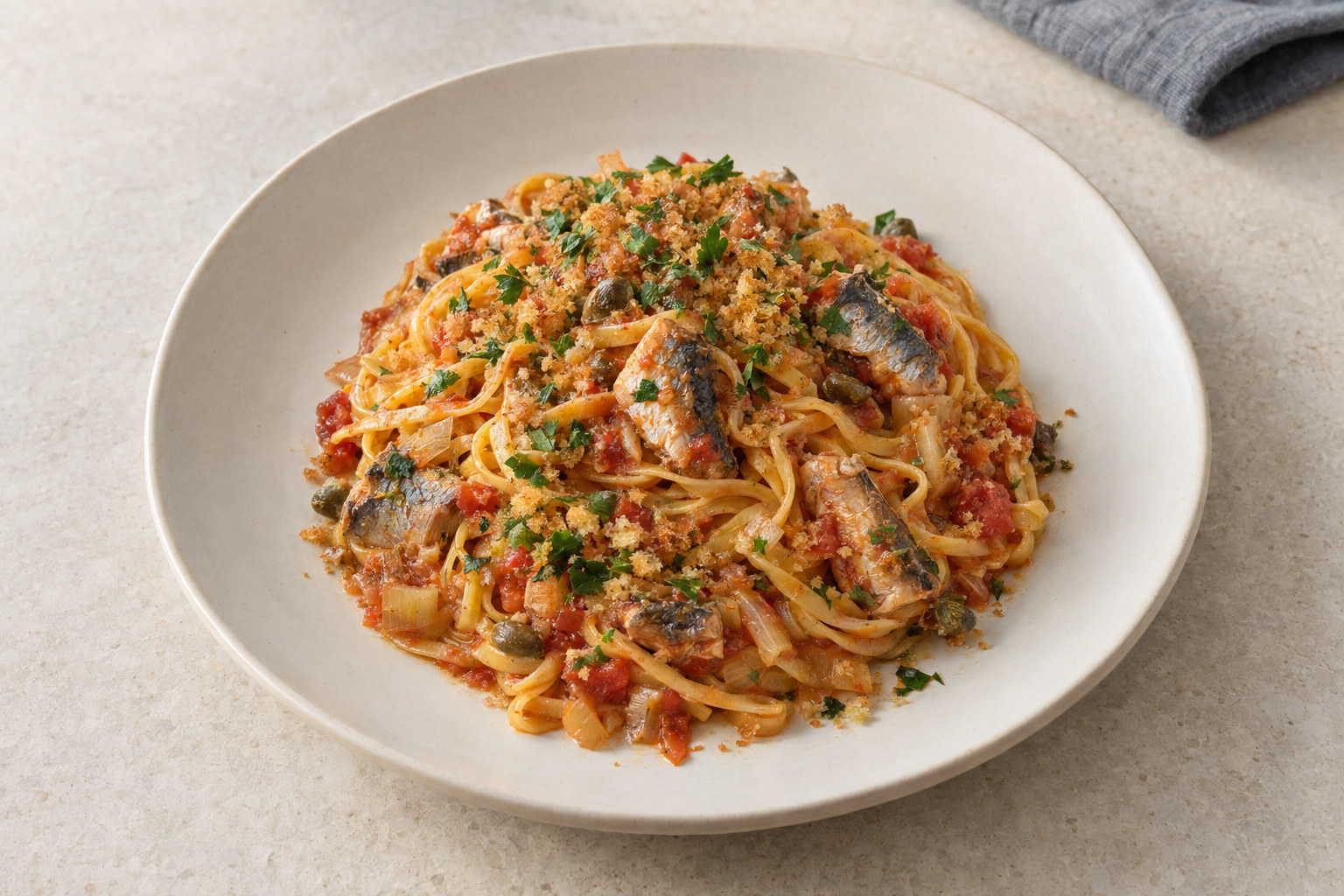
Tomatoes and sardines give the sauce a full flavour, fennel adds gentle sweetness and chilli brings a little warmth. Toasted breadcrumbs with capers and lemon zest form a fragrant, crisp topping.
Step-by-step method
What you will need
- kitchen scales
- knife, chopping board and tweezers
- probe thermometer
- pasta machine
- rolling pin
- 28 cm deep frying pan holding at least 3 l
- small 20 cm frying pan
- 4 l saucepan
- two baking trays
- tongs or a large slotted ladle
- two hob rings
Before we start
We make the dough first. While it rests, we cook the sauce base and toast the breadcrumbs. The fish and fresh pasta wait until the final, brief cooking stage.
Make the dough
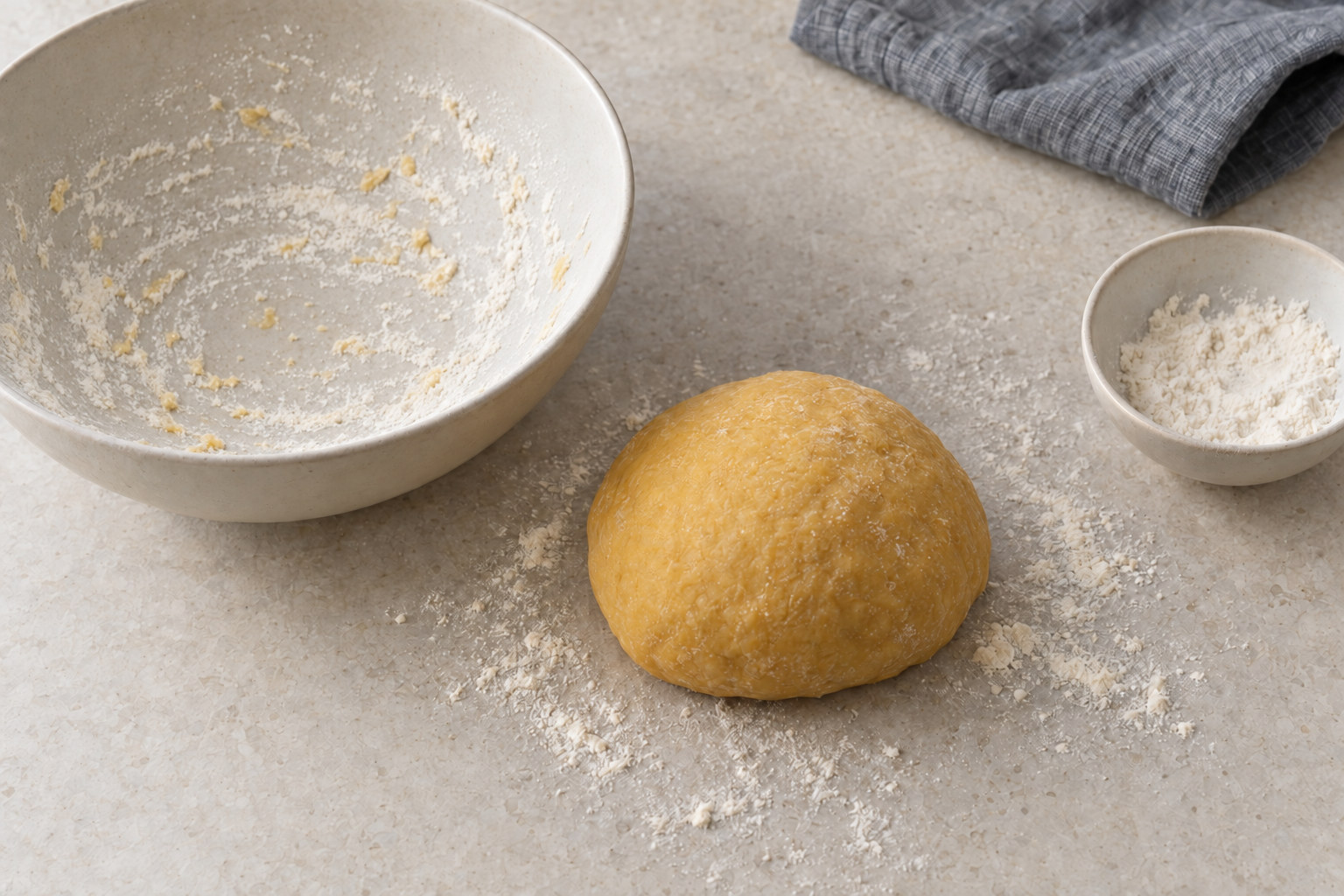
We mix the flour and eggs with a fork, then knead for 8–10 minutes to make a firm, smooth dough. We cover and leave to rest for 30 minutes. If there are dry patches, we dampen our hands rather than pouring in large amounts of water.
The dough does not stick to dry fingers but bends without deep cracks.
Cook the sauce base
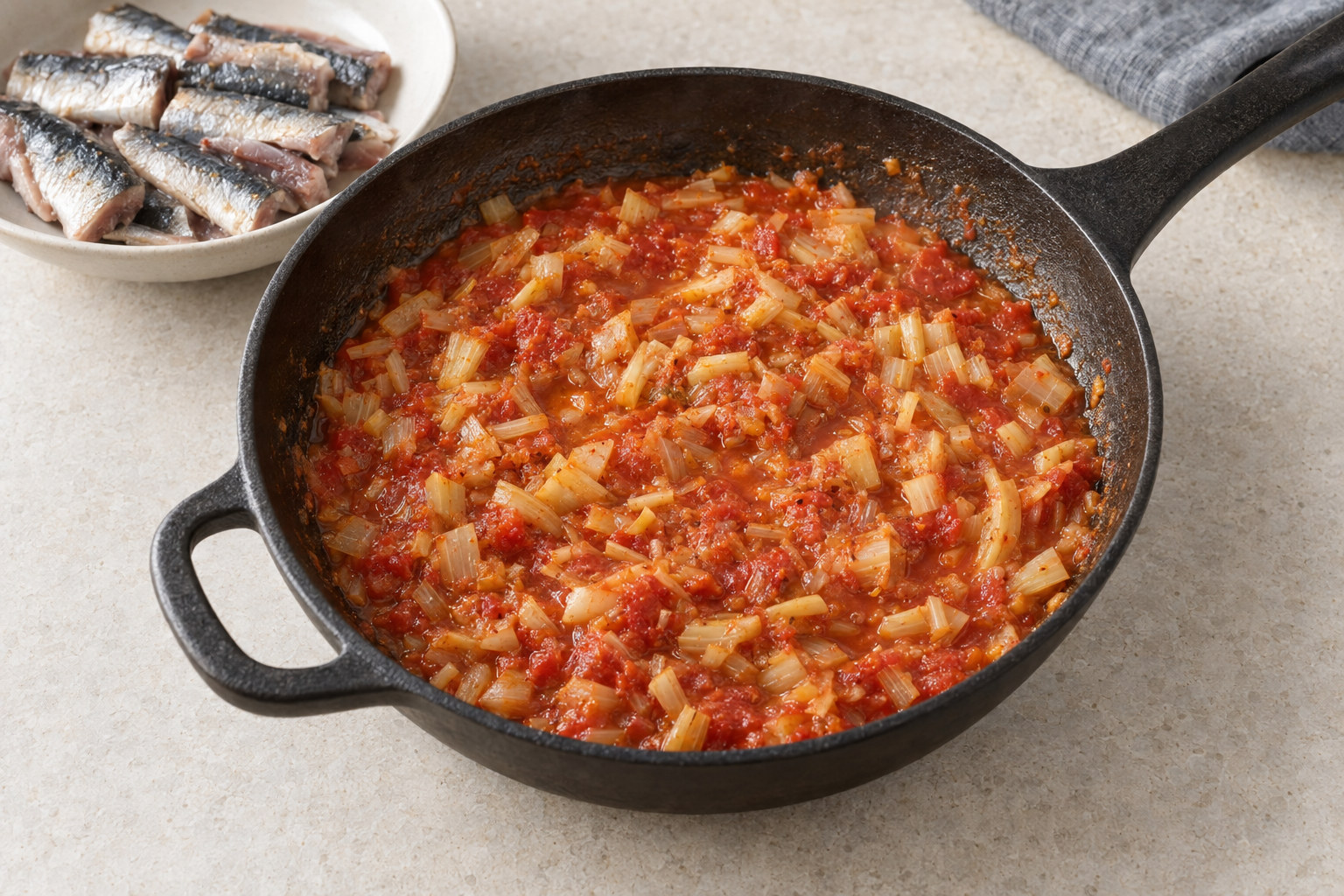
We remove the heads and guts from the sardines, open them out and remove the backbones and any remaining bones, leaving the skin on. While the dough rests, we peel and chop the shallot and garlic. We wash the fennel, cut out the tough core and dice it into 3 mm pieces. We heat a tablespoon of oil in a deep 28 cm frying pan and gently cook the vegetables with ¼ tsp of salt for 8–10 minutes. We add the chilli, passata and 100 ml of water and simmer gently for 15 minutes until the fennel is tender. We take off the heat, keeping the sardines chilled for now.
The sauce is thick but spreads across the base of the pan; neither the garlic nor the shallot should brown and turn bitter.
Toast the breadcrumbs
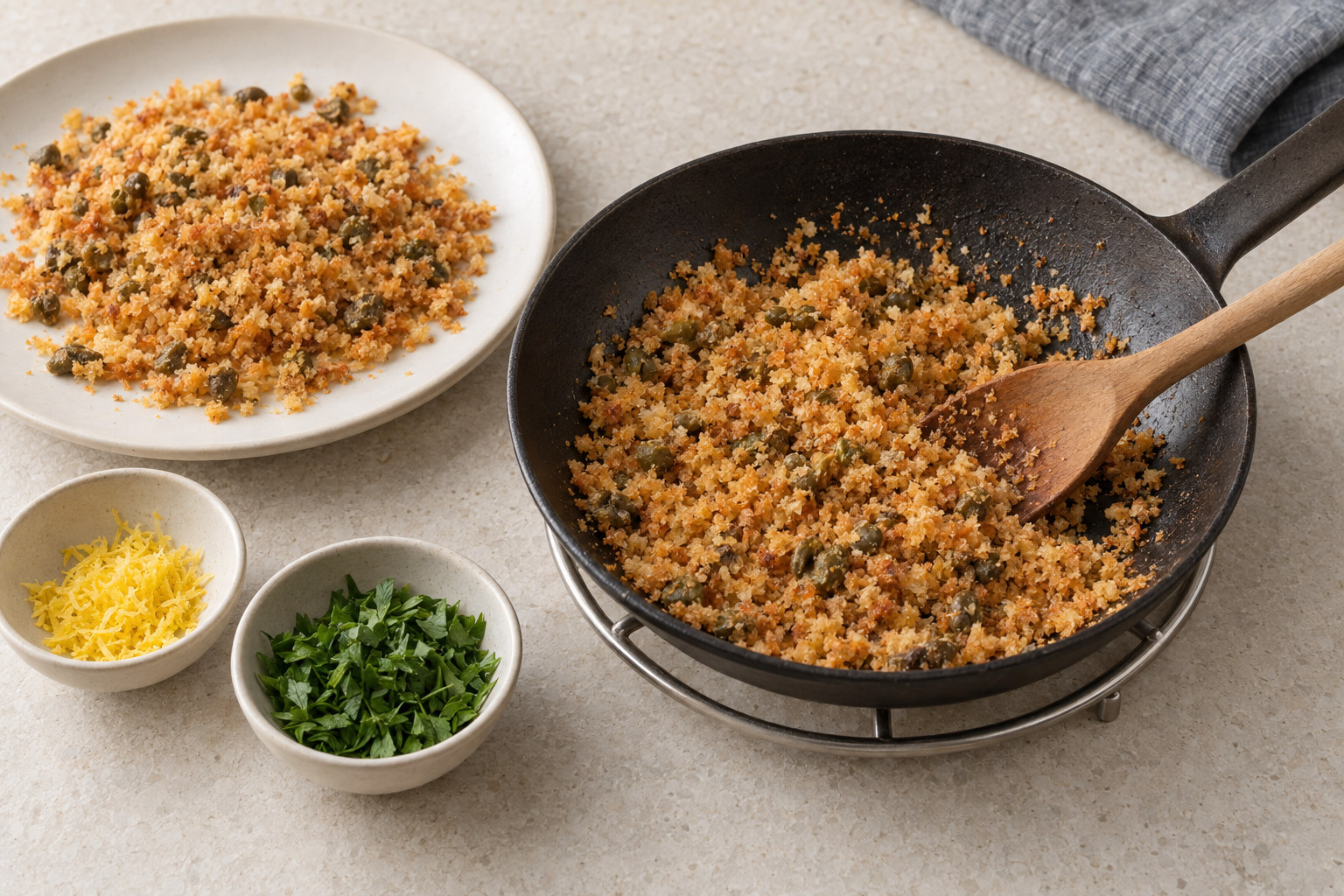
We chop the capers and dry them well. In a small frying pan, we stir the breadcrumbs and capers in two teaspoons of oil for 4–5 minutes until golden. We tip onto a dry plate, leave to cool for 3 minutes, then stir in the lemon zest. We rinse and dry the parsley, then chop it separately.
The breadcrumbs are loose and smell of lemon; we do not leave them to brown further in the hot pan.
Roll and cut the pasta
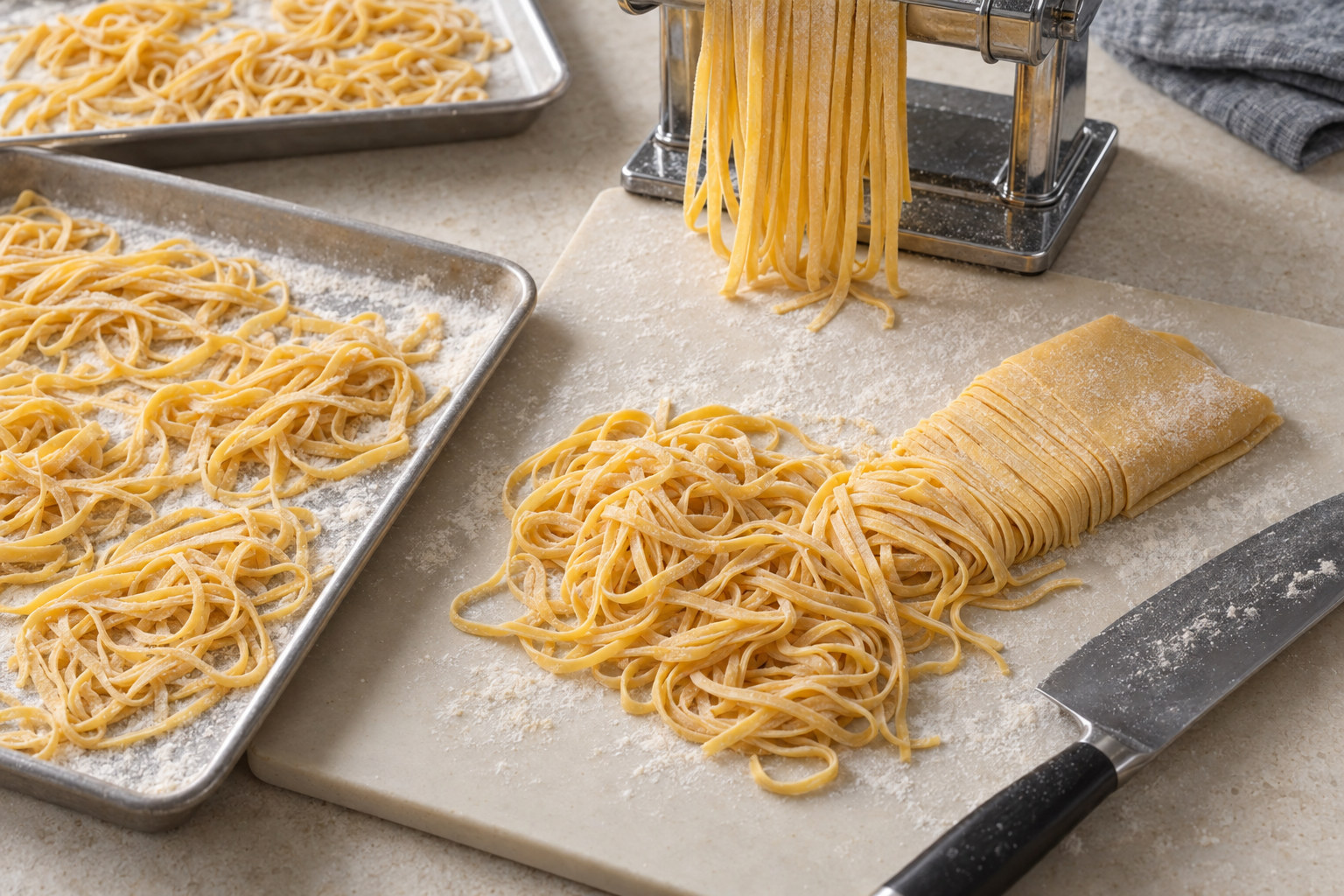
We divide the dough into two pieces and pass each one through the pasta machine to form a sheet about 1 mm thick, folding it into thirds on the first few passes. We use only as much of the prepared 20 g of flour for dusting as needed to prevent sticking. We leave the sheets to dry for 5–8 minutes, fold them loosely and cut into 2 mm strips with a sharp knife. We separate them straight away and spread loosely on floured trays.
The sheet is flexible and dry to the touch; if it sticks when folded, we leave it to dry a little longer.
Cook the sardines in the sauce
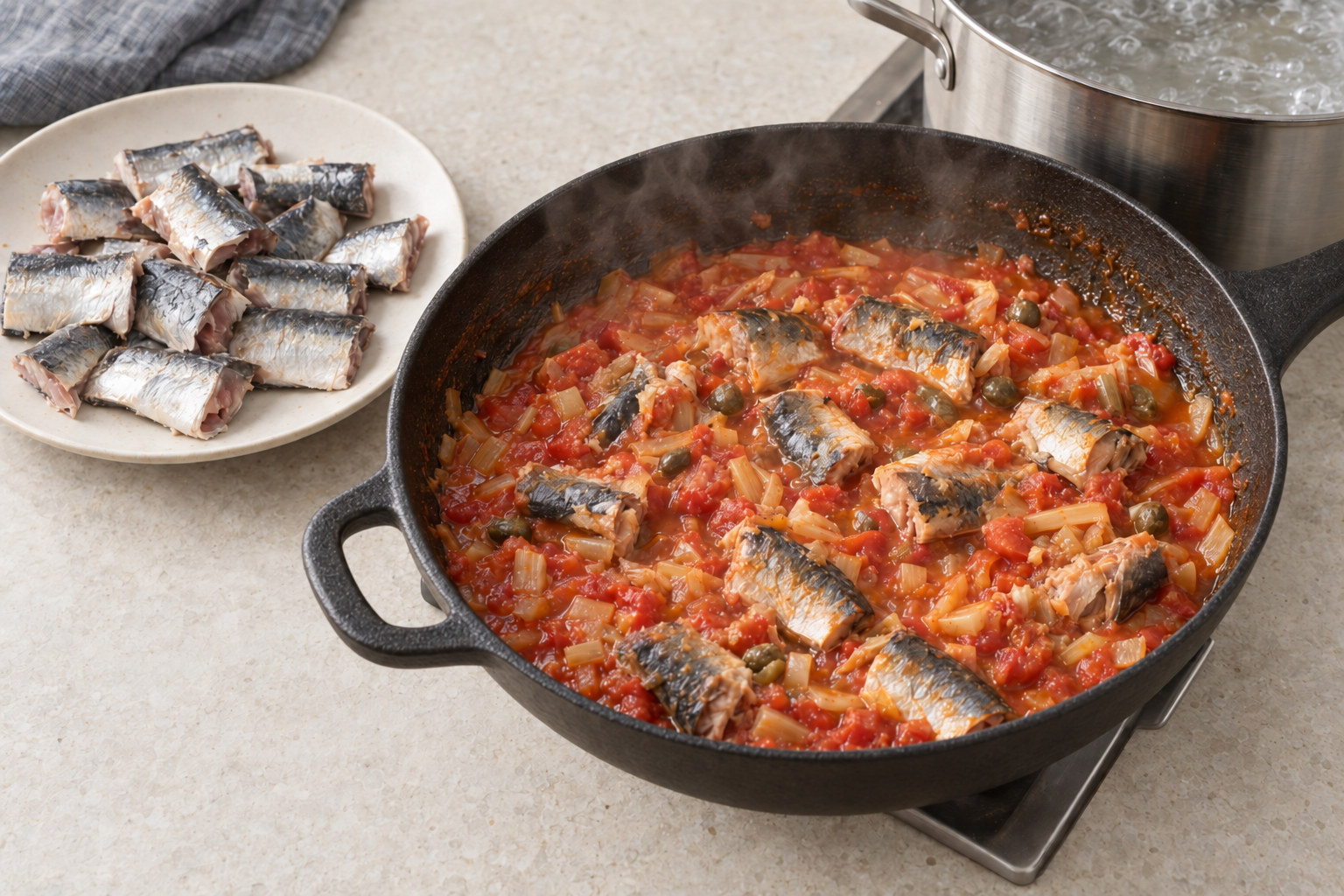
In a 4 l saucepan, we bring plenty of water to the boil with one and three-quarter teaspoons of salt. We bring the sauce back to a gentle simmer. We cut the sardines into 3 cm pieces and add them to the sauce. We simmer gently for 4–6 minutes until the thickest piece reaches 63 °C, stirring carefully so some of the fish stays in pieces.
The fish is cooked, with small juicy flakes and whole pieces remaining in the sauce.
Combine the tagliolini with the sauce and serve
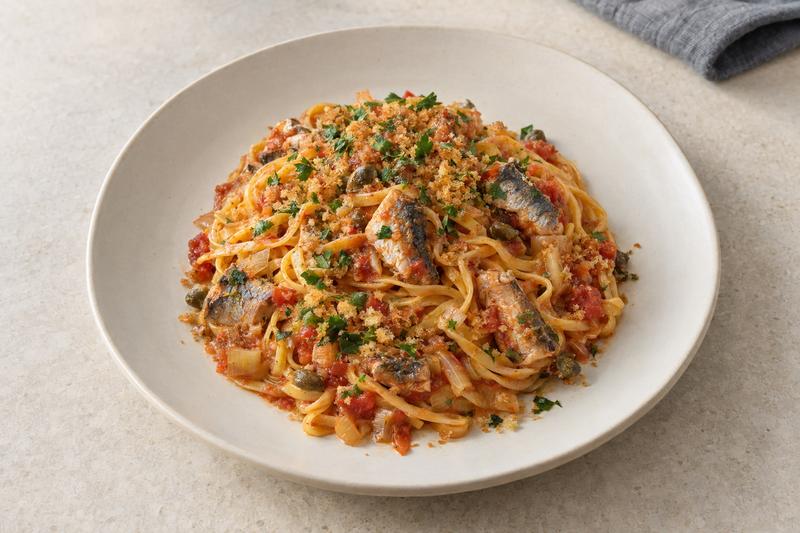
We add the pasta to the boiling water, separate the strands straight away and cook for about 1–2 minutes until almost tender. Before draining, we measure out 150 ml of the cooking water. We transfer the pasta to the sauce, add 50 ml of the water to start with and stir gently for 30–60 seconds. We add more water a tablespoon at a time as the pasta absorbs it, setting any unused water aside. We turn off the hob, stir in the lemon juice and parsley, divide between two plates and sprinkle with the breadcrumbs.
The pasta is springy with no floury centre. The sauce coats it without leaving a watery puddle on the plate.
Tips from our kitchen
- We use less salt in the pasta water: some of the water goes into the sauce, and the salty capers add more seasoning.
- We can make the dough a few hours ahead and keep it covered in the fridge. Before rolling, we leave it at room temperature for about 20 minutes and add this to the preparation time.
What to watch out for
- We do not leave the cooked fresh pasta waiting in a colander, as it would quickly stick together.
- We do not stir the breadcrumbs into the whole pan, as they would soften before we start eating.
How we serve it
- We serve the pasta as soon as it is mixed with the sauce, adding the toasted breadcrumbs to the individual portions.
Ingredient swaps
Pasta machine
rolling by hand on a lightly floured surface We use a sturdy rolling pin. Rolling an even 1 mm sheet takes about 20 minutes longer for two servings and 30 minutes longer for four.
Ingredient notes
- We remove the heads, guts and backbones from the whole sardines. We open them like a book, keeping the two halves joined.
During preparation
- We keep the fish chilled until we start cooking. We keep utensils used for raw fish away from cooked food and wash them after use. We check for at least 63 °C in the thickest part.
Our inspiration
Even ordinary breadcrumbs can add plenty of flavour. Ciccio Sultano, chef at Duomo in Ragusa Ibla, Sicily, serves sardine pasta with a slowly toasted mixture of breadcrumbs, anchovies, olives and capers. His pairing of fish and seasoned crumbs inspired us; in our simpler version, capers and lemon zest stand out.
Ciccio Sultano
Sicilian chef at Duomo in Ragusa Ibla. His cooking develops the flavours of Sicily’s sea, herbs and local ingredients.
Similar recipes
Recipe for 4 people
We roll the four pieces of dough one at a time, adding the fish to the sauce only after all the pasta is cut.
Step-by-step method
Before we start
We allow extra time to roll the four pieces. The sauce without the fish can wait covered off the hob; we finish the fish and pasta together just before eating.
Make the dough
We combine the flour and eggs, then knead for 10–12 minutes until the dry crumbs disappear and the dough is elastic. We cover and leave to rest for 30 minutes. If it crumbles, we dampen our hands rather than adding a large amount of water.
The dough does not stick to dry fingers but bends without deep cracks.
Cook the sauce base
We remove the heads and guts from the sardines, open them out and remove the backbones and any remaining bones, leaving the skin on. We peel the shallots and garlic, wash the fennel and remove its tough core. We heat two tablespoons of oil in a deep 32 cm frying pan. We cook the finely chopped shallots and garlic and the fennel cut into 3 mm dice with ¼ tsp of salt for 12 minutes. We add the passata, chilli and 160 ml of water and simmer gently for 18–20 minutes. Once the vegetables are tender, we take the base off the heat, keeping the sardines chilled for now.
The sauce is thick but spreads across the base of the pan; neither the garlic nor the shallot should brown and turn bitter.
Toast the breadcrumbs
In a small frying pan, we toast the breadcrumbs and chopped, dried capers in a tablespoon of oil for 5–6 minutes. We tip onto a dry plate and stir in the lemon zest after 3 minutes. We rinse, dry and chop the parsley and set it aside for the end.
The breadcrumbs are loose and smell of lemon; we do not leave them to brown further in the hot pan.
Roll and cut the pasta
We divide the dough into four pieces and roll each one through the pasta machine to form a 1 mm sheet, keeping the unused pieces covered. We leave the sheets to dry for 5–8 minutes, dust lightly with flour, fold loosely and cut into 2 mm pasta strands. We spread them loosely over two baking trays without making tight nests.
The sheet is flexible and dry to the touch; if it sticks when folded, we leave it to dry a little longer.
Cook the sardines in the sauce
In a 7 l saucepan, we bring plenty of water to the boil with 3 teaspoons of salt. We reheat the base in the deep frying pan and add the sardines cut into 3 cm pieces. We simmer gently for 6–8 minutes until the centre of the thickest piece reaches 63 °C, stirring carefully so some of the fish stays in pieces.
The fish is cooked, with small juicy flakes and whole pieces remaining in the sauce.
Combine the tagliolini with the sauce and serve
We separate the whole batch of pasta in the boiling water and cook for about 2 minutes. We measure out 250 ml of the cooking water and transfer the pasta to the deep frying pan. We pour in 90 ml of the reserved water first, then add more a tablespoon at a time as needed until the sauce coats the pasta evenly. We stir gently for 1 minute, turn off the hob and add the lemon juice and parsley. We divide between four warmed plates and sprinkle the breadcrumbs over the top.
The pasta is springy with no floury centre. The sauce coats it without leaving a watery puddle on the plate.